
 English
 Italy
Italy
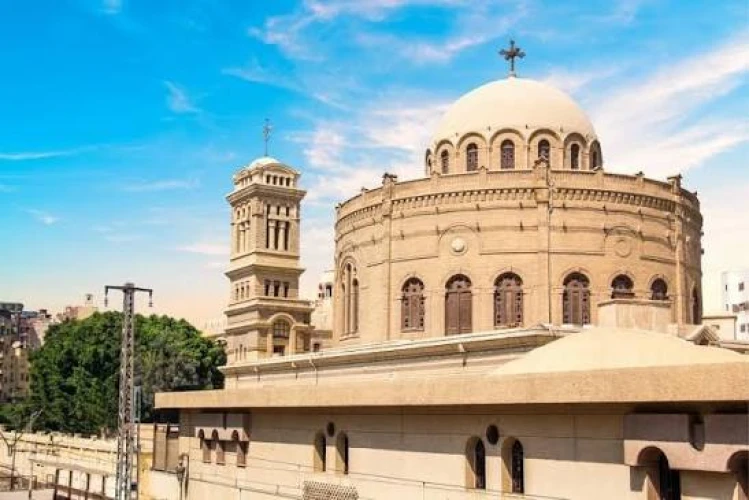
The Holy Family Route in Egypt: Complete Travel Guide
The route of the Holy Family in Egypt is one of the most significant historical routes of all time. This is the trail that Our Lady, Joseph, and the infant Jesus took while they were in flight from Herod. The trail covers a distance of approximately 3500 km throughout the Nile Delta, Historic Cairo, Egypt’s Western Desert, and Upper Egypt.
Currently, the Egyptian Ministry of Tourism and Antiquities has reactivated this 25-stop route for international visitors, history enthusiasts, and Christian pilgrims. This is a list of all the essential information needed to complete the trail on the route of the Holy Family.
Holy Family Trail
According to the Gospel of St. Matthew, an Angel of the Lord appeared to Joseph in his dreams and told him to flee to Egypt with the infant Jesus and Mary, the mother of Jesus, since Herod, the king of Judea, was trying to kill all the boys in Bethlehem. The family remained in Egypt for approximately 3 and a half years, according to tradition. They survived by relying on natural caves, springs, and the hospitality of the locals.
The trail connects many excavated Roman forts, monasteries, rock-hewn cliff churches, and natural trees. Notably, many of these are closely associated with early Christianity and the Coptic history and art.
Coptic Cairo Attractions
While there are 25 primary sites around Egypt on the trail, most of them are concentrated in three geographic regions. Here is a list of all the significant attractions you should consider visiting in Coptic Cairo:
1. Church of St. Sergius and Bacchus (Abu Serga): This 4th-century church was built over the cave where the Holy Family was staying for some time.
2. Hanging Church (Al-Muallaqa): This church was built over the gate towers of the Roman fortress of Babylon, although it was not a family shelter. However, the Hanging Church is considered the religious center of Coptic Cairo.
3. Church of the Virgin Mary in Maadi: This church is located right on the banks of the Nile. According to tradition, Our Lady, Joseph, and Jesus traveled by boat from this location down the river to Upper Egypt.
Nile Delta Attractions
The other two areas that you can consider visiting include the cities in Cairo Suburbs and the Nile Delta. Some of the most significant sites associated with the Holy Family Trail include:
1. Mary’s Tree in Matariya: This tree is located in northern Cairo and is considered one of the most important places on the trail. It is believed that Mary, the mother of Jesus, took her food and rest under the shade of this tree. In addition, a spring that was used to provide water was located nearby.
2. Tel Basta & Sakha: This location is in the Delta and features numerous wells and the “Bikha Isous” rock relief. Isous means Jesus in Arabic. According to tradition, the infant Jesus left behind his footprint on this stone.
Nitrian Desert Attractions
The Nitrian Desert is also a home to some of the most fascinating historic monasteries. It is located on the road between Cairo and Alexandria. This region is also known as the “Valley of Monks.” It is a land of vast wilderness popular with hermits during the 4th century. The area is famous for the following monasteries:
1. Monastery of Anba Bishoy
2. Monastery of El-Suryan: This monastery is well-known for the ancient frescoes that depict Syriac Saints.
3. Monastery of Baramus
4. Monastery of St. Macarius (Abu Makar)
Middle and Upper Egypt Attractions
The Middle and Upper Egypt is famous for the Gabal Al-Teir (The mountain of the birds) in Minya and the Monastery of Al-Muharraq (Asyut). The former is a cliff-hanging monastery that was built over the cave where the Holy Family spent the night. At the same time, Minya is a village located on the mountain of Qusqam.
On the other hand, the Monastery of Al-Muharraq (Asyut) is the most essential site on the southern trail. It is believed that Our Lady, Joseph, and the infant Jesus stayed here for over six months. The cave in the monastery is considered to be one of the oldest churches in the world. Notably, Al-Muharraq is at the foothills of Mount Qusqam.
Drunka Monastery (Asyut): This is a huge convent built into the mountains overlooking Asyut. It marks the southernmost point of the Holy Family Trail before they turned back and headed back north.
Recommended 7-Day Itinerary
Day 1&2: You should spend your first two days in Cairo visiting the Hanging Church, Abu Serga’s cave church, the Coptic Museum, the Mary’s tree in Matariya, and the river church in Maadi.
Day 3: On the third day, you can consider spending the day exploring the Monasteries of Wadi El Natrun.
Day 4&5: You can spend the next two days exploring the Minya and the Gabal Al-Teir. It is a good idea to take a road trip to the south of the Nile to discover ancient rock-grooved tombs along with the cliff-hanging church.
Day 6&7: You can use the next two days to explore the Monasteries of Al-Muharraq and Drunka before heading back to Cairo or further down to Luxor.





-webp.webp "Hilton")
-webp.webp "dusit")
-webp.webp "Marriott Hotels")
-webp.webp "Azimut Hotel")
-webp.webp "Golden Tulip")
-webp.webp "sheraton")
-webp.webp "westin hotel")
-webp.webp "Movenpick")