
 English
 Italy
Italy
The Hidden Tombs of El Kab: What Every History Buff Needs to Know
While the massive pylons of Karnak and the golden treasures of Luxor command the spotlight, there is a quiet, dusty corner of the Nile that holds the "real" history of Egypt. El Kab, located on the East Bank between Luxor and Edfu, is one of the oldest settlements in the country. In the 2026/2027 season, it has become a sanctuary for "slow travelers" and history buffs who want to escape the crowds and touch the origins of the Pharaonic state.
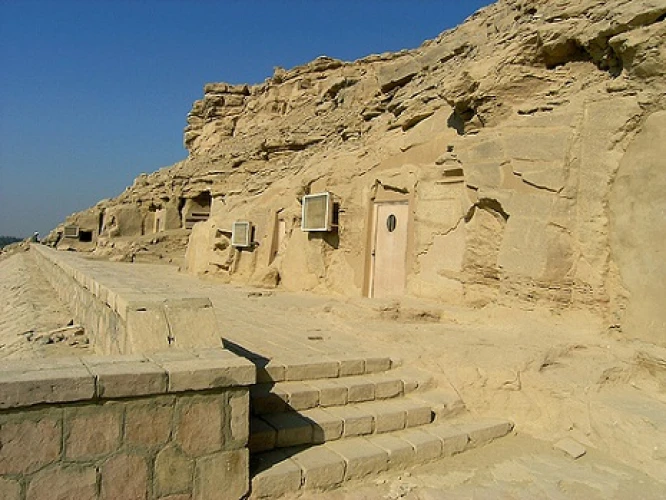
If your boat pulls up to the rugged bank of El Kab, you aren’t just visiting another temple; you are entering the ancestral home of Nekhbet, the Vulture Goddess of Upper Egypt. Here is the humanized guide to what makes these "hidden" tombs a mandatory stop for the true enthusiast.
1. The Gateway of the Vulture Goddess
Before you even reach the tombs, you are confronted by the massive Mudbrick Walls. These aren’t just ruins; they are a 2,600-year-old defensive enclosure that is so large it can be seen from space.
-
The Scale: The walls are roughly 12 meters thick and once stood even higher. Walking through the gaps in these ancient fortifications feels like entering a different dimension of time.
-
The Sacred Protector: El Kab (ancient Nekheb) was the cult center of Nekhbet. You’ll see her everywhere in Egypt—she is the vulture on the Pharaoh’s crown, wings spread in protection. To be in El Kab is to be at the source of that protective power.
2. The Tombs of the "National Heroes"
The rock-cut tombs at El Kab are unique because they don't belong to the "celebrity" Pharaohs; they belong to the Governors and Military Commanders who actually did the heavy lifting of building an empire. In 2026, four tombs are the primary focus for visitors.
The Tomb of Ahmose, son of Ebana
This is the "crown jewel" of El Kab. If you love military history, this is your holy grail.
-
The Story: Ahmose was a naval commander who served under three different Pharaohs. His tomb contains a long, autobiographical inscription that is our primary historical source for the expulsion of the Hyksos (foreign invaders) from Egypt.
-
The Human Connection: Unlike the formal, religious texts in the Valley of the Kings, Ahmose’s walls tell a story of grit. He lists the "Gold of Valor" awards he received and mentions the slaves he captured. It’s a raw, firsthand account of the birth of the New Kingdom.
The Tomb of Paheri
If Ahmose’s tomb is about war, Paheri’s tomb is about life. Paheri was the Mayor of Nekheb and a tutor to a prince.
-
The Art: The reliefs here are some of the most charming in Egypt. You’ll see scenes of plowing, sowing, and harvesting grain. Look closely at the scene of the vintage—you can see men treading grapes and the fermentation jars lined up.
-
The "Banquet" Scene: There is a famous relief of a funeral banquet where the guests are being served wine. One woman famously says, "Give me eighteen cups of wine... my throat is as dry as straw." It is a 3,500-year-old reminder that Egyptians loved a good party just as much as we do in 2026.
3. Why El Kab is a "History Buff" Essential in 2026
-
The "Non-Filtered" History: In the big temples, everything is propaganda. In the tombs of El Kab, the language is more personal. You learn about family lineages, local droughts, and the practicalities of governing a province.
-
The 2026 Conservation Lab: In recent years, international teams have used multi-spectral imaging to reveal "lost" inscriptions at El Kab. If you visit in early 2026, you might see researchers working on the Gebel el-Silsila stretch nearby, where they are still uncovering the secrets of the ancient quarrymen.
-
The Total Silence: Because El Kab is not a standard stop for the 150-passenger motor ships, you will likely be the only person in the tombs. This silence allows you to hear the desert wind and truly absorb the atmosphere of the Old Kingdom and New Kingdom layers that overlap here.
4. The Hidden Gem: The Temple of Amenhotep III
A short walk (or a quick 2026-style "tuk-tuk" ride) into the desert valley behind the tombs leads you to a tiny, perfectly preserved Desert Chapel.
-
The Architect: It was built by Amenhotep III (the "Magnificent"). Because it was tucked away in the desert, it escaped much of the damage that plagued the larger riverfront temples.
-
The Experience: It is small, intimate, and feels like a private sanctuary. The colors inside are soft and haunting, dedicated to the lion-goddess Sekhmet and the local vulture-goddess.
Comparison: El Kab vs. The Valley of the Kings
| Feature | The Valley of the Kings | The Tombs of El Kab |
| Who is buried? | Kings & Pharaohs. | Governors & Military Heroes. |
| Main Vibe | Epic / Divine. | Biographical / Everyday Life. |
| Crowds | High (Thousands per day). | Very Low (Often empty). |
| Art Style | The Journey of the Sun. | Agriculture, War, and Banquets. |
| Accessibility | Modern ramps & lighting. | Rugged rock-cut steps. |
5. The "Vulture Rock" (Gebel el-Silsila)
Just south of El Kab is the quarry site of Gebel el-Silsila. This is where the stone for almost every major temple in Luxor was cut.
-
The Human Labor: Seeing the massive, "negative" spaces where obelisks and blocks were removed gives you a profound respect for the ancient engineers. You can still see the marks of their chisels and the "graffiti" left by tired workers 3,000 years ago.
-
The 2026 Insight: Recent excavations here have uncovered a "lost" sphinx and several small shrines, making this whole El Kab / Silsila corridor the most exciting frontier for archaeology this season.
6. Strategy for the 2026 Explorer
-
Timing: Visit El Kab in the late afternoon. The sun hits the "Vulture Rock" and the mudbrick walls at an angle that turns them into a deep, glowing orange.
-
The "Dahabiya" Advantage: The best way to see El Kab is via a small boat. The larger ships usually steam right past it. If you are on a boutique cruise, ask your captain specifically for the "El Kab Morning."
-
Footwear: Unlike the paved paths of Luxor, El Kab is raw. Wear sturdy boots for the walk up the hillside to the tombs.
Table for Your Visit
| Tomb / Site | Key Feature | Why You Should Care |
| Ahmose son of Ebana | The Biography Wall. | It explains how the New Kingdom began. |
| Paheri | The Farming Scenes. | The most beautiful "everyday life" art in Egypt. |
| Renenni | The Family Tree. | A rare look at provincial genealogy. |
| The Desert Chapel | Secluded Architecture. | A tiny masterpiece by Amenhotep III. |
| The Great Wall | 12-meter thick mudbrick. | One of the oldest city fortifications on earth. |
The Verdict for the History Buff
If you only have three days in Egypt, you stay in Luxor. But if you have a week, and if you want to understand the people who made Egypt an empire, you have to stop at El Kab.
It is a place that rewards the curious. It doesn't scream for your attention with gold or massive statues; instead, it whispers its stories through the autobiography of a naval captain and the "thirst" of a banqueting noblewoman. In 2026, as tourism becomes more about "authentic connection," El Kab is the most authentic connection to the ancient world you can find.




-webp.webp "Hilton")
-webp.webp "dusit")
-webp.webp "Marriott Hotels")
-webp.webp "Azimut Hotel")
-webp.webp "Golden Tulip")
-webp.webp "sheraton")
-webp.webp "westin hotel")
-webp.webp "Movenpick")