
 English
 Italy
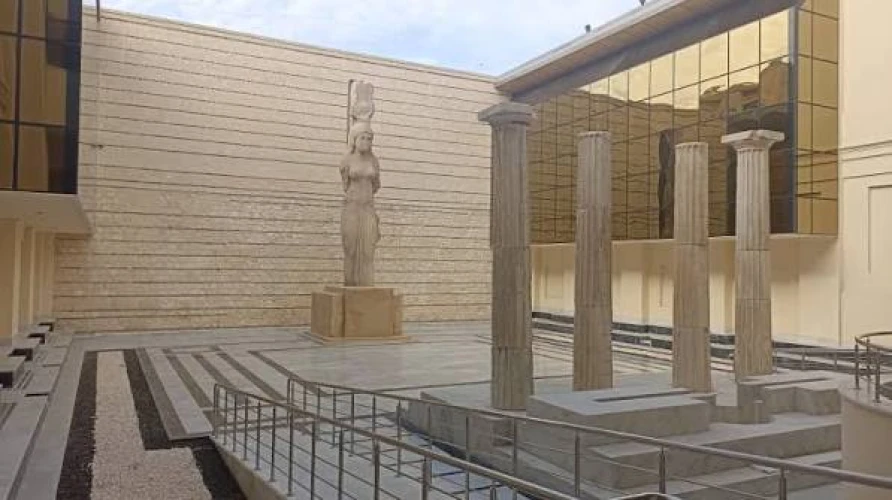
The Graeco-Roman Museum Alexandria
The city of Alexandria is one of the most brilliant centers of ancient culture, science, and art that rose and fell in the Mediterranean region. Founded by Alexander the Great in 332 BCE, Alexandria became a cosmopolitan center of Hellenistic culture, science, and art, and, later, the capital of a Roman province. To exhibit and preserve the great treasures of the material culture of this multicultural society, the Graeco-Roman Museum of Alexandria was founded. Housing thousands of artifacts related to the unique history of Egypt from the era of Alexander the Great to the rise of Christianity, the Graeco-Roman Museum is one of the most renowned archaeological museums of North Africa.
1. Foundation, History, and Architecture
The initial impulse to establish a museum to exhibit the city’s archaeological treasures came up due to the nineteenth-century concern about the ongoing destruction of the ancient urban relics.
A. Origins and Nineteenth-Century Establishing
The establishment of the Graeco-Roman Museum began in the late nineteenth century under the Khedival rule when the authorities realized the necessity to exhibit the great number of archaeological finds unearthed in the course of the city’s modernization. Thus, the museum was founded and first opened its doors to the public in 1892 in an initial location, and then it was moved to its current location – the building of the neoclassical design, inaugurated and completed in 1900. The architecture of the Graeco-Roman Museum of Alexandria reflects the classical simplicity and grandeur of the ancient world: an impressive facade and several exhibition halls are surrounded by a central courtyard.
B. Remodeling, Expansion, and Modernization
In the course of the last century and a half, the museum underwent multiple reconstructions and transformations in order to organize the exposition in keeping with the modern standards of museology. In particular, numerous archaeological excavations carried out by the museum researchers in the city’s harbors, catacombs, domestic village houses and farms, and pagan temples in the course of their explorations of the ancient Alexandria have enriched the museum’s collections. Accordingly, the museum’s interiors and exposition halls have been renewed many times in order to present the visitors with the most comprehensive view of the ancient material culture of Egypt.
2. Multicultural Mixture of Greek Roots and Roman Administration
The permanent exhibition of the Graeco-Roman Museum of Alexandria presents the unique cultural mixture of the ancient Alexandria society, namely, the blend of the ancient Greek and Egyptian cultures with Roman elements that prevailed in the city after its conquest by Octavian in 31 BCE. This blend is called syncretism by historians.
A. Origins and Development of the Ptolemaic Dynasty
The beginning of the cultural history of Alexandria is closely related to the name of Alexander the Great and the Ptolemaic dynasty that ruled Egypt for more than two centuries after the death of Alexander the Great in 323 BCE. The finds presented in the first exhibition halls of the museum illustrate the cultural mixture of the Alexandrian society of that time, when the newly established Macedonian rulers adopted many local Egyptian rituals in order to appear legitimate in the eyes of the native population. Thus, the exhibit includes portrait busts of Ptolemaic dynasty rulers, coins bearing the likenesses of Alexander the Great and his successors surrounded with the symbols of Egyptian mythology, and many other artifacts.
B. The Introduction of Roman Administration
After the defeat of Mark Antony and Cleopatra at the Battle of Actium in 31 BCE, Egypt was formally incorporated into the Roman Empire as the personal possession of the Emperor, ruled by a single equestrian prefect. The exhibit includes numerous artifacts that illustrate the cultural and religious syncretism of the period, such as the busts of Roman rulers, war tools, Roman coins and inscriptions, and many others. Of particular interest are the statues of Roman Emperors made of traditional Egyptian materials, such as basalt and granite, as well as the marble figures of mythological characters familiar to both Greeks and Egyptians.
3. Syncretism in Religion and Gods’ Cults
The religious beliefs of the people of ancient Alexandria were highly syncretic, which is reflected in the wide range of artifacts, on exhibit in the museum. In particular, the religious practices of ancient Alexandria illustrate the tendency toward merging the functions and cults of the Greek and Egyptian gods and the creation of a whole new pantheon of gods, saints, and heroes.
A. Sarapis and His Wide Cult Influence
The most notable example of the syncretism of the Alexandrian religion is the cult of Sarapis – the state god, created by order of Ptolemy I. The exhibit presents a wide range of artifacts, including temple relics, statues, and reliefs, representing the cult of the god Sarapis and his wife, the goddess Isis. According to the Alexandrian mythological tradition, the cult of Sarapis was accompanied by the worship of the most revered gods of Ancient Egypt – Osiris and Apis. On the other hand, the cult of Sarapis is also attributed to the Greek gods – Zeus, Hades, and Dionysus. Interestingly, the images of the Greco-Egyptian gods in the museum collection are characterized by the classical simplicity of the artistic shapes, typical of Greek sculpture.
B. Popular Gods and Temples
In addition to the state gods and goddesses, the residents of ancient Alexandria worshiped a variety of local gods and saints. Many artifacts from the museum’s collection, including the household idols of various gods, reflect the popularity of the ancient religious beliefs and practices among the Alexandrians. Among the exhibits, one can find numerous artifacts related to the domestic religious practices of the Alexandrians, such as ancient stone amphorae, jewelry made of gold, precious and semi-precious stones, bronze cosmetic mirrors, ivory hairpins, bead jewelry, and many others.
4. Daily Life, Goods, and Tools
The artistic and material culture of ancient Alexandria is presented in the museum with the help of a large collection of artifacts related to the domestic life of the Alexandrians of different classes and social statuses.
A. Households and Popular Domestic Life
The collection presents the daily life of the people of ancient Alexandria in all its variety and details – from the intricacies of the domestic architecture of the Alexandrian residents to the personal belongings of the common people. In particular, the findings from the excavations of the ancient houses, cemeteries, and towns of Alexandria include many artifacts that reflect the domestic life of the Alexandrians of different classes and social statuses. Among the exhibits, one can find a great variety of amphorae, oil lamps, and glassware, representing the ancient industries of the Alexandrian glassblowers, potters, and jewelers known throughout the Mediterranean region. The collection also includes many artifacts made of gold, such as earrings, rings, mirrors, hairpins, and beaded jewelry, which reflect the personal adornment and jewelry-making traditions of the Alexandrians. Besides, the collection includes many artifacts reflecting the domestic architecture and structural details of the Alexandrian dwellings of different social classes.
B. Ancient Trading and Nautical Trade Activities
Being a major commercial crossroads between the Mediterranean and the Nile valley, ancient Alexandria was the center of the trade of the region. The collection of the Graeco-Roman Museum includes many artifacts that witness the commercial role of ancient Alexandria in the economy of the Roman Empire and beyond. In particular, the collection includes many artifacts related to the maritime trade of ancient Alexandria, such as anchor stones, fittings of lead, and amphorae from the harbors of ancient Alexandria, representing the commercial connections of the city with the countries of the Mediterranean and Black Sea regions.
5. Burial Practices, Graves, and Coffins
The ancient Egyptian beliefs and customs regarding death and the afterlife were of particular interest to the ancient Greeks and, later, the Romans. In ancient Alexandria, the traditional Egyptian practices of burying the dead were combined with the Hellenistic and Roman customs of decorating the tombs. The collection of the Graeco-Roman Museum includes many artifacts that reflect the Alexandrians’ attitude toward death and the afterlife.
A. Burial Customs and Mummy Masks
The traditional Egyptian practice of embalming the bodies of the deceased continued to be widespread among the Alexandrians despite the opposition of the Greeks and Romans. However, the Alexandrians modified this procedure by decorating the mummies with classical Greek masks. The collection of the Graeco-Roman Museum includes many artifacts related to the Alexandrian burial customs, such as various mummy masks and coffins, grave stelae, sarcophagi, and many others.
B. Necropolises and Catacombs
Ancient Alexandria was famous for its necropolises and catacombs where the residents of the city were buried according to their religious beliefs. The collection of the Graeco-Roman Museum includes many artifacts related to the Alexandrian necropolises, including the Kom el-Shoqafa, the Mustafa Kamel Necropolis, and the Chatby Necropolis. In particular, the exhibits include a variety of stone jars, tables, and couches, as well as numerous artifacts related to the burials and tombs of the Alexandrians of different social classes and nationalities.
Conclusion
The Graeco-Roman Museum of Alexandria is a true sanctuary of humanity’s rich and diverse cultural history. Housing the great treasures of the material culture of ancient Alexandria from the time of Alexander the Great to the rise of Christianity, the Graeco-Roman Museum has unique collections of classical sculptures, syncretic religious relics, precious jewelry, household goods, and many other artifacts. These artifacts help the modern scholars and visitors to the museum to appreciate the cultural and historical legacy of one of the most renowned ancient multicultural societies in human history. The cultural and material wealth of the ancient Alexandria, reflected in the vast collections of the Graeco-Roman Museum, continues to fascinate the people of today’s world even two millennia after the foundation of Alexandria by Alexander the Great.