
 English
 Italy
Italy
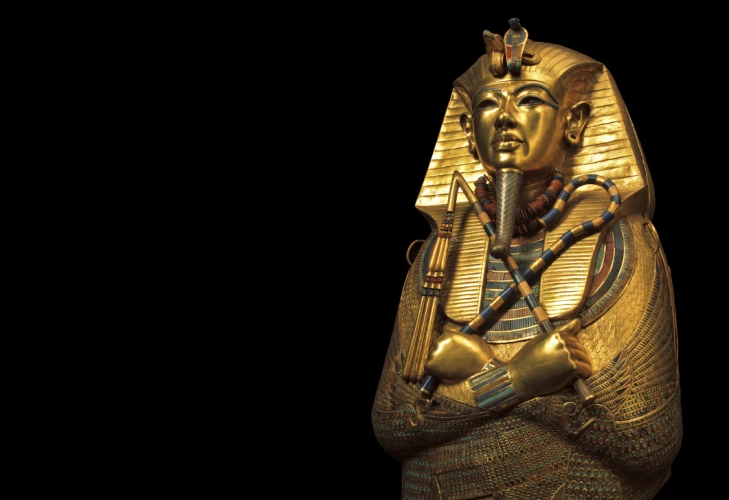
The Golden Legacy: Why Tutankhamun Still Rules the 2026-2028 Travel Season
The Golden Legacy: Why Tutankhamun Still Rules the 2026-2028 Travel Season
The humidity and heat of Valley of the Kings on November 4 1922 created conditions that made a water boy discover a stone step. The most important archaeological discovery in human history started when one person stumbled in the street. But more than a century later Tutankhamun exists today as more than a box containing his mummy. He has become an international brand which maintains an enigmatic presence that people must discover because he serves as the primary attraction for luxury travelers who explore Egypt's ancient heritage.
The "Boy King" exhibition has reached its peak during the 2026 2027 and 2028 seasons according to current travel trends. The Grand Egyptian Museum (GEM) presents cutting-edge exhibits while researchers study Tutankhamun's family background to create a new version of his life story.
From "The Heretic’s Son" to Restoration King
Tutankhamun's character requires examination of the chaotic situation which he received as his royal obligation. The father of Tutankhamun had brought Egypt to a state where civil war between religious groups and social factions had become imminent. The temples were closed, the old gods were banned, and the economy was in a tailspin.
Tutankhaten assumed control of the Egyptian throne at nine years old when he began his reign as king in 1332 BCE. The Egyptian establishment used him as their child king until they installed him as their leader. His name change to Tutankhamun occurred after three years because it represented his father's death and the restoration of Egypt's traditional practices.
The Great Restoration Decree
The most significant political action Tutankhamun performed through his military activities. His "Restoration Decree" which he documented on a large stone stela served as an apology for the "chaos" which had occurred during the previous rule. He restored temple operations by bringing back priests and he used gold to support the worship activities of ancient deities.
The Result? He brought stability to the empire. His reign established a crucial link that prevented the 18th Dynasty from complete destruction.
The Man Behind the Mask: New Scientific Revelations
The world believed Tutankhamun to be a fragile sickly child for multiple decades. Modern forensic technology together with virtual autopsies have established a more intricate depiction of his life.
Health and Physicality
The King faced multiple difficulties according to recent CT scans and DNA analysis results.
A Genetic Cocktail: His parents were siblings a common practice in the royal bloodline to "keep the blood pure" which resulted in a clubfoot and a slight cleft palate.
The Warrior Myth: He used 130 walking sticks which were found in his tomb even though his physical health prevented him from standing. His tomb contained both weapons and chariots that had visible damage from their previous use. New theories suggest he wasn't just a bystander in ceremonies but may have participated in hunts or low-stakes military parades.
The Final Blow: The cause of death remained a mystery for 3,000 years. Was it murder? A blow to the head? Current evidence indicates that the person died because of serious malaria and a broken leg which became deadly after chariot fall.
Howard Carter’s "Wonderful Things"
The discovery itself unfolds as a narrative which resembles a Hollywood movie. Howard Carter who worked as a British archaeologist and Lord Carnarvon who belonged to the aristocracy entered their final season of financial support. They almost reached their stopping point when they discovered the entrance to KV62.
"Initially I observed nothing because hot air from the chamber created candle flame disturbances which blocked my view but after some time my eyes adapted to the existing light and I started to see the various components of the room which had been hidden behind the initial darkness. The room contained strange animals and statues and gold which scattered everywhere produced a luminous effect."
— Howard Carter, 1922
The Anatomy of the Treasure
Tutankhamun's tomb existed as a small burial site because he died unexpectedly so his grave functioned as a converted noble's burial site. The site remained secure from looters because it hid underneath debris which fell from a later tomb.
Artifact Significance
The Gold Mask 10kg of solid gold; the universal face of Ancient Egypt.
The Iron Dagger Made from a meteorite which demonstrates the "otherworldly" technological capabilities of that time period.
The Golden Throne A rare leftover from the Amarna period which shows the King and his wife under the Aten sun.
The Canopic Jars Exquisitely carved alabaster which contains his internal organs.
The "Curse" and the Media Frenzy
The "Curse" functions as the most effective marketing tool for boutique travel experiences and documentary films. The international media network started their obsessive coverage after Lord Carnarvon died from an infected mosquito bite which happened immediately after the tomb's opening.
The Reality? Howard Carter lived to be 64. The majority of attendees at the opening ceremony enjoyed long lives which lasted until their natural deaths. The Times newspaper established the "curse" as a means to protect their exclusive news report from being published by competing newspapers. The tomb contains an actual "curse" which consists of ancient spores and bacteria that present no danger to modern travelers or archaeologists.
The period from 2026 to 2028 will become the ultimate time period to experience the "Tut" exhibit. The next upcoming years will provide international tourists with their best chance to view these artifacts from ancient times. High-end itinerary curation now centers on "experiencing a legacy" instead of "seeing a mummy" because this new approach delivers superior results.
1. The Grand Egyptian Museum (GEM)
The GEM museum stands at the base of the Giza Pyramids as the largest archaeological museum which displays artifacts from one civilization. The dedicated exhibition space will showcase all 5000 artifacts from Tutankhamun's tomb for the first time in history. This location will serve as the main attraction for all Egyptian tourists visiting during the late 2020s.
2. The Valley of the Kings (KV62)
The King's body remains in his original tomb located at Luxor while the treasures stay in Cairo. The boy king burial chamber provides visitors with an intense human experience which no museum display can match.
3. Luxury River Cruises: The Royal Path
The 2026-2028 travel trend will lead to travelers who prefer "Slow Travel" as their primary mode of transportation. The traditional Dahabiyas and the modern ultra-luxury fleets of boutique river cruises offer travelers the opportunity to navigate the Nile between the Tutankhamun life and death sites which follow the same route as his funeral procession.
Why He Matters Today
The teenage king who ruled for nine years 3300 years ago continues to attract our interest.
Tutankhamun provides a human representation of historical events. He wasn't a god-like conqueror like Thutmose III; he was a young man caught between a radical father and a traditionalist priesthood. He loved his wife, he struggled with his health, and he died before he could truly leave his mark—yet, in his death, he became the most famous face of his civilization.
Modern travelers who visit his sites obtain two lessons about power: its temporary nature and art's lasting presence. The "Boy King" remains the ultimate destination for travel planning because we approach the 2028 travel horizon.





-webp.webp "Hilton")
-webp.webp "dusit")
-webp.webp "Marriott Hotels")
-webp.webp "Azimut Hotel")
-webp.webp "Golden Tulip")
-webp.webp "sheraton")
-webp.webp "westin hotel")
-webp.webp "Movenpick")