
 English
 Italy
Italy
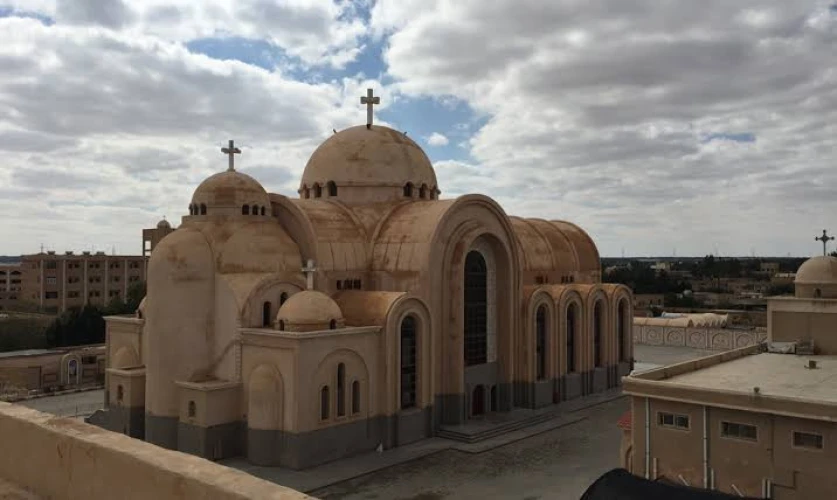
The Four Monasteries of Wadi El Natrun: Complete Visitor Guide
Deep in Egypt’s western desert, on the road between Cairo and Alexandria, lies a quiet depression called Wadi El Natrun. Otherwise known as the Valley of Natron, this desert region has been the source of salt lakes for centuries. This fertile ground has been blessed by the Holy Family, as it was their road to Egypt. According to tradition, when the young Jesus, his mother Mary, and adoptive father Joseph passed through this area, they blessed the valley and it flourished. This gift bore fruit in the 4 th century AD, when St. Macarius the Great appeared and began building the first ever monastic settlements. Drawn by the uncharacteristic peace of the desert, thousands of monks arrived, building underground hermitages and rock churches. And today there remains 4 medieval Coptic Orthodox monasteries, where you can still witness ancient Egyptian hospitality. Here is everything you need to know before visiting the Wadi El Natrun Monasteries.
1. The History of Desert Monasteries
Prior to building whole monastic cities, the earliest Christian monks wandered the desert, living as hermits in caves and underground shelters. This was the lifestyle that St Macarius the Great chose for himself and many others, as he journeyed from village to village spreading the word of God. However, as the numbers of these desert dwellers grew, so did the threat that they would be attacked by nomads. As a solution, the monks banded together to build fortified monasteries.
This is the architectural design that you will see in every one of the Wadi El Natrun’s monasteries:
The High Outer Walls
These walls of immense height (up to 12 meters) and thickness (up to 5 meters) encircled churches, living quarters, water wells and gardens. They formed a solid defense against the nomads who plagued the desert.
The Keeps – The Castle Inside your Monastery
Inside every monastery’s courtyard, there is a castle, otherwise known as Al Qasar. They could be reached only by a wooden drawbridge on the top of the keep’s walls. In case of an attack, the monks would retreat into the keep, draw up the bridge, and wait for the attackers to leave. Inside you will also find water wells, storerooms and even a chapel on the roof.
2. What to Know About Every Monastery in Wadi El Natrun
Every one of the four still inhabited desert monasteries has its own unique charm and collection of artifacts. But if you are planning to visit more than one, remember that none of them have any particular arrangement for tourists. You will need to ask permission to enter any of their premises and follow their monastic rules, so it’s best to know what to expect beforehand.
1. The Monastery of St. Bishoy (Deir Anba Bishoy)
The Monastery of St. Bishoy is the most popular and visited of them all. Hundreds of thousands of Copts make their way to this desert monastery complex every year. Bishoy was a 4 th – century saint and anchorite who built his hermitage on this spot. He was known to perform incredible feats of endurance and faith, in order to bring people to Christ.
The Church and its Holy Well
The central church is surrounded by an amazing walled garden, where the well is said to have been dug by the Holy Family. This well was also blessed by St. Bishoy, after which it healed a poor traveler of his ailments. He would later reveal himself to be Jesus. The main church is home to the body of St. Bishoy, who is said to have been buried in an ancient wooden tube.
The Medieval Castle Keep
One of the best-preserved medieval keeps in Egypt can also be found on the grounds of this monastery. There are plenty of ancient artifacts to see, including the 29-chamber storeroom and a chapel of the Angel Michael on the roof. The drawbridge was used to great effect, and you can still see the mechanism that raises and lowers it.
2. The Syrian Monastery (Deir el-Suryan)
The next in line is the Syrian Monastery, which is located right next to St. Bishoy’s. This monastery was built in the 6 th century by monks from Syria, who came to Egypt to study the Coptic tradition. It is also considered to have one of the most impressive collections of early Christian art.
The Church of the Virgin Mary
Inside the Church of the Virgin Mary you will find some of the best-preserved 8 th -century frescoes and stunning wall paintings. These depict the Annunciation, the Birth of Mary and the Dormition. They were hidden behind the layer of soot from countless candles, until they were painstakingly cleaned.
The Tree of St. Ephrem and the Library
Within the courtyard of the monastery there is a tree that stretches its branches overhead like an umbrella. It is said to have grown from the staff of St. Ephrem the Syrian, after he planted it in the ground. Furthermore, this monastery used to boast one of the world’s largest libraries, with many rare Syriac, Coptic and Arabic manuscripts. They can still be found in many international libraries today.
3. The Monastery of El-Baramus (Deir El-Baramus)
This is the northernmost and possibly the oldest of the four monasteries. Deep in the heart of the valley lies El-Baramus, an ancient settlement of the 340 AD, founded by St. Macarius the Great. It was called the Monastery of the Romans, after the two Roman prince-hermits, Maximus and Domatius, who died as anchorites here.
The Monastery of the Romans
Perhaps one of the liveliest among the desert monasteries, El-Baramus offers a great opportunity to view authentic artifacts. Its main church is home to stunning 13 th -century rock-hewn columns. You will also find medieval wall paintings and even an underground chapel, built right over the early Christian hermitages.
4. The Monastery of St. Macarius (Deir Abu Makar)
Further south lies the fourth and last among the Wadi El Natrun’s monasteries. This is the Monastery of St. Macarius, which has provided the Coptic church with popes, poets and philosophers for centuries. It was also the place where St. John the Baptist and the Prophet Elisha were found, in the late 20 th century.
The Monastery’s Sacred Relics and Medieval Churches
St. Macarius’s Monastery is one of the biggest in Egypt. With three medieval churches and a three-story castle keep, it offers great insight into how the early Christian monks might have lived. The castle keep holds the ancient chapels of the Angel Michael. In addition to that, the keep also boasts three floors of fascinating artifacts. The underground chapel is a must-see for all visitors.
3. Everything Else You Need to Know Before Visiting the Wadi El Natrun Monasteries
If you are wondering how to plan your Wadi El Natrun Monastery tour, we have a few helpful hints:
Where to go
The Wadi El Natrun Monasteries are located on the road between Alexandria and Cairo. The trip from Cairo takes about 2 hours and 30 minutes. The valley is around 110 km from Alexandria and 100 km from Cairo. The easiest way to get to the monasteries is to hire a car or join an organized tour.
When to go
The best time to visit is between October and April. The desert weather is pleasant during these months. We recommend arriving at the monasteries around 9 am, so that you have enough time to visit two.
What to wear
The monasteries are all places of prayer and asceticism. As such, they require you to dress modestly. Your shoulders and knees should be covered at all times. Additionally, men are asked to remove their hats inside the churches and speak quietly at all times. Do not forget to ask for permission before photographing any monks.
What to see
The monasteries are open to visitors daily, but remember that access to individual churches or keeps may be restricted at times.
Visiting Hours
The hours of operation may vary from one monastery to another and from one day to the next.





-webp.webp "Hilton")
-webp.webp "dusit")
-webp.webp "Marriott Hotels")
-webp.webp "Azimut Hotel")
-webp.webp "Golden Tulip")
-webp.webp "sheraton")
-webp.webp "westin hotel")
-webp.webp "Movenpick")
