
 English
 Italy
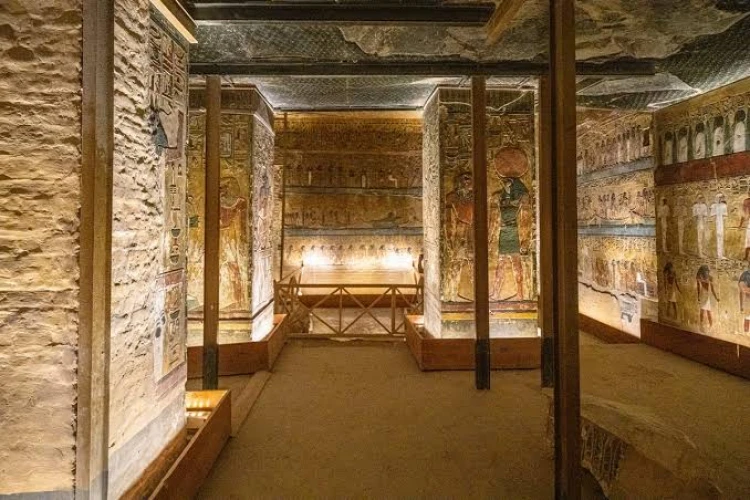
The Crypts of Ancient Egypt: Subterranean Sanctuaries of Mystery and Eternity
The architectural development of ancient Egyptian temples is characterized by a variety of monumental pylons, impressive hypostyle halls, and serene innermost sanctuaries. Nevertheless, the late dynastic, Ptolemaic, and Roman periods’ temples possess a particular ancient edifice, dedicated to a specific purpose and called the mammisi, from the Coptic word for birth. The diminutive temple of the deity birth was a unique structure surmounting the intersection of royal power with a godhead and architectural mastery. Indeed, the marvel of later Egyptian architecture, dedicated to a young god who is a son of a distinguished triad, is one of the most outstanding innovations.
1. Architecture and Evolution of the Mammisi Temples
Although the concept of divine birth has been a sacred notion since the dawn of ancient Egypt, when the Pharaohs were regarded as the sons of a god Amun or Ra, the dedicated structures to this idea appeared in a much later period.
A. Transient Booths, Sacred Constructions of the New Kingdom, and Permanent Temple Edifices
Traditionally, the ceremonies and festivals in honor of the godly birth took place within the walls of the great temple complex, more specifically, in a wooden booth or small tent belonging to the main sanctuary of the locality. Nevertheless, in the Saite and Persian period and especially during the Ptolemaic and Roman era, this ritual site was transformed into a large-scale stone building, erected separately from the temple.
B. Mammisis Temples’ Prime Examples
There are several remarkably preserved examples of small-scale edifices of this category, which allow modern researchers to reconstruct the original structure of these sacred sites, primarily:
Dendera – the Mammisi temple was constructed by Nectanebo II and later expanded by the Roman Emperor Augustus, located near to the Hathor’s temple.
Edfu – the Ptolemaic example of the edifice with a set of well-preserved vibrant polychrome reliefs, situated near the Horus’ temple.
Philae – the Mammisi dedicated to the goddess Isis, famous for its outstanding elegance and prime colonnades, overlooking the Nile waters.
Kom Ombo and Armant – other architectural testimonies of the structure’s presence in ancient Upper and Lower Egypt.
2. Architecture of the Mammisi: An Overview of the Externally Facing Colonnades
The layout of the small temple, exclusively dedicated to the godly birth, was designed to create a distinction between the outer colonnade’s architecture and the one of the inner sanctuary of the main temple complex.
A. A Distinct Peripteral Design of the Sanctuary
In contrast to the conventional ancient Egyptian architecture, where large stone walls surrounded and enclosed the temple complex, the standard peripteral design of the first temples of this category built during the Ptolemaic and Roman epochs used an open colonnade of pillars, connected by low balustrades or curtain walls.
Moreover, this architectural feature of the Mammisi sites, open to the sunrays and air, was designed to represent the association of the godly birth and universal joyfulness. The columns’ capitals were superbly carved, depicting the open papyrus umbel and a lotus flower, as well as the beauty of the goddess Hathor, whose image was highly revered in the ancient Egyptian society.
B. The Inner Structure Sanctuaries and Their Meaningful Imagery
While the architecture of the outer walls of the temple complex depicted a variety of mythological subjects, the inner sanctuaries contained a small core of the pronaos (vestibule) and naos (chamber). The latter, the enclosed chamber, was a site of the central mystery of the sanctuary, symbolizing the birth goddess’ suffering during her journey through the narrow passageways. The images of protective house spirits, minor gods, and divine midwives decorated the walls of the chamber.
3. Mythological Meaning of Religious Architecture
The prime objective of the architectural and sculptural projects in the ancient Egyptian temples was to celebrate the perpetual birth of gods.
A. The Temple’s Divine Triads and Gods’ Offspring
For every grandiose temple complex, there existed the notion of the divine family or a triad, which consisted of a father god, a mother goddess, and their son:
At the Dendera temple, the Mammisi’s ceremonies were dedicated to the godly birth of Ihy (or Harsomtus), a son of the Hathor goddess and Horus of Edfu.
While the Edfu’s temple’s mammisi was built in honor of the son of Hathor and Horus, namely, Harsomtus (Horus the Uniter).
At the Philae’s temple, the Mammisi complex was devoted to the memory of Harpocrates (the Child Horus), a son of the goddess Isis and Osiris, the god of the Nile.
Thus, at every annual festival held in these sacred sites, the priests and priestesses recreated the mythical story of the creation of the world and the birth of gods to symbolize the perpetual rebirth of the universe.
B. Political Legitimacy and Mammisi’s Role in Validating the Power of the Pharaohs
At the same time, the political significance of the small-scale temple dedicated to the godly birth, the Mammisi, was equally important. According to the ancient Egyptian religion, each living Pharaoh and later the Roman Empire’s emperors could be considered the son of a god on Earth. Particularly, the reliefs carved on the walls of the Mammisi complex illustrated how the supreme god united with the queen or goddess to give birth to the child, after whom the young Pharaoh was chiseled on the potter’s wheels by the god Khnum and presented to the gods. Thus, the rituals and architecture of the Mammisi complex helped the foreign rulers legitimize their position in the ancient Egyptian society, increasing their religious authority and popularity among the local population.
4. Artistic Projects: Polychrome Paintings Depicting a Variety of Family Imagery
The wall carvings and sculpted figures within the premises of the Mammisi temple complexes were masterpieces of the late ancient Egyptian architectural and artistic traditions, distinguished by the vividness of subject matter.
A. Goddesses’ Nurturing and Offspring Protection Imagery
On the walls of the inner sanctuaries, in contrast to the grim and solemn pylons of the great temple complexes, were the amiable images of mother goddesses, such as Hathor, Isis, and the hippopotamus-headed goddess Taweret, nursing and protecting the little god born during the Mammisi’s ceremonies.
B. The Colorful Frescoes and Wall Paintings
Due to the protective walls of many temple complexes, enclosed within the walled courtyard, numerous colorful ancient Egyptian paintings have survived to the present times, enabling the modern scholars to learn more about the artistic traditions of the ancient Egyptians. A variety of vivid colors, such as Egyptian blue, malachite green, golden yellow, and red ochre, were used to paint the scenes with the gods’ and goddesses’ families on the stone walls of the temple complex.
Conclusion
The unique Mammisi temples, portraying the ideals of ancient Egyptian beliefs, reflected the nation’s historical, artistic, and architectural development. These sanctuaries, serving as a reminder of the divine birth of young gods, from the distinguished triads, were constructed in the late dynastic, Ptolemaic, and Roman periods. The open colonnade surrounding these edifices decorated with exquisite carvings and reliefs, the inner sanctuaries with their distinct imagery, and the colorful frescoes depicting the family life and the nurturing goddesses were the most prominent features of the Mammisi’s architecture. This distinctive temple model, emphasizing the perpetual rebirth of gods, became an integral part of the local community, both among the foreign rulers and the ancient population, to whom the Pharaohs of Egypt were sacred.