
 English
 Italy
Italy
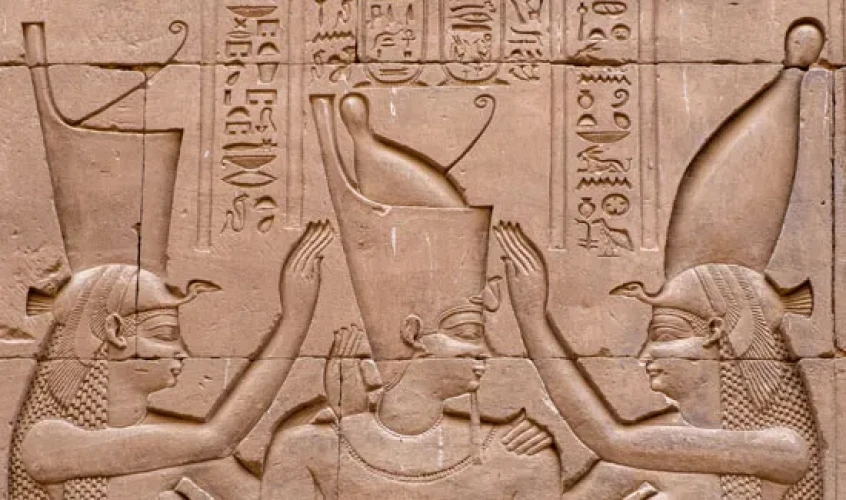
The Crowns of Ancient Egypt: More Than Just Royal Headgear
The moment you enter a temple through its dark corridors or you observe the massive Pharaoh statue, your attention goes to the headgear which the statue displays. People in Ancient Egypt considered a crown to be more than just a headpiece. The crown functioned as a religious declaration and a national demarcation and a connection to the divine. For the modern traveler, learning to distinguish between these crowns is like learning to read a secret code; it tells you exactly where the King was, what role he was playing, and which gods were backing him. New Travel Dynamics takes pleasure in discovering every minor aspect that transforms a "ruin" into an interactive narrative. The most famous crowns which you will see during your upcoming trip will be explained through our analysis.
The Deshret: The Red Crown of the North
The "Deshret," or the Red Crown, represented Lower Egypt (the Nile Delta). The crown has an easily identifiable appearance because of its flat top and its special long curly wire that people call "khabet." The Red Crown in reliefs shows a Pharaoh's control over the Delta's Mediterranean-facing lands. The crown which represents fertility has strategic significance and is connected to the goddess Neith.
The Hedjet: The White Crown of the South
The "Hedjet" White Crown of Upper Egypt represents a direct opposition to the Red Crown. The crown which resembles a high rounded miter demonstrates the geographical features of the Southern region which consists of mountains and deserts. The vulture goddess Nekhbet provided protection for the goddess. The White Crown which appears on a statue at Luxor or Aswan establishes an immediate connection to the ancient Egyptian royal homeland where the Nile runs through its narrow granite canyons.
The Pschent: The Power of the Double Crown
The "Pschent" which people commonly call the Double Crown stands as the most recognized Egyptian royal headdress. This was the ultimate symbol of "The Two Lands" (Upper and Lower Egypt) united under one ruler. By placing the White Crown inside the Red Crown, the Pharaoh made a bold political statement: "I am the lord of the entire Nile." The crown stands as a masterwork which uses symbols to demonstrate that ancient Egyptians believed in achieving harmonious balance between two opposing forces which they considered essential for existence throughout all their temples from Memphis to Philae.
The Khepresh: The Blue War Crown
The New Kingdom reliefs show bright blue helmet-shaped crowns which appear during the military reigns of Ramses II and Thutmose III. The War Crown which gets called the Khepresh exists as a headpiece. The headpiece existed for military use and victory celebrations and religious processions, as soldiers wore it. The representation shows Pharaoh as an active leader who protects Egypt's borders. This crown represents the most contemporary appearance among all ancient crowns for most travelers.
The Atef: The Crown of the Afterlife
The "Atef" crown served as a sacred headpiece which connected to the divine. The headpiece resembles the White Crown design which features two large ostrich feathers and a small sun disc as its crown. The Pharaoh wears the Atef crown in his religious rituals which show him as a dead king who reached everlasting life. The crown serves as a symbol of resurrection and spiritual power which appears in the tomb paintings that decorate the Valley of the Kings.
The Nemes: The Iconic Royal Headdress
The "Nemes" serves as the most recognized royal symbol in the world because it creates a distinct image for Egyptian royalty through its association with King Tutankhamun's mask. The Nemes functioned as the standard headwear for royals because its design included blue and gold stripes and shoulder-length "lapets" that dropped down. The King used this item to represent his solar powers and his duty to safeguard his subjects. The golden light of the Egyptian Museum creates an everlasting experience of seeing the Nemes for visitors.
Why These Details Matter for Your 2026 Journey
New Travel Dynamics requires people to observe historical events through their smaller historical details which they consider as their essential historical elements. The distinction between Deshret and Khepresh lets you experience the wall art through an advanced method that most visitors cannot access. The exhibition space which displays statues creates a detailed story which combines political elements with religious themes and personal identity development. The expert guides show visitors locations but they also provide training on how to observe everything.
Experience the Majesty with New Travel Dynamics
The period between 2026 and 2028 will see us develop exclusive tours which will concentrate on the "Art of the Pharaohs" theme. The historical background we provide enables visitors to understand every aspect of Abu Simbel's giant sculptures and Abydos's concealed chapels. The ruins we present to you come with the complete histories of the people who wore these crowns and made significant impacts on human progress.
Ready to Step into the Story?
Egypt is a territory which possesses voice for every stone and secret for every crown. The southern region of Egypt contains hidden details which New Travel Dynamics will show you. Our expedition will create an unforgettable experience which connects modern travelers with ancient times while showing them authentic Egyptian culture. Your journey into royal territory starts at this moment.





-webp.webp "Hilton")
-webp.webp "dusit")
-webp.webp "Marriott Hotels")
-webp.webp "Azimut Hotel")
-webp.webp "Golden Tulip")
-webp.webp "sheraton")
-webp.webp "westin hotel")
-webp.webp "Movenpick")
