 EN
 IT
 ES
 FR
 ZH
The Concept of Divinity in Ancient Egyptian Civilization
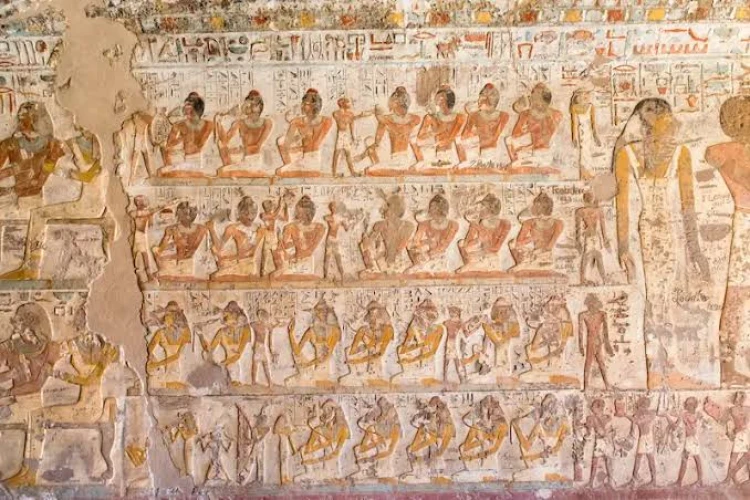
Understanding the culture, art and architecture of Ancient Egypt starts with understanding the concept of 'God’ within Ancient Egyptian culture. Unlike today, Ancient Egyptians didn’t see a clear separation between creator and creation. Instead they saw a very real, active God that was part of everything including the cosmos, nature, animals and humanity.
When exploring the Ancient Egyptian beliefs around their Gods, the role of the Pharaoh and the ‘Divine nature’ within nature you can begin to make sense of the amazing sculptures, carvings and hieroglyphics found throughout Egypt.
1. Understanding the Nature of Netjer – What did the Ancient Egyptians mean by ‘God’?
The Ancient Egyptian word for God/Deity was Netjer (plural Netjeru). They saw these Gods as any source of divine power, energy and cosmic force. These all created order, life and structure within the universe.
Ancient Egyptians saw their Gods as:
Immanent – They saw God in the natural world all around them. The sun shining fiercely at midday, the Nile flooding every year, the stars in the night sky, the fertile black soil of the river and the fierce mother protectiveness of the lioness.
Fluid & Syncretism – The Ancient Egyptian gods had no set identity. Deities could combine together temporarily or permanently. For example Amun (hidden wind and creator) combined with Ra (visible sun) to create Amun-Ra. Or Ptah combined with Sokar and Osiris to create one powerful God.
Take many forms – Many of the deities could be seen in human form, animal form, a hybrid animal-human form or inanimate object such as pillars, Lotus flowers and the sun disc. The Ancient Egyptians saw these as symbolic images rather than real pictures of the God.
2. Animal Depictions & Divine Manifestations
One of the most iconic parts of Ancient Egyptian art is depicting Gods with human bodies and animal heads. Such as Horus with a falcon head, Thoth with an ibis head and Anubis with a jackal head.
Symbolic – The Ancient Egyptians didn’t worship animals. Instead they saw certain animal traits in nature and related them to divine characteristics. For example the falcon flying high in the desert represented royal sight and dominion of the skies. The jackal roaming the borders of cemeteries became the guardian of the dead. And the Scarab beetle rolling its dung ball represented the sun God pushing the sun disc across the sky.
Living Avatars – Some individual animals with rare divine markings were worshipped while they were alive. Most famously the Apis Bull of Memphis. These animals were seen as living vessels (Ba) for a particular God.
3. Divine Rulership – The Pharaoh was a unique link between heaven and earth. Although the Pharaoh was mortal, the role of Pharaoh was completely divine.
Living Horus & Son of Ra – Once crowned the Pharaoh would become the living Horus (ruler of the skies) and take the title Son of Ra.
Royal Ka – The Ancient Egyptians believed there was a divine, eternal source of energy within the royal family known as the Royal Ka. This would transfer seamlessly from one rightful Pharaoh to the next when they were crowned.
Mediator – As the Pharaoh was both mortal and divine only they could theoretically stand face to face with the Gods within the temple. They would offer Maat (truth and justice) to ensure continued blessings from the deities.
4. Cult Statues
To us the Ancient Egyptians seem to have a lot of statues made of stone and gold depicting their Gods. But to the Ancient Egyptians the statue would have been specially blessed.
Opening of the Mouth Ceremony – When the new statue was made it would go through the Opening of the Mouth ceremony. Priests would purify the statue with water and incense. Then use special tools to touch the eyes and mouth to "wake up" the statue spiritually.
Home of the Ba – Once blessed the statue would become a home for the invisible Ba of the God. The priests would look after the God with daily offerings of hymns, incense, clothes and food.
5. Top Tips
Headdress – Look at the headdress or symbol on top of the head of the God. If there is a throne it will be Isis. If there is a sun disc surrounded by cows horns it will be Hathor. If there are tall double plumes it will be Amun-Ra. And if there is one ostrich feather it will be Maat.
Size & Stance – Look carefully at any scenes where the Pharaoh is standing in front of a God or Goddess. The God/Goddess will always be the same height as the Pharaoh. Often offering the Ankh (key of life) to their nose.
Keep in mind – The golden statues within the sanctuary were homes for the living God. Whereas the statues in tombs were made to be homes for the soul (Ka).
6. Benefits of Understanding the Concept of God
Understanding how the Ancient Egyptians saw God means that their impressive temples and complex hieroglyphics become much easier to understand. You start to see that everything they have created is using a poetic language. From falcon wings to sun discs and royal images they really believed God was close to them. The sun, river and harmony of the world was full of God.