
 English
 Italy
Italy
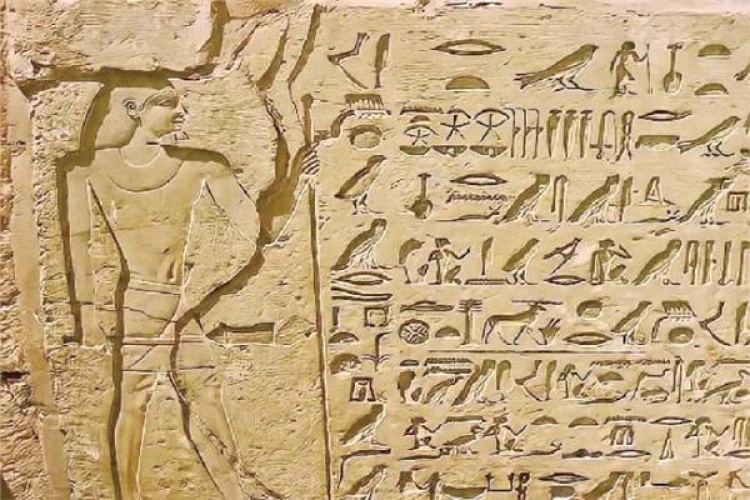
The Coffin Texts: An Important Source of Ancient Egyptian Beliefs
Following the political collapse and social downfalls of the Old Kingdom during the First Intermediate Period (2181-2055 BCE) of devastating droughts, regional civil wars, famine, and loss of the centralized power of Memphite, ancient Egyptian society underwent a massive philosophical and ideological shift. In the Middle Kingdom (2055-1650 BCE), the divine privileges of the king underwent a transformation. The magical spells, hymns, and protective formulas etched only at the underground limestone walls of royal pyramids were adopted, adapted, and painted on the interior wooden covers of the coffins belonging to the provincial governors, local noble class, the wealthy scribes, and the ordinary citizens.
Known to the modern Egyptology as the Coffin Texts, this vast body of literature is one of the most significant sources for studying the evolution of the ancient Egyptian worldview, social democratization, moral philosophy, and geographical understandings of the underworld. Mostly preserved in the provincial cemeteries of Beni Hasan, Asyut, Dayr al-Barsha, and Thebes, the Coffin Texts act as a link between the royal Old Kingdom ideology and the popular democratization of the New Kingdom’s understanding of the afterlife.
1. The "Democratization" of the Afterlife and Social History
To the social historians, the Coffin Texts serve as the primary source material illustrating the significant ideology shift, commonly recognized as the “democratization of the afterlife.”
A. Appropriation of Royal Funerary Privileges
In the Old Kingdom, the eternal resurrection, transformation into an akh (the transfigured, effective spirit form) and ascension to the heavens were uniquely the privileges reserved to the king and his close circle. The common people had only a limited ability to provide themselves with the basic tomb burial, being content with the idea of a shadowy, dusty existence in the silent underworld.
It was the political instability of the First Intermediate Period that unchained the regional governors (nomarchs) and the local bureaucracy from the absolute royal dominance. They demanded the same privileges as the king, and the Coffin Texts reflect this change as the royal first-person pronouns get replaced with the names of the ordinary, provincial elite and middle-class members. Thus, every citizen now claimed the right to become Osiris, get transformed into an akh , and live among the gods forever.
B. Provincial Diversity and Regional Autonomy
Unlike the Pyramid Texts with the highly centralized, Memphite ideological program, the Coffin Texts reflect a wide regional diversity as different scribes and artists chose the spells and painted them on the coffin boards according to the local traditions. Such physical detachment from the royal core serves as a significant source for the Middle Kingdom social history as it illustrates the complete decentralization the Egypt underwent before the complete reestablishment of the political unity by the Eleventh and Twelfth Dynasties.
2. Moral Accountability and the Origins of Ethical Judgement
While the Old Kingdom Pyramid Texts focused on the magical knowledge, passwords, and intimidating rhetoric of the gods, the Coffin Texts introduced a new ethical and moral approach to the afterlife.
A. The Shift from Magic to Morality
The spells incised in the Middle Kingdom coffins explicitly proclaim that magic powers are no longer sufficient to reach the blissful existence in the heavens, and the moral conduct during life determines the fate of the deceased. The spells urge the dead and the bereft to prove to the creator god that their deeds, justice, and humanity had not failed them.
B. Early Precedents of the Weighing of the Heart
Hidden in the Middle Kingdom Coffin Texts (and especially the Book of Two Ways spells), we find the earliest descriptions and illustrations of the moral judgements taking place in the afterlife. The departed souls undergo the ordeals by the gatekeepers and the fearsome demons, who challenge them to declare whether they have fed the hungry, clothed the naked, been just and fair to everybody during their lifetime. This development in the ancient Egyptian worldview, which occurred precisely during the First Intermediate Period, marks the turning point in the history of ethical judgements, as the Middle Kingdom writers record that their society placed a strong emphasis on the importance of personal morality and social responsibility for achieving the eternal, blissful life.
3. The Book of Two Ways: Early Cartography of the Underworld
One of the most astonishing contributions of the Coffin Texts to the ancient Egyptian religious art and literature is the description of the two ways to reach the creator god.
A. The First Illustrated Underworld Map
The middle Kingdom spells (most of which are dated back to the twelfth century BCE) recorded on the wooden floorboards of the coffins from Dayr al-Barsha represent the first known map of the underworld. Painted in bright colors, they depict the two distinctive roads and the lake of fiery water in the middle of the desert landscape divided by the two paths leading to the creator god’s realm. The two routes are lined with the fearsome monsters, various gates, and numerous obstacles the deceased had to navigate and overcome on their way to the divine judgment hall.
B. Psychological and Cosmological Significance
Both the historians of the ancient religions and the modern students of cartography could find the rich material for their research in the Coffin Texts. The Map of the Two Ways in particular demonstrates that the Middle Kingdom thinkers perceived the afterlife as a real place needing the soul’s careful exploration and appropriate mental preparations. The deceased had to answer the gods’ questions and riddles to prove their worthiness of ascending to the heavens.
4. The Metamorphosis of the Soul: Shape-Shifting Spells
One of the most remarkable features of the Coffin Texts is the collection of transformation spells constituting their considerable part and entitled by the Egyptologists as the Spells for Becoming… .
A. Freedom of Movement Across the Cosmos
While the later Books of the Dead depicted the deceased being confined within the tomb chamber or its vicinity, the Coffin Texts provided the dead with the opportunity to transform themselves using the shape-shifting magic. They could turn into the falcon or swallow, the heron or the snake, the crocodile or the lotus flower, the ball of fire or the messenger of the gods, thus having the freedom of movement across the cosmos.
B. Cultural Reflections of Nilotic Ecology
The Middle Kingdom Coffin Texts’ transformation spells give the modern historians excellent insight into the environmental awareness of the ancient Egyptians. The frequent choices of the natural objects, birds, reptiles, and fish inhabiting the Nile Valley as the components of the shape-shifting magic confirm the close relationship between the natural environment and human beings. For the Middle Kingdom writers, the nature was not separated from the people, but, similarly to the modern ecological awareness, it was perceived as an integral part of the universe, brimming with the divine energies and opportunities for spiritual transformation.
Conclusion
A great contribution to the study of the ancient Egyptian worldview, literature, and art is represented by the Coffin Texts, part of which survived from the politically unstable and socially fragmented First Intermediate Period. Mostly consisting of the protective and healing spells, they also contain the rich material for studying the Middle Kingdom transformations in the social and ideological realms. Their wide application, starting from the ordinary people and the provincial governors to the king himself, resulted in the significant “democratization” of the royal privileges and the shift towards the moral and ethical ideals. By being preserved on the wooden coffin covers, decorated with the early maps of the underworld, and including the transformation spells enabling the dead to become the gods’ messengers, the Coffin Texts proclaim the Middle Kingdom’s values and principles of judging the deceased.





-webp.webp "Hilton")
-webp.webp "dusit")
-webp.webp "Marriott Hotels")
-webp.webp "Azimut Hotel")
-webp.webp "Golden Tulip")
-webp.webp "sheraton")
-webp.webp "westin hotel")
-webp.webp "Movenpick")
