
 English
 Italy
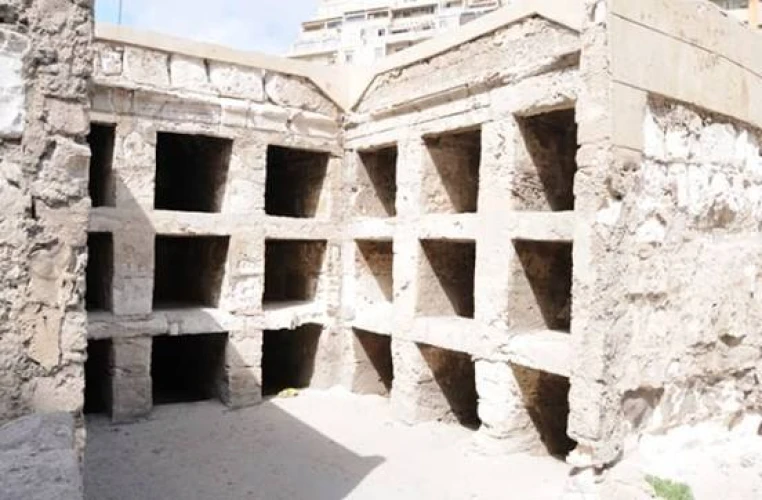
The Cemetery of Shatby: Alexandria's Earliest Hellenistic Necropolis
The discovery and excavation of the ancient city of Alexandria have provided continuous insights into how the early Greek settlers adapted their traditional practices to the different cultural and geographical setting of Egypt, both physically and culturally. One of the historically richest burial sites found in the modern capital is the Cemetery of Shatby. Located on the eastern part of Alexandria, Shatby is the first Greek necropolis to be founded by Alexander the Great in 332 BCE. Shatby is one of the major archaeological repositories that sheds light on the ancient development of early Ptolemaic tomb construction, cultural exchange practices, and the way of life of the first settlers who built the great capital of the Mediterranean.
1. Discovery, Location and Archaeology
The Shatby cemetery is located in the eastern part of modern Alexandria on the coast with the same name. Due to the rapid growth of the city in the late 19 th and early 20 th centuries, many constructions unearthed ancient foundations, statues, and underground tombs hidden by the sandy desert.
A. Early archaeology
The site was explored and excavated by early 20 th century archaeologists, most notably by Evaristo Breccia, the director of the Graeco-Roman Museum of Alexandria. The cemetery was frequented extensively from the late 4 th century BCE to the 3 rd century BCE, coinciding with the rule of Alexander the Great and the early Ptolemaic dynasty of the city (Ptolemy I Soter and Ptolemy II Philadelphus).
B. Geography and architecture
Unlike the deeply dug multi-leveled catacombs of later Roman times (Kom el-Shoqafa), the tombs of Shatby were constructed closer to the surface within the soft calcarenite limestone ridge facing the eastern harbor. The layout of the Shatby necropolis illustrates early urban planning for burial grounds as private family plots, underground chambers, and surface monuments enclosed in walled courtyards. The cemetery’s proximity to the early settlements highlights the permanent residency of the Greek immigrants in the coastal city of Egypt.
2. Architectural Construction and Structures
The architecture of the Shatby cemetery represents the middle ground between the mainland Greek burial construction and the Hellenistic architectural requirements of Alexandria.
A. The rock-cut chamber tombs
The prominent feature of the Shatby cemetery is the rock-cut chamber tomb. Shatby’s tombs were accessed by a stone staircase that led from an open courtyard downward into a subterranean vestibule from which doorways opened into side chambers.
Carved into the walls of these chambers, the masons constructed rectangular niches to receive cinerary urns and bodies, unlike the grand loculus walls of later periods; these tombs were often family vaults designed to accommodate a small lineage of relatives or friends. The stonework bore clean, well-defined lines of classical Greek masonry and used local limestone blocks cut with great precision.
B. Surface monuments and stelae
Apart from the underground chambers, the Shatby necropolis also possessed many surface monuments, altars, and boundary walls. Wealthy families erected carved stone stelae upon the tombs. The early stelae were often painted in bright hues and carved in low relief with scenes of the mourning over the deceased in domestic settings, quiet contemplation, or farewells to family members. Combined with the underground burial chambers, the surface monuments created a sacred landscape in which surviving descendants could gather for annual remembrance rituals and libations.
3. Funeral Customs: Cremation-dominated
The most notable archaeological feature of the Shatby cemetery is the prevalence of cremation over the usual practice of inhumation performed by later Alexandrians during this early Ptolemaic period.
A. Cinerary urns and hydria
The Shatby tomb excavations produced hundreds of ceramic and stone cinerary urns that contained the incinerated remains of the deceased. The most common type of vessels found in the Shatby tombs are painted ceramic hydriae (water jars) from Attic and Alexandrian workshops.
These hydriae were used both for the living and the dead, but upon the death of a person, these vessels were carefully sealed with lead or plaster to contain the ashes of the departed. Many of these urns bore painted inscriptions in Greek script that marked the name of the deceased, their ancestral town or region in Greece, and sometimes even their title or profession.
B. Immigration
The prevalence of cremation in the Shatby cemetery indicates the early demographic composition of the immigrants who built the capital city of Alexandria. The individuals interred in the Shatby tombs were mostly first- and second-generation Greeks who had arrived with Alexander or the early Ptolemies and retained their Hellenic tradition of body incineration. The inscriptions of the urns also indicated the diverse geographical origins of the first settlers of Alexandria in Greece, who hailed from Athens, Corinth, Crete, Arcadia, and many islands of the Aegean Sea.
4. Grave goods, Jewelry, and Material Culture
The excavations of the sealed-off chambers and urns inside the Shatby cemetery produced a wealth of minor antiquities and grave goods that indicate the material culture of the early Hellenistic city.
A. Figurines, Tanagra styles
The Shatby tombs were particularly rich in small terracotta figurines of women draped in fine garments, actors wearing comic and tragic masks and gods like Eros and Aphrodite. These figurines represent the famous Tanagra styles from the Greek mainland adopted by the Alexandrians. These figures were commonly placed in tombs as votive offerings or guardians on the journey to the afterlife.
B. Jewelry, Coins, and Cosmetic items
Personal possessions found in the Shatby burials included gold leaf earrings, bronze cosmetic mirrors, ivory unguent jars, and terracotta oil lamps. Furthermore, the discovery of the early Ptolemaic bronze and silver coins of Ptolemy I Soter provided an accurate chronological dating for the excavation layers, indicating the years of activity of the cemetery. Such commonplace finds illustrate the level of luxury the early settlers of Alexandria could afford even in their death.
Conclusion
The Cemetery of Shatby represents an early foundation of the archaeological study of the ancient city of Alexandria. Being the first necropolis of the city’s early Greek settlers, Shatby depicts the crucial transitional period of the first interactions between the Macedonian conquerors, the native Greeks, and the local Egyptian traditions in the Mediterranean coastal city. Through its architectural construction of subterranean rock-hewn tombs, its preference in cremation urns and painted hydria, its diverse epitaphs of the early settlers, and its fine terracotta artifacts, Shatby preserves the legacy of the people who laid the foundation of ancient Alexandria. The treasures of Shatby are now protected by modern archaeologists who ensure that the memory of Alexandria’s first settlers lives on.