
 English
 Italy
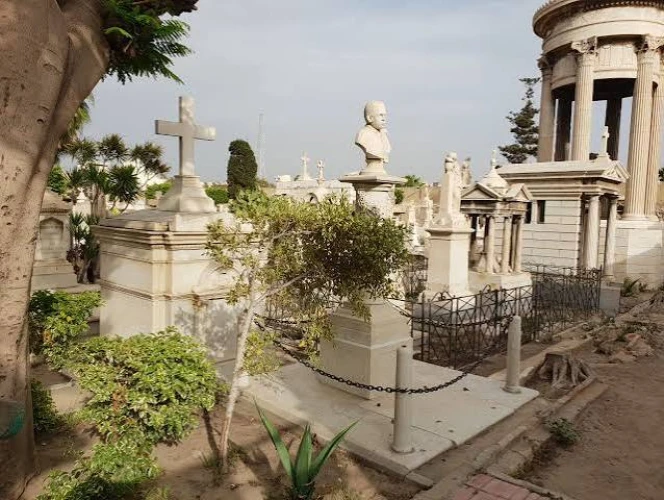
The Cemeteries of the Greeks in Alexandria
When Alexander the Great established the great city of Alexandria on the Mediterranean coast of Egypt in the year 332 BCE, he created an extraordinary mixture of civilizations. Thousands of Greek soldiers, officials, merchants, artists, and mercenaries arrived in Egypt and brought their cultural traditions, religions, and burial customs with them. As these people grew old and died in their new home, they needed burial places. The cemeteries of the Greeks in Alexandria are one of the ancient Mediterranean’s most astonishing finds, displaying a unique mixture of ancient Greek and Egyptian artistic cultures.
1. Introduction to the Hellenistic Necropolises of Alexandria
The ancient Greeks believed that the burial of a person who had lived in the city was a serious matter. According to the traditional view, the dead should be buried outside the city walls in specially designated necropolises so that the ghosts of the dead did not haunt the city and its inhabitants. Fortunately for the ancient Greeks, near Alexandria, there were natural geographical conditions for making rock-cut tombs.
When the Greeks arrived in Alexandria, they were faced with the need to adapt their ancient cultural traditions to the local ones. The indigenous Egyptian culture has its own unique traditions and beliefs about death and burial. The local people practiced mummification. Nevertheless, the newcomers did not follow the local traditions; instead, they made a unique cultural synthesis with the local Egyptian artisans. Alexandrian funerary art and architecture produced a synthesis of classical columns and ancient obelisks.
2. Historical Evolution and Spatial Distribution of the Cemeteries
As the city grew stronger under the rule of the Ptolemaic Dynasty and the Roman Empire, the necropolises extended from the city’s outskirts, forming a ring around it.
A. The East and West Necropolises
Ancient geographers and modern archaeologists conveniently divide the city’s ancient cemeteries into two main categories: the Eastern Necropolis and the Western Necropolis.
The Eastern Necropolis: The Eastern part of Alexandria’s cemeteries is also called the Ibrahimia-Hadra-Camp Caesar Necropolis. This was the favorite place for burial in the early Ptolemaic period. The Eastern Necropolis is famous for its exquisite surface monuments, rock-cut tombs decorated with beautiful paintings, and stunning architectural stelae.
The Western Necropolis: The Western Necropolis extends from the Shatby district and covers several other suburban villages: Minet el-Bassal, Kom el-Shoqafa, and Amriya. Unlike the Eastern Necropolis, the Western one has a large number of rock-cut catacombs, tombs, and underground burial chambers. This part of the necropolis is more local, and it was used by ordinary middle-class Greeks, native Egyptians, and Roman soldiers.
3. Architectural Types and Artistic Innovations
The ancient tombs of the Greeks in Alexandria differ qualitatively from the traditional Greek ones. Given the limited space in the city, the Alexandrians constructed unique tombs with space-saving technologies.
A. Loculus Tombs and Subterranean Chambers
The most widespread tomb architecture in the cemeteries of Alexandria was the loculus tomb. The Alexandrians did not use traditional Greek free-standing monuments; instead, they made remarkable large-scale underground vaults with a corridor. Inside the vault, there were dozens of niches (loculi) in the walls, each of which was designed for one corpse or ashes. After the body or the bones of the dead had been placed in the niche, it was closed with a stone or plaster tile. On these tiles, the name of the dead, his or her homeland, and even profession could be seen. The Alexandrians used this type of multi-family grave because it was less expensive and more practical, as families could share the resting place of a whole generation.
B. Painted Stelae and Classical Reliefs
The Alexandrians also used traditional Greek architectural structures to honor the dead. For simplicity and monumentality, the Greeks erected gravestones (stele) made of stone on top of the underground chamber tomb. The stele was a unique artistic structure with carved reliefs of male heads or scenes from the deceased’s life. This architectural feature gives a rare insight into everyday life in ancient Alexandria. Mostly the stone slabs depict banquets, where family members and dear ones farewelled the dead and participated in various rituals. It is interesting that the Alexandrians used a wide range of colors to paint their steles. Although time claimed its toll, the remains of the vivid reds and yellows still amaze modern scholars.
4. Cultural Syncretism and the Transformation of Death
The unique mixture of burial traditions and practices that the Greeks brought from the mainland and the Egyptians used in Alexandria created a distinctive blend of the cultures’ beliefs about death and the afterlife.
A. The Assimilation of Funerary Deities
When the first settlers arrived in Alexandria, they carried their religious views about the afterworld. The traditional religious beliefs held that after death, the soul left the body and traveled to the underworld ruled by Hades, Persephone, Hermes, and Demeter. Nevertheless, the Greeks encountered many local gods and goddesses in Egypt, such as Osiris, Isis, and Anubis, whose cults were extremely popular among the locals. In the underground tombs of Alexandria, the Greeks and the locals assimilated the attributes of gods and goddesses. For example, the god Hermes, Psychopompos (the conductor of souls), was depicted in the tombs as having dog’s head and ears, a feature typical of Anubis. The same applies to many other gods and goddesses; the images of the Greek underworld gods, priests, and judges had the forms of Egyptian ones.
B. Cremation versus Inhumation
In ancient Greece, the traditional practice was to cremate the dead and to subsequently bury the ashes in a simple earthenware vessel of a specific shape (hydria). When the Greeks settled in Alexandria, they adopted the local tradition of burying the dead. In Egypt, the bodies of the deceased were carefully mummified, prepared for the long journey to the afterworld. On the other hand, the local people sometimes adopted the foreign tradition of painting the face and wrapping the body in linen shroud. The cemeteries of Alexandria bury the evidence of the rich and diverse cultural traditions of the city’s inhabitants.
5. Archaeological Discovery and Modern Preservation
Until the end of the nineteenth and twentieth centuries, the great necropolises of ancient Alexandria were lost and covered with sand. When the Graeco-Roman Museum was founded, and numerous archaeologists began their relentless excavations, the lost cities and villages of the ancient world were gradually recovered. It is hard to realize the effort that went into the tedious work of archaeologists who painstakingly studied the remnants of the past. Today, the Shatby Necropolis, Mustafa Kamel’s tombs complex, or the multi-level catacombs of Kom el-Shoqafa are the objects of historical and artistic research that allow for exploring the life of the ancient world. Moreover, the people of modern Alexandria can visit the ancient underground necropolis and feel the atmosphere of the ancient world.
Conclusion
The study of the necropolises of the Greeks in Alexandria provides precious information about the life of this ancient city. By combining the cultures of the ancient mainland and Egypt, the Alexandrians created a unique funerary art. The architectural structures and artistic buildings made by skilled local artisans have withstood the trials of time and continue to amaze modern scholars. Buried under the modern streets and the bustling activity of the largest northern port of Egypt, these fascinating remnants of the past whisper their ancient stories to those who seek them.