
 English
 Italy
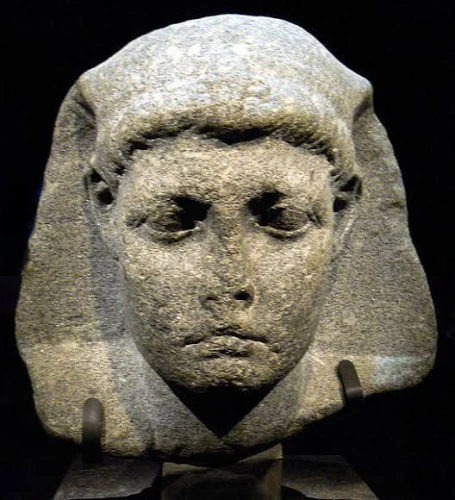
The Caesarion of Alexandria
The ancient city of Alexandria was famous for its beautiful buildings, attractive squares, and magnificent temples. However, there is one monument of a significant historical and political value located in this ancient city. The Caesarion, a temple complex near the ancient harbor, was first built as a great monument to honor the Roman general Julius Caesar. Later, the Caesarion became associated with the legendary Cleopatra and the end of the Ptolemaic dynasty. Let’s explore the origin, development, and present state of this ancient monument.
1. Foundation and Historical Origins
The origin of the Caesarion is closely linked with the political union of the Roman Republic and Ptolemaic Egypt in the first century AD.
A. Cleopatra VII and the cult of Julius Caesar
After Julius Caesar conquered Alexandria in 48 BC and had an affair with Cleopatra VII, the latter wanted to innovate the royal dynasty and adopt new progressive policies. After the Roman general’s death, Cleopatra declared his cult and built the great temple complex dedicated to Julius Caesar in Alexandria. It was named the Kaisareion in Greek.
The main reason to build the great temple was to create an opportunity to openly honor the memory of the Roman general and to establish the image of a caring ruler in the eyes of the people. It is believed that Cleopatra started constructing the great temple complex in Alexandria soon after the general’s death.
B. Completion under the Roman rule
Nevertheless, the temple complex was completed only after Egypt was conquered by the Roman Empire and Augustus became the new emperor. He allowed finishing the construction of the great temple to Ptolemy XII’s daughter as a sign of respect from the Roman Empire to the Ptolemaic dynasty and Julius Caesar.
2. Architecture and Waterfront Location
According to the descriptions of different writers and historians from ancient times, the great Caesarion temple complex was one of the most beautiful buildings in Alexandria.
A. Prime waterfront location
The ancient building complex was located on the territory of modern-day Alexandria, occupying a large stone-paved area on the eastern edge. It is believed that the temple complex was built near the royal harbor to impress the city’s residents and visitors who arrived by sea.
B. Great colonnades, courtyard, and obelisks
The writers described the great temple complex as an open courtyard with colonnades of rare marble and granite stones surrounding it. There were beautiful gardens, pools, and altars for religious rituals. The most remarkable structures at the entrance to the temple complex were the two large obelisks made of pink granite.
They were brought from the capital of the ancient kingdom of the sun, Heliopolis, and were located within the temple enclosure. The obelisks were erected by the Roman authorities to mark the city as an imperial capital and to underline the power and greatness of the Roman Empire.
3. Obelisks or Cleopatra’s Needles
The two large pink granite obelisks near the Caesarion temple complex had a long history.
A. The history of the needles
After the destruction of the great temple complex, the obelisks stood in the middle of the ruins for centuries. They were called Cleopatra’s Needles and could be seen when the city was found by modern archaeologists. In the XIX century, the rulers of Egypt were eager to donate the needles to Western countries.
In 1878, the London authorities received one of the large obelisks. It was transported on the special boat ‘Cleopatra’ through the Mediterranean and Atlantic oceans to London. Today it can be seen on the river bank and is called the Cleopatra Needle. The second granite obelisk was transferred to the city of New York in 1881, on the ship ‘Isis’.
4. Religion and Martyrdom of Hypatia
The great temple complex in Alexandria was famous for its beauty, grandeur, and magnificence. Nevertheless, it played a notable role in the history of the city as a center of religious persecutions.
A. The Christian cathedral
When the Roman Empire became officially Christian, the temple complex of Caesarion was closed. The great church of St. Michael was built on its site. The Christian cathedral became the residence of the Patriarch of Alexandria, one of the most powerful religious figures of North Africa and Egypt. Hypatia, a famous female scholar and philosopher, was assassinated at the beginning of the V century in one of the churches of Caesarion.
B. The history of the martyrdom
At the time when religious wars between Christians and Pagans began, Hypatia was caught in the middle of the conflict between the Roman governor Orestes and the Christian patriarch Cyril. Cyril’s supporters dragged the scholar’s body from her carriage, tore it to pieces, and killed her in the atrium of the Caesarion cathedral. This bloody event became the symbol of the end of the ancient world and the dawn of the Middle Ages in Alexandria.
The ancient temple complex of Caesarion was built by Cleopatra to honor Julius Caesar. It was one of the most beautiful buildings in Alexandria. The temple complex was completed after the reign of the Ptolemaic dynasty and the Roman Empire’s conquest of Egypt. The magnificent colonnades, two large granite obelisks, and a beautiful courtyard were the pride of the city and the symbol of the Roman Empire’s power. The great temple complex later became a Christian cathedral, which was the center of religious persecutions in ancient Alexandria.