
 English
 Italy
Italy
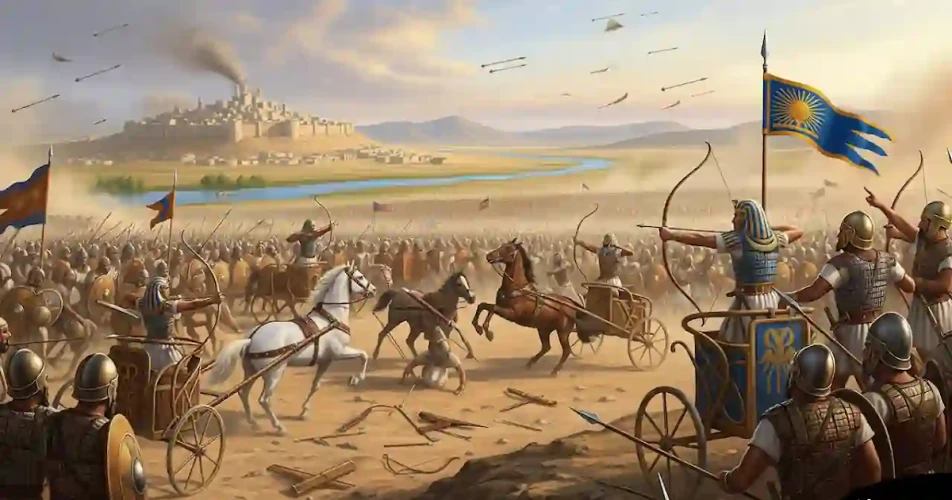
The Battle of Kadesh: Reliving the World’s First Action Epic
The massive Luxor Temple pylons and Ramesseum structures should be treated as more than empty stone mass because visitors should view them as living historical sites. The ancient cinema screen exists as a 3000-year-old historical artifact. Ramses II ruled as Pharaoh while he performed as both director and producer of the most important military historical film in ancient times. The Battle of Kadesh which took place in 1274 BC stands as the most significant combat between Egyptian and Hittite forces because it resulted in permanent changes to world history. The battle serves as the essential knowledge that helps 2026 travelers to Egypt understand both royal heritage and artistic accomplishments and intellectual achievements of the New Kingdom period.
Visual Storytelling: How the Pharaoh "Filmed" the War
Ancient Egyptian artists used these temple walls like a modern graphic novel. The Kadesh reliefs display their content through "simultaneous narration" which presents all war stages in a single extensive view. The wall display presents you with more than a fixed picture because it takes you through a historical progression. The viewer observes Egyptian soldiers advancing in formation followed by the unexpected Hittite attack and then the intense scene of Ramses II entering the battle. New Travel Dynamics maintains that we should explore beyond stone to trace the human elements of these narratives which include soldiers' fear and their charging adrenaline and their close escape relief.
The Ambush at the Orontes: A Near-Fatal Mistake
The Kadesh story starts with an intelligence operation that failed at vital importance. The reliefs show Egyptian officers who beat two Hittite spies to extract truthful information from them. The spies had deceived others by asserting that Hittite forces positioned themselves at a distant northern location while their actual position remained concealed near Kadesh's urban center. The scenes show Egyptian soldiers experiencing genuine fear as Hittite chariots destroyed the Division of Ra. This royal artwork shows an uncommon depiction of the Egyptian army facing weakness which enhances the impact of Ramses' following "miracle" battle.
The "One-Man Army": Ramses II in the Heat of Battle
The Kadesh battle scenes present Ramses II as the main character who attracts all viewer attention. The artist depicts him in combat with enemies by showing him at a greater size while he stands in his chariot with a drawn bow. The "Poem of Pentaur" which is inscribed there tells that Ramses faced 2500 chariots after his soldiers deserted him. He called on his father Amun to help him push the enemy back to the Orontes River. The art creates an amazing visual experience which shows horse movements and the intense struggle of a King who fights to protect his life and his legacy according to modern historians.
Technology on the Field: Chariots and Tactics
The Kadesh reliefs serve as a valuable resource for people who enjoy studying historical technicalities. The two superpowers exhibit their distinct engineering characteristics through their engineering designs. The Egyptian chariots combined lightweight design and agile movement to achieve high-speed performance which required a driver and an archer for operation. The Hittite chariots operated as heavy "tanks" which their designers constructed to create shock and awe during battles. The Egyptian forces used their superior maneuverability to defeat the Hittite army which operated with heavier equipment. Our expert guides show visitors during our 2026-2028 tours that ancient technology controlled battle movements.
Small Details and Dark Humor: The Prince of Aleppo
The artists presented small human details which viewers typically overlook through their work because the war dominated their entire project. The Ramesseum features one of its most recognized dark sections which displays the Prince of Aleppo being held upside down by his soldiers after he almost drowned in the river. They are trying to "drain the water out of him" so he can breathe. The royal propaganda segment of the piece contains small moments which show that people from that time period shared the ability to laugh and experience common human feelings with us today.
From Chaos to Peace: The World’s First Treaty
The battle reached a bloody stalemate, but its main result occurred after several years through the establishment of the first international peace treaty in history. New Travel Dynamics dedicated its efforts to studying the process which nations follow to transition between military conflict and diplomatic relations. Ramses II and Hattusili III, the Hittite King, discovered after fighting for thirty years that peace brought greater benefits than military conflict. The treaty copy exists as a permanent display at UN Headquarters. The temples serve as a site for people to honor wartime victories, but their true purpose lies in teaching visitors about the origins of human conflict resolution through negotiation.
Experiencing Kadesh with New Travel Dynamics
Our presentation of temples extends beyond simple demonstration because we reveal the underlying reasons which explain the actual reasons behind our temple display. Our 2026 itineraries exist to serve travelers who wish to experience complete exploration of these historical narratives. We provide you with the necessary information to understand the reliefs which we study at both the Great Hypostyle Hall at Karnak and the peaceful environment of Luxor Temple during sunset.
Why This Story Matters for Your 2026 Journey
The ruins of Egypt function as historical sites which still preserve their ancient stories. The Battle of Kadesh tells three main elements through its narrative which depicts survival and shows how stories succeed in creating peace. Your visit with us to southern territories will show you the authentic experience of witnessing the Golden Age which Egyptians regarded as their most glorious time. Our team will assist you in locating the eternal elegance which exists throughout the Egyptian desert while you traverse the battlefield's dusty terrain. The beginning of your journey to the past begins at this location.





-webp.webp "Hilton")
-webp.webp "dusit")
-webp.webp "Marriott Hotels")
-webp.webp "Azimut Hotel")
-webp.webp "Golden Tulip")
-webp.webp "sheraton")
-webp.webp "westin hotel")
-webp.webp "Movenpick")
