
 English
 Italy
Italy
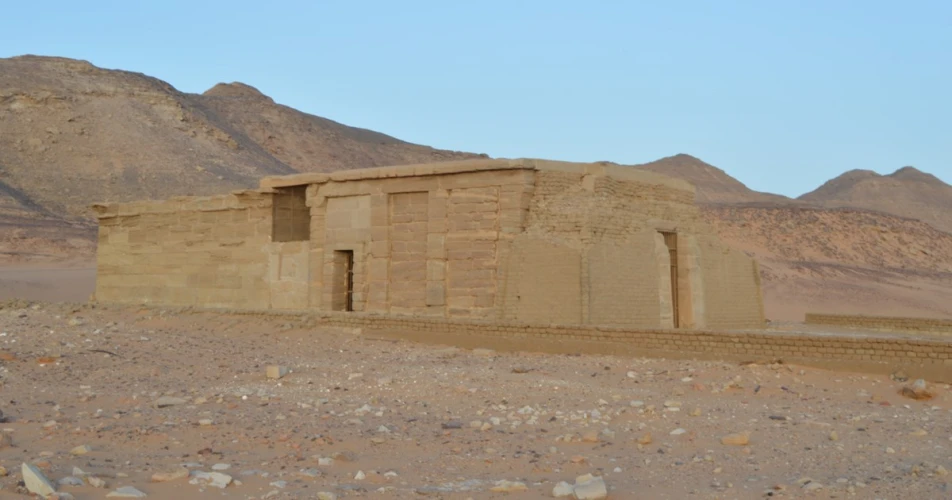
Temple of Amada
The Stone That Walked: How the Temple of Amada Survived Conquest, Time, and the Nile
To understand the Temple of Amada, you kind of have to look past those heavy blocks of weathered Nubian sandstone and then peer, closely at the faint chalky traces of plaster clinging to its interior walls. For centuries, that plaster hid a vivid world of painted gods and triumphant pharaohs. But it also leaks out a deeply human story of survival. It reminds us that monuments are not just dead weight anchor points of history, they are living testaments to the people who built them, the cultures that adapted them, and the modern engineering marvels that refused to let them drown. Tucked away on the quiet shores of Lake Nasser in southern Egypt, Amada is easy to miss if you are chasing the sheer towering scale of Abu Simbel or Philae. Still, this modest structure holds a singular title: it is the oldest surviving Egyptian temple in Nubia. To step through its threshold is to step straight into that complex, shifting relationship between an ancient empire and the frontier it tried to tame..
Born of Sand and Ambition
The story of Amada starts, nearly 3,500 years ago, in Egypt’s New Kingdom— a time marked by astonishing wealth, a sort of artistic resurgence, and also the usual pushy imperial drive. It was about 1450 BCE. Pharaoh Thutmose III, who people sometimes call the “Napoleon of Egypt” because of his broad military thrusts, kinda kept looking south, toward Nubia. Nubia mattered a lot to the Egyptian crown. It was a valuable passageway for exchange, a reliable source of elite archers and, more than anything, the main supplier of Egypt’s gold. So, to tighten his hold on that critical territory and display his divine rule to the local people, Thutmose III ordered a temple on the eastern bank of the Nile, roughly 180 kilometers south of today’s Aswan. But he didn’t quite finish it. Empire building, tends to survive its rulers, you know. The main core was finished by his son and successor Amenhotep II, a king famous for wild physical strength and a no-nonsense streak in war. Then later, Amenhotep’s son Thutmose IV would build on it, adding a grand, pillared entry hall, which basically turned a smaller shrine into a fuller complex, with more presence. The pharaohs dedicated the temple to two strong forms of the sun: Amun-Re, the king of the gods, and Re-Horakhty, the sun god connected with the horizon. In that ancient way of thinking, putting up this temple wasn’t only about politics. It was also cosmic upkeep. The rulers felt, that by honoring the deities right at the edge of their realm, they were keeping the confusing, unruly forces of the wild cosmos under control.
Propaganda Carved in Relief
If you look at Amada from outside, the whole place seems calm, almost a minimalist silhouette sitting against the desert sky, like it dosent really want to draw attention. But inside it’s different—there it turns into this kind of stunning, up close explosion of detail and intimacy. And because the scale is smaller, the reliefs end up putting you right there face-to-face with the pharaohs in a way that the huge, cavernous halls at Luxor or Karnak just can’t really match. The carving work is unbelievably precise, it shows the peak of 18th-Dynasty craftsmanship, without hesitation. On one wall, you can make out Thutmose III being embraced by Isis , and on another Amenhotep II pouring some holy libation to the gods. His body is rendered with that idealized athletic definition he liked to brag about while he was still alive. Even the colors, kept safe from the harsh desert sun for millennia, still seem to whisper the original shades—ochres, deep Egyptian blues, and darker reds, too. Still, Amada’s walls are not just “art” like some gallery. They feel more like an ancient newspaper. At the rear of the sanctuary there’s a massive stone stela, and it’s dated to the third year of Amenhotep II’s reign. The inscription starts with poetic, flowery praise for the king’s majesty, but then it pivots very fast into brutal, hard historical reality. Because the text talks about a military campaign far into Syria. To stamp out a rebellion, Amenhotep II personally captured seven enemy chiefs. The stela says he bound them, brought them back down the Nile on his royal barge, and then executed them himself. And then, in a very deliberate show meant for psychological pressure, he hung six of those bodies on the walls of Thebes, as a warning to his own people about dissent. The seventh body wasn’t left behind either—it was brought down to Nubia and hung on the walls of Napata. So when you stand in Amada’s quiet sanctuary today, and you read the translations of those words cut right into stone, the ancient world stops acting like a fairytale. What you’re seeing is the raw, uncompromising machinery of an old superpower, preserved there in stone, basically waiting for you.
The Plaster that Saved the Gods
As centuries kind of rolled on, the pharaohs faded into memory , and the Roman Empire collapsed, a new kind of human story washed over Amada. In the early centuries of the common era, Christianity spread quickly through Egypt and Nubia . For the early Coptic Christians the old temples were, you know , places for pagan worship, but they were also solid, already standing structures, good to go for new churches. When one community of Christians took up the Temple of Amada, they did something that modern art historians first saw as vandalism, though later it became a miracle kind of thing they celebrated. Instead of hacking away the “heathen” images of Egyptian gods with chisels , the Christians went with a more straightforward, faster renovation: they covered the whole interior with a thick layer of mud and plaster, then painted crosses and icons straight over it. What happened was kind of odd, because that act of religious re-purposing ended up acting like a time capsule. For more than a thousand years, that plaster layer helped insulate the colorful , fragile pigments of the pharaohs from moisture in the air, wind-blown sand, and even human touch. When modern archeologists in the 19th and 20th centuries carefully peeled back the crumbling Christian plaster, they discovered the 3,500-year-old paint underneath still looking almost as fresh as the day the royal artists brushed it on.
The Quiet Witness
Today, the Temple of Amada rests in this calm, kind of isolated stretch of New Amada, reachable mostly by Lake Nasser cruise boats. It does not really face the same roaring river that Thutmose III once watched, no, instead it faces that huge, steady blue water, the lake that tried to take it in, kind of absorb it. When you come by, the true charm of the place is its closeness, like it keeps you there. You can often sit in the hypostyle hall, completely alone, while the desert wind whistles through the stone pillars, and you just hear it. If you let your gaze drift along the walls, you catch evidence of people everywhere, not in a tidy way but in little traces: Amenhotep II’s bold royal pride, the gentle, quiet faith of the early Christians, and even those unseen marks left by the French engineers who kept insisting it should not die. Amada is, honestly, a deep reminder of how we all share this urge to make things that hang around longer than our own lives. It made it through political collapse, changes in worship, environmental upheaval, and then the slow lifting of the waters. So now it stands, still and almost silent, as a monument to human endurance— a small piece of the past we decided to take along with us, into the future.





-webp.webp "Hilton")
-webp.webp "dusit")
-webp.webp "Marriott Hotels")
-webp.webp "Azimut Hotel")
-webp.webp "Golden Tulip")
-webp.webp "sheraton")
-webp.webp "westin hotel")
-webp.webp "Movenpick")