
 English
 Italy
Italy
Sacred Stones: A Complete Guide to the Temples Between Luxor and Aswan
Every Temple You Visit on a Luxor to Aswan Nile Cruise
There’s no journey on Earth quite like sailing along the Nile River. As your ship glides smoothly over that mirror like water, you peer out at emerald green palm groves, set against golden desert dunes, the exact same panorama that mustve welcomed ancient pharaohs thousands of years ago.
Sure, those calm river sights are hard to forget. But the real standouts on any Luxor-to-Aswan Nile cruise are the big monuments, waiting right there along the shore. This section of the river in Upper Egypt, between the two most historic cities, has the highest density of monumental architecture on the entire planet.
So, from massive stone complexes laid down across millennia to quiet island shrines, here’s your go to, temple by temple map of every sacred place you’ll meet on a classic upstream Nile cruise.
1. Karnak Temple: The World’s Largest Religious Complex
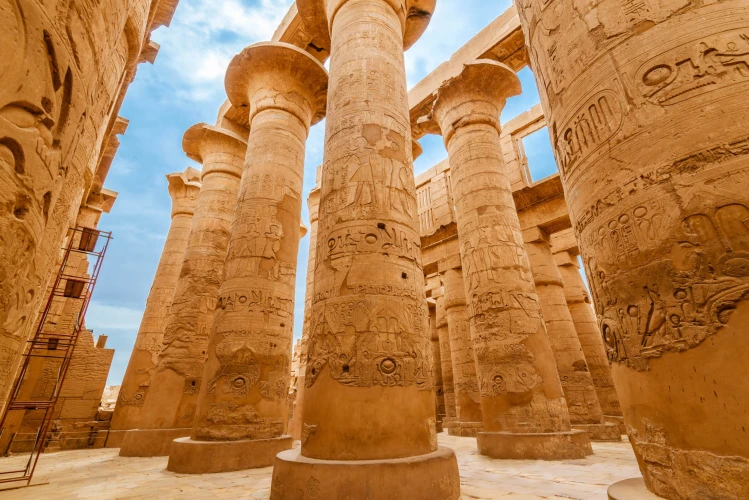
So Karnak Temple is on the East Bank of Luxor , and honestly it’s not just one building it’s more like this huge open-air museum. It covers about 200 acres, and it was put together over 2,000 years by more than 30 pharaohs one after another. A lot of it was devoted mainly to the triad of Amun-Ra, Mut, and Khonsu, so in a way it was the political plus religious center of the New Kingdom empire.
Must-see things there, you kinda have to look for :
The Great Hypostyle Hall: this wild “forest” of 134 tall sandstone columns, each one reaching around 21 meters up, and they’re covered with carved hieroglyphics plus royal decrees, like everywhere you turn.
The Obelisk of Hatshepsut: a giant 29-meter single block, made from pink Aswan granite. It was raised by one of Egypt’s few women pharaohs, which sounds simple but it isn’t, really.
The Sacred Lake: ancient priests used it for ritual purification ceremonies. Basically, before they went into the deeper, inner sanctuaries to do the sacred rites, they prepared here.
2. Luxor Temple: The Illuminated Sanctuary of Kingship
Also placed on the East Bank, Luxor Temple sits kind of right in the middle of today’s Luxor city. And yeah, unlike Karnak which was mainly dedicated to the gods, Luxor Temple felt more like it was for the rejuvenation of kingship itself… a sacred place where Egyptian pharaohs were crowned in a symbolic way and joined, spiritually, with their divine essence
Must-see highlights:
The Avenue of Sphinxes, a recently reworked 2.7 kilometer processional walkway that runs for about that distance, and it is lined with hundreds of stone sphinxes, linking Luxor Temple directly to Karnak.
The Colossal Statues of Ramses II: enormous seated granite figures guarding the main pylon entrance, basically showing off the ultimate authority of the state.
Night illumination: most cruise trips tend to arrive at Luxor Temple near dusk, when warm floodlights light up the ancient columned halls, turning everything into a stunning display against the dark night sky
3. The Mortuary Temple of Queen Hatshepsut: A Modern Architectural Wonder
Crossing over towards the west Bank of Luxor kinda pulls you straight into that ancient realm of the dead. Tucked into the sheer limestone cliffs at Deir el-Bahari there’s this striking Mortuary Temple of Queen Hatshepsut. It was made under her royal architect Senenmut and the terraced design was, honestly, centuries ahead of its era.
Must See Highlights:
The colonnaded terraces, there are three huge sweeping levels tied together by long ramps and somehow they merge almost effortlessly into the towering cliff wall behind them.
The Punt colonnade: a lot of detailed stone reliefs show Hatshepsut’s well known trade expedition to Punt. That mysterious land is rendered with exotic trees animals, and trails of incense too.
Anubis and Hathor sanctuaries, these side chapels have lovely column capitals, carved as the cow-eared goddess Hathor.
4. The Temple of Horus at Edfu: The Most Intact Relic of Antiquity
After your ship sets sail south from Luxor, your first big stop along the riverbank is Edfu, more or less. This place is dedicated to the falcon headed sky god Horus, and the temple was built in the Ptolemaic period, between 237 and 57 BCE. Since it sat buried under river silt and desert sand for more than a thousand years, it still feels like the most perfectly preserved temple in Egypt.
Must-See Highlights, kind of:
The Entry Pylon: A towering 36 meter high stone gate carved with those dramatic scenes where Horus defeats his enemies.
The Holy of Holies: Walk deep into the pitch black inner sanctuary to see the original granite naos, that shrine space where the golden cult statue of Horus was once kept.
5. The Temple of Kom Ombo: The Dual Sanctuary of Crocodile and Falcon
Perched pretty dramatically on a high bluff above a bend in the Nile where ancient crocodiles would just lie around and sunbathe, Kom Ombo looks, honestly, hard to miss. It was built in the Greco-Roman period and it’s known for a fully symmetrical, double sort of layout. The whole place seems to honor two deities at once—Sobek, the crocodile god, and Haroeris, also known as Horus the Elder.
You kind of want to stop for the big bits like this:
**Symmetrical Layout:** pretty much everything here is doubled. Two entrances, two hypostyle halls, two courts and even two twin sanctuaries, all aligned in that rigid way.
**Ancient Medical Instruments Relief:** there’s a well-known wall carving with scalpels, forceps, suction cups, and birthing chairs. It’s often used as evidence that ancient physicians had advanced surgical techniques, or at least very sophisticated tools.
**The Crocodile Museum:** right beside the ruins, this small museum shows dozens of real mummified crocodiles that were found in nearby catacombs.
6. Philae Temple: The Island Jewel of Isis
Landing at the southern end of your cruise in Aswan, you jump into a short motorboat crossing Lake Nasser, heading for Agilkia Island where Philae Temple sits. It’s the place dedicated to Isis, goddess of magic, motherhood, and curing things , and to be honest this was the very last stronghold where ancient Egyptian hieroglyphs were still being written, before Christianity moved through and changed the whole region.
What you really shouldn’t miss:
The First Pylon, and that courtyard too: those soaring stone gates are covered in detailed Ptolemaic carvings, and they show Isis bringing Osiris back to life.
Trajan’s Kiosk: a famous open air pavilion with no roof, ringed by 14 elegant columns, kind of straddling the shoreline, so you get one of those Egypt photos where the background water looks unreal.
The UNESCO rescue legacy: find out how engineers from different countries took apart the whole temple complex into 40,000 numbered blocks, then rebuilt it on higher ground, so it wouldn’t end up underwater during the 1970s.
Summary of Your Temple Journey
So you can really picture how these sacred places slot into your sailing plan, here’s the usual sequence of stops on a 4-night cruise from Luxor to Aswan:
On Day 1, (Luxor East Bank) you typically start with Karnak Temple and then Luxor Temple, not much else besides soaking it all in.
On Day 2, (Luxor West Bank) the main focus becomes Hatshepsut Temple, and you’ll also see the subterranean tombs, in the Valley of the Kings.
Day 3 is more like riverbank moments—Temple of Edfu in the morning, and then Kom Ombo Temple at sunset.
Day 4, (Aswan) ends with Philae Temple, on its quiet island, which feels kind of romantic even if you’re just looking around and not thinking too much about it.
Practical Tips for Temple Explorers
If you want to get the most out of every old-world stop along your river trip, try to keep these few tips in your head, kind of casually but also seriously:
Early Morning Starts: To dodge the brutal desert heat and all those loud tour bus crowds, many temple visits depart the ship somewhere between 06:00 AM and 07:00 AM.
Footwear Matters: Expect miles of uneven stone floors and dusty gravel paths, so sturdy supportive walking shoes are basically non-negotiable, no exceptions, not even “just this once”.
Book Securely: When you’re setting your cruise plan online, just be sure you’re booking through reputable travel partners that handle reservations using secure, bank-level systems such as WeTravel or portals powered by Stripe. They use PCI-DSS Level 1 Encryption to safeguard your payment details while you’re locking in that long-awaited dream itinerary.





-webp.webp "Hilton")
-webp.webp "dusit")
-webp.webp "Marriott Hotels")
-webp.webp "Azimut Hotel")
-webp.webp "Golden Tulip")
-webp.webp "sheraton")
-webp.webp "westin hotel")
-webp.webp "Movenpick")