
 English
 Italy
Italy
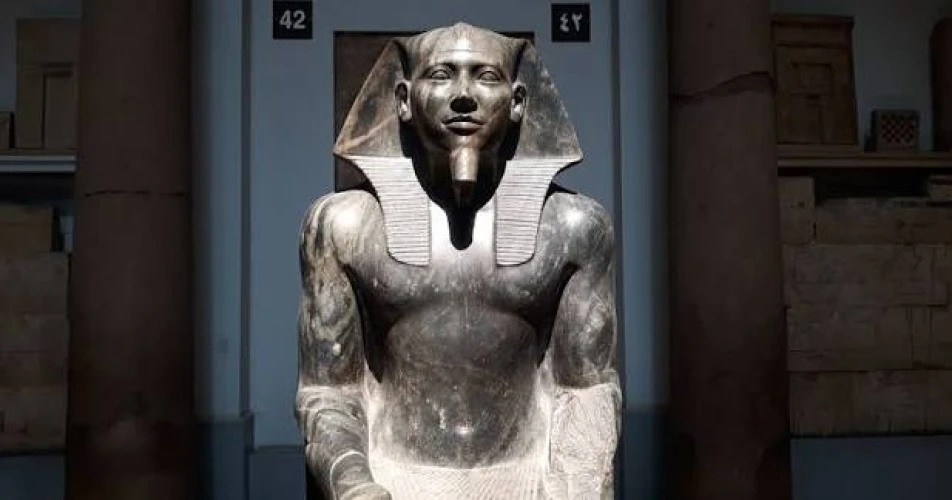
Pyramids, Granite, and the Sphinx: Inside the Reign of Pharaoh Khafre
King Khafre: The Mastermind Behind Giza’s Guarded Legacy
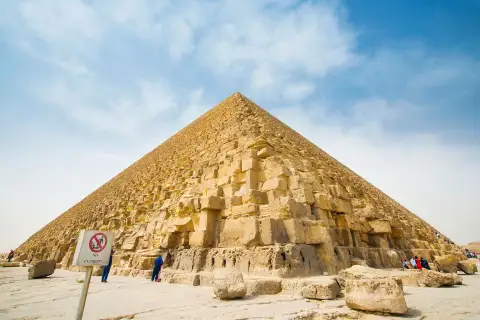
Standing on that slightly higher limestone back bone of the Giza Plateau, one monument always grabs the sight pretty fast: a magnificent pyramid, still wearing a regal cap of polished white stone up at the peak. This is the Pyramid of Khafre, and it’s watched over, sort of faithfully, at its base by the well known lion-bodied Great Sphinx.
While his father, Pharaoh Khufu, put up the single largest individual pyramid in history, King Khafre (in ancient Greek sources called Chephren) made something that many people consider even more dramatic and more complete. Khafre did not just construct a tomb , he shaped a whole sacred setting—mixing a soaring pyramid, a monumental mortuary temple, a valley temple below ground, and the largest single carved statue on Earth into one unified architectural idea.
He reigned during the Fourth Dynasty of Egypt’s Old Kingdom, roughly c. 2558–2532 BC. Khafre was a visionary ruler, and in his era the king’s role hardened into the earthly living likeness of Horus, plus the divine son, Ra’s sun born representative, so to say.
Here’s the full story of King Khafre—his royal succession, those dramatic Giza monuments, the lingering riddle around the Great Sphinx, and the legacy that keeps on lasting.
1. Royal Bloodline and Ascension to the Throne
Khafre kind of came into being during that golden age of ancient Egypt’s Fourth Dynasty. He was the son of Pharaoh Khufu and Queen Meritites I (also seen as Queen Henutsen), so in the end he becomes the grandson of Sneferu, the so called master builder everyone keeps talking about.
Still, his road to the throne, honestly, wasnt totally clean or simple.
First there’s Djedefre’s reign: after Khufu passed away, Khafre’s older brother (or maybe half-brother) Djedefre took power. Djedefre then shifted his own pyramid site up north to Abu Rawash, and reigned for something like eight to eleven years, give or take.
Then Khafre goes back to Giza: when Djedefre died around 2558 BC, Khafre became king and, almost right away, he moved the royal burial plan back to the Giza Plateau. He picked a strong elevated piece of bedrock next to his father’s Great Pyramid, not far at all.
And Khafre’s complete royal name was Khaf-Ra, meaning “Appearing Like Ra” or sometimes “Rise, Ra!” It hints at a real theological turn in the Fourth Dynasty, because the rulers were increasingly linking their divine power straightway to the sun deity Ra, like that alignment mattered more and more.
2. The Illusion of Height: Khafre’s Pyramid Masterpiece
To the casual observer standing on the Giza Plateau today, Khafre’s pyramid often seems taller than Khufu’s Great Pyramid. It’s one of those things that feels, somehow, intended. Like the choice was not only about stone but also about sight, Khafre’s architects made it a kind of plan, brilliant in a quiet way.
The illusion and the geometry, more or less
First, the raised ground: Khafre picked a natural limestone plateau outcrop, it sits about 10 meters (33 feet) higher than where Khufu placed his own monument. So even before you look up, the angle is, already working.
Then, the pitch itself: Khufu is usually described with a slope around 51.8 degrees, and Sneferu at about 43 degrees, but Khafre went for a noticeably steeper 53.1 degrees. Not a tiny difference, not really.
And the numbers that matter: Khafre’s pyramid originally stood about 143.5 meters (471 feet), just three meters lower than the Great Pyramid. Yet that sharper slope makes the top look more pointed, more dramatic, like it’s climbing harder into the sky.
The casing cap that still shows
What people notice most now is the preserved strip of smooth, pale Tura limestone casing, the part that still covers the upper 45 meters of the peak.
Down below, the outer stones were removed over centuries, medieval builders took much of that material for palaces and fortresses around Cairo. Still, the upper casing stayed in place, so we get this clear view, a kind of window, into how the Giza pyramids looked in the far past—smooth, bright and polished, all of them, four and a half thousand years ago, or there about.
3. The Face of the Desert: Khafre and the Great Sphinx
No discussion of King Khafre is really complete unless you also look at the single most famous statue in human history, The Great Sphinx of Giza.
It was carved right out of a huge natural limestone ridge in the bedrock, and the result is this colossal figure, a giant lion body in a crouch topped with a human head wearing the royal Nemes headdress.
So, is the Sphinx Khafre? People love alternative stories in popular culture, but mainstream Egyptologists, and several geological surveys, tend to say that the Great Sphinx was carved under Khafre’s direct orders.
Architectural alignment: the Sphinx is placed basically along the long stone causeway that links Khafre’s pyramid mortuary temple to his lower Valley Temple, like it was meant to be seen as part of that whole route.
Facial similarities: when researchers compare the Sphinx’s facial features with verified statues of Khafre, the matches are pretty strong, especially in things like cheekbone structure, jawline proportions, and even the general expression.
Symbolic power: the whole idea mixes a lion’s fierce, physical authority with a king’s wisdom, showing Khafre as the highest divine protector of the Giza necropolis, sitting there watching the horizon, where the sun comes up every morning.






-webp.webp "Hilton")
-webp.webp "dusit")
-webp.webp "Marriott Hotels")
-webp.webp "Azimut Hotel")
-webp.webp "Golden Tulip")
-webp.webp "sheraton")
-webp.webp "westin hotel")
-webp.webp "Movenpick")