
 English
 Italy
Italy
Palaces, Schools, and Fountains: Inside the Living Heart of Old Cairo
Al-Muizz Street: A Journey Through 1,000 Years of Islamic Cairo
If you want to really understand Cairo, you kinda have to leave the modern highway overpasses behind and step straight into its past. While the Pyramids of Giza tell the ancient story of Egypt’s pharaohs, the stone paths of Al-Muizz li-Din Allah al-Fatimi Street , (most people say Al-Muizz Street) tell the story of its living, breathing medieval vibe.
It sits right in the historic center of Old Cairo, and this one-kilometer street holds the highest concentration of medieval architectural gems in the Islamic world.
Walking down Al-Muizz Street is nothing like going to a traditional museum where everything is locked up and quiet behind glass. Here, the history is actually awake. You’re on cobblestones laid down around a thousand years ago, and all around you are these towering minarets, grand palaces, and old-style religious schools. The air smells like roasting coffee , and fresh spices from the nearby spice markets, and underneath that you hear the daily chatter of local craftsmen—working with small wood and metal workshops.
So, let’s take a slow, careful stroll through this open-air place, and find the monumental landmarks that make it the ultimate time capsule of Islamic Cairo.
1. The Foundation: The Backbone of a Fatimid City
Al-Muizz Street started in 969 CE when the Fatimid dynasty swept into Egypt and, in a way , built the fresh fortified city of Cairo (Al-Qahira, which means "The Victorious").
It was planned to be the grand central lane, you could almost call it the main spine of Cairo, running in a straight line through the middle of the city, from the northern gate of Bab al-Futuh down to the southern gate of Bab Zuweila.
At first, the street was basically a royal realm. It stretched right between two huge Fatimid palaces so the middle ground got the old name Bayn al-Qasrayn ("Between the Two Palaces"). Those palaces faded out later, as later dynasties took over, yet the street kept its top-tier prestige, for each new sultan, Mamluk emir, or Ottoman governor who wanted to leave behind a lasting, steadfast monument, showing off their power , forever.
2. The Architectural Masterpiece: The Qalawun Complex
As you walk past the midpoint of the street, and you know, the horizon somehow turns dramatic, because it’s suddenly dominated by this massive stone wall, with elegant pointed arches and a grand minaret. It’s the spectacular Complex of Sultan al-Mansur Qalawun , built in 1285 CE, during the Mamluk era.
The Qalawun Complex is kind of unique in a very specific way , because it combined three vital social institutions into one big, architectural mass: a Mosque-Madrasa (school), a Mausoleum (tomb), and a Bimaristan , meaning a medieval hospital.
Inside the Mausoleum
Step into the mausoleum chamber , and you’ll understand why historians frequently compare its beauty to the Alhambra Palace in Spain. The interior has a grand octagonal plan, supported by giant granite columns that were originally taken from ancient pharaonic temples.
The walls are covered from floor to ceiling with intensely detailed stucco carvings, gorgeous multi-colored marble mosaics , and beautiful inscriptions of Arabic calligraphy inlaid with mother-of-pearl. Light slips into the quiet room through stained-glass windows, and it spreads soft red, blue, and golden hues across the floor, like a slow kind of reverie.
3. The Sabil-Kuttabs: Charity in Stone
As you keep going, slow like, you’ll start to notice a few really beautiful two-story stone pieces that seem to stick out a little onto the cobblestone walkway. Down below there are big open iron grilles, and up top there’s this airy wooden balcony. These buildings are called Sabil-Kuttabs, and they’re kind of a very particular form of charitable architecture that’s basically unique to historic Cairo , even if the details feel familiar.
A Sabil-Kuttab handled two main needs , side by side but in different spaces:
The Sabil (Ground Floor): it was a public water fountain. People working inside would slide cups of cool, filtered water through the iron grilles for anyone passing by, so thirsty strangers in that hot desert sun could drink for free. The water itself stayed cold thanks to massive underground cisterns, built under the street.
The Kuttab (Upper Floor): this was a small primary school. There, local orphan children were taught to read, write, and memorize the Holy Quran for free, supported by donations from wealthy patrons.
On the street, the most well-known example is the Sabil-Kuttab of Abdel Rahman Katkhuda, built in 1744. It sits nicely at a fork in the road , and it works almost like a landmark, a kind of medieval monument for everyday civic charity.
4. The Grand Houses: Glancing Inside Medieval Domestic Life
Al-Muizz Street isn’t only about religious and political monuments, it’s also kinda the key to getting a real sense of how wealthy families lived, centuries back. Just a bit to the side of the main avenue, you can find medieval residences that are preserved very well, and the most famous one is Bayt al-Suhaymi (The House of al-Suhaymi) .
Built 1648, this big home is a great example of traditional Islamic domestic architecture, and it’s basically designed, from start to finish, with privacy in mind plus natural climate control.
As you go in through the twisting entrance corridor, you end up in a calm, open-air central courtyard, where there are green plants and little fountains too. The windows that look down toward the courtyard are fitted with lovely Mashrabiya, those intricate carved wooden screens. The idea was that the women in the house could observe the courtyard from above in total privacy , without being seen clearly from below. At the same time , the mashrabiya helped let the cool breeze move through and gently reach the rooms where people lived.
5. Practical Guide for an Authentic Walk
To really soak up the magical mood of Al-Muizz Street, and not get stuck with the stress of huge crowds, you should remember a few practical things, sort of like yes this helps… a lot
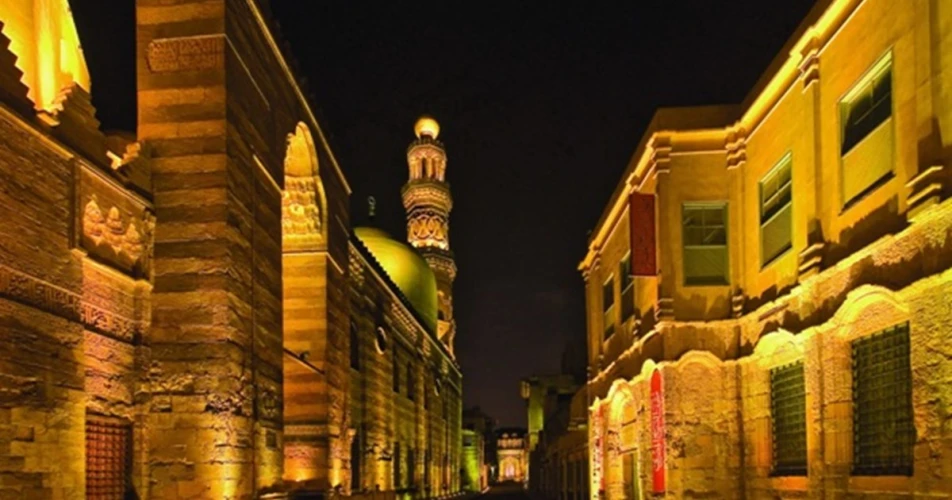
Timing matters : even though the individual historic buildings and the madrasas are open for entry from 09:00 AM to 05:00 PM the street itself feels totally different once it gets dark. By evening the road becomes pedestrian-only, the modern lights turn on and the golden stone minarets look almost unreal, and sometimes local musicians play traditional instruments out in the open air.
Wear comfortable clothes: the street is paved with old cobblestones, and they can be a bit uneven, so don’t go in flip flops. Use highly supportive athletic shoes , something that actually hugs your feet
Lock in your travel plans: for a fuller feel of the Fatimid , Ayyubid , and Mamluk eras layered through time, it’s strongly suggested you explore with a private licensed guide, because otherwise you miss the best connections
Also , when you arrange those custom walking tours from home, just double check that your payments run through certified, bank-level platforms such as WeTravel or payment gateways powered by Stripe. These networks use PCI-DSS Level 1 encryption to securely tokenize your card information, so your financial details stay out of reach from external sales staff. In the end you can book your historic Cairo itinerary safely, and honestly with a lot more peace of mind





-webp.webp "Hilton")
-webp.webp "dusit")
-webp.webp "Marriott Hotels")
-webp.webp "Azimut Hotel")
-webp.webp "Golden Tulip")
-webp.webp "sheraton")
-webp.webp "westin hotel")
-webp.webp "Movenpick")
