
 English
 Italy
Italy
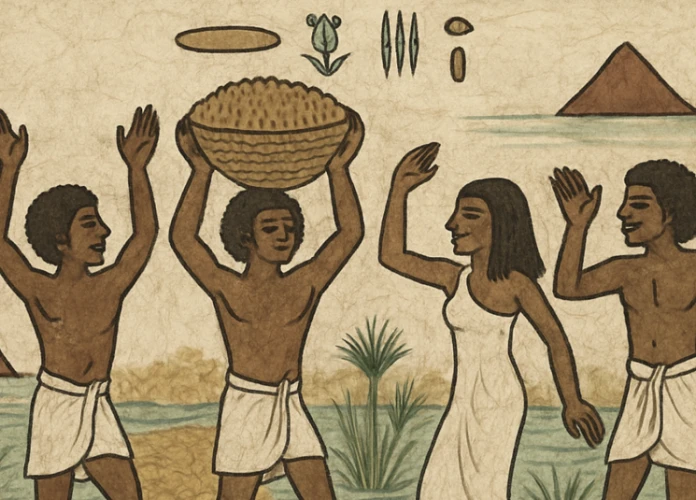
obet Festival in ancient egypt
The scene shows you standing on the lively banks of the Nile River which existed three millennia ago. The atmosphere contains three elements: the odor of burning incense and the sound of tambourines and the loud laughter of thousands of people. The obet Festival in ancient egypt (historical records show that people called it Opet Festival) represents one of the most magnificent religious events which existed throughout the ancient world.
The grand event evolved from a basic street parade into a complex demonstration which combined religious practices with political affairs and public activities. The sacred festival functioned as the empire's essential religious event which maintained the land's prosperity and protected the ruler's authority.
The ancient celebration holds many secrets which we will investigate by studying its ceremonial practices and its connection to royalty and its lasting historical impact.
The Core of the Celebration: Gods on the Move
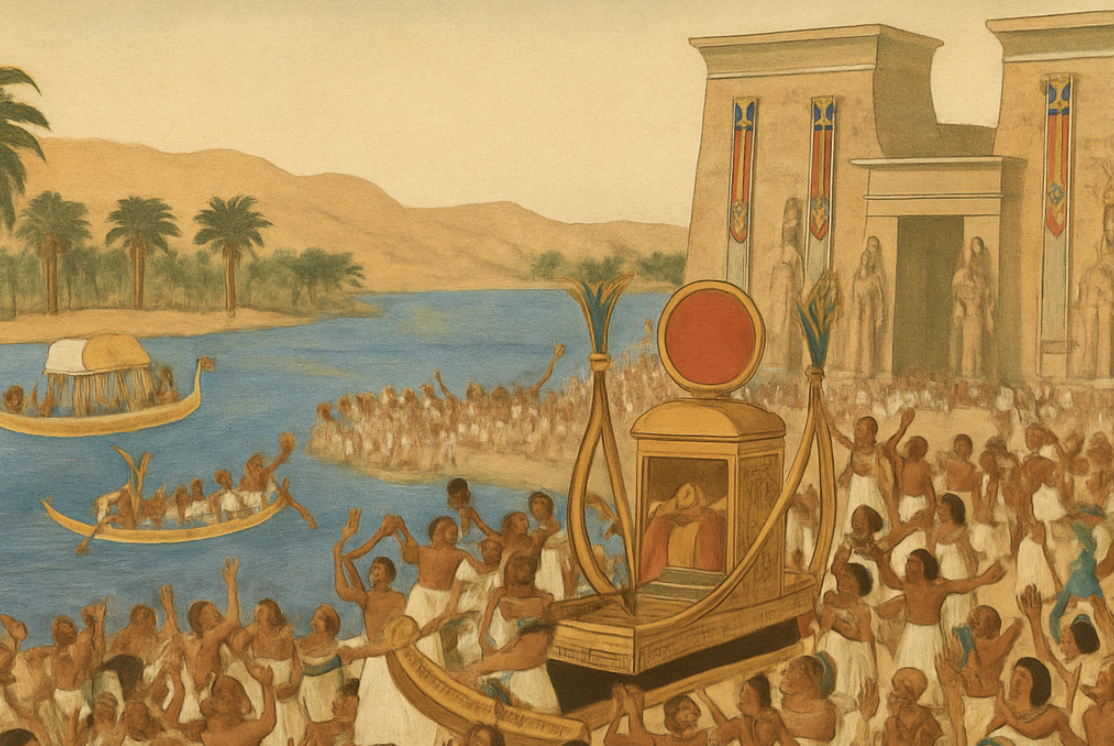
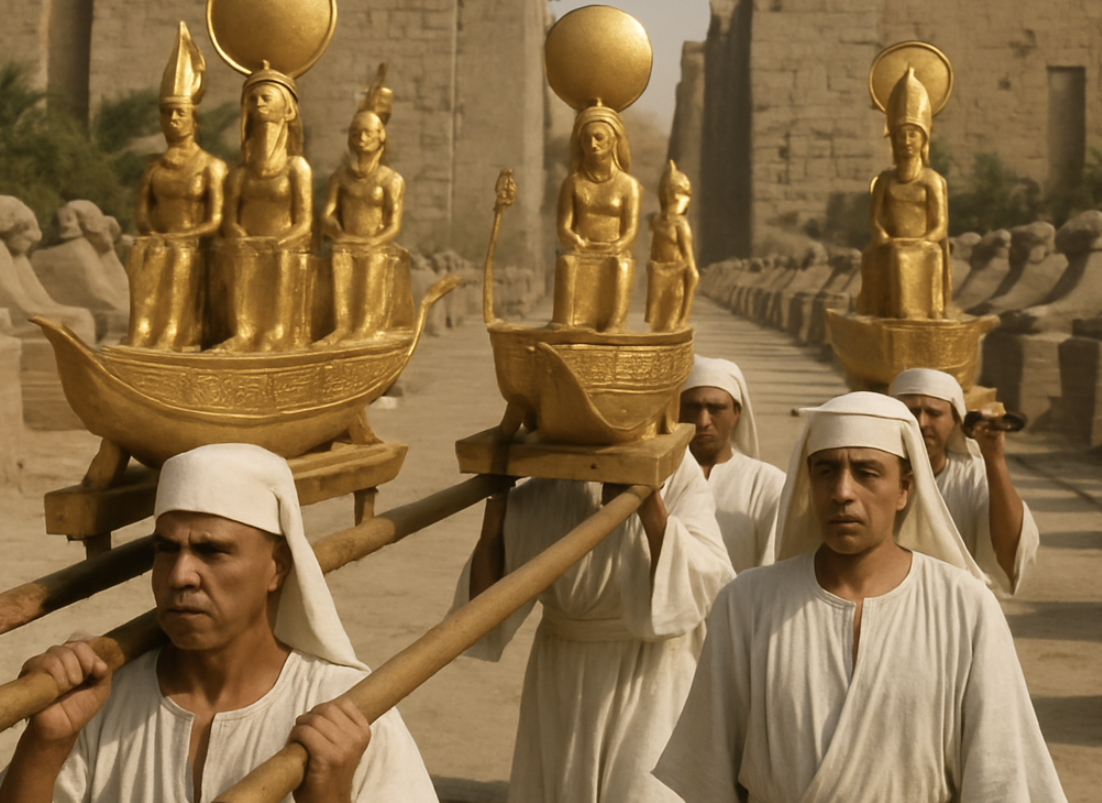
The deities who serve as primary figures of the obet festival demonstrate its enormous scale to us. The sacred procession which Theban Triad dedicated to Amun-Ra functioned as their primary religious observance. The three main deities Amun-Ra who reigns as supreme creator god Mut his strong consort and their son Khonsu the moon-god, who resided in their Karnak Temple sanctum, temporarily left their dark sanctum to meet human beings. The highlight of the entire event was the magnificent Amun-Ra journey from Karnak to Luxor. The gods traveled south through the famous Avenue of Sphinxes which elite priests carried because it connected the two great temples via its 1.5-mile distance. The statues of Mut and Khonsu followed the king of the gods during this procession, which created a divine family reunion that excited the vast audience of commoners who had been permitted to see the event.
Why Did Ancient Egyptians Celebrate the Opet Festival?
The ancient Egyptians celebrated the Opet festival because they believed in Ma'at which represented their understanding of universal balance and order. The festival served as the primary New Kingdom method for restoring royal authority. The belief existed that both celestial bodies and pharaohs lost their power throughout the entire yearly cycle. The celebration provided people with a sacred opportunity to refresh their spiritual energy. The festival occurred at a time that matched the sacred importance of the yearly Nile flooding ceremonies. The festival represented agricultural regeneration through the Nile's floodwaters which brought nutrients to the fields while it also represented a political and divine rebirth.
A Spectacle of Faith: The Grand Procession
What events took place at the beautiful feast of Opet? The event combined serious religious ceremonies with energetic street festivities.
The procession started with soldiers carrying standards and Nubian musicians and acrobats and dancers. The audience created a soundscape which included chanting and clapping and trumpet players. The priests gave out thousands of loaves of bread and jugs of beer and cuts of meat to the public, which became a special banquet because the temple estates covered all expenses.
The parade's visual splendor existed because of the sacred solar barques which served as its central symbol. The statues of the gods were not simply carried on platforms; they were housed in magnificent, gilded boat-shaped shrines. These barques represented the sun god's eternal journey across the sky and through the perilous underworld. The priests produced a cosmic effect through their shoulder movements when they carried the sacred objects.
How Long Did the Opet Festival Last in Antiquity?
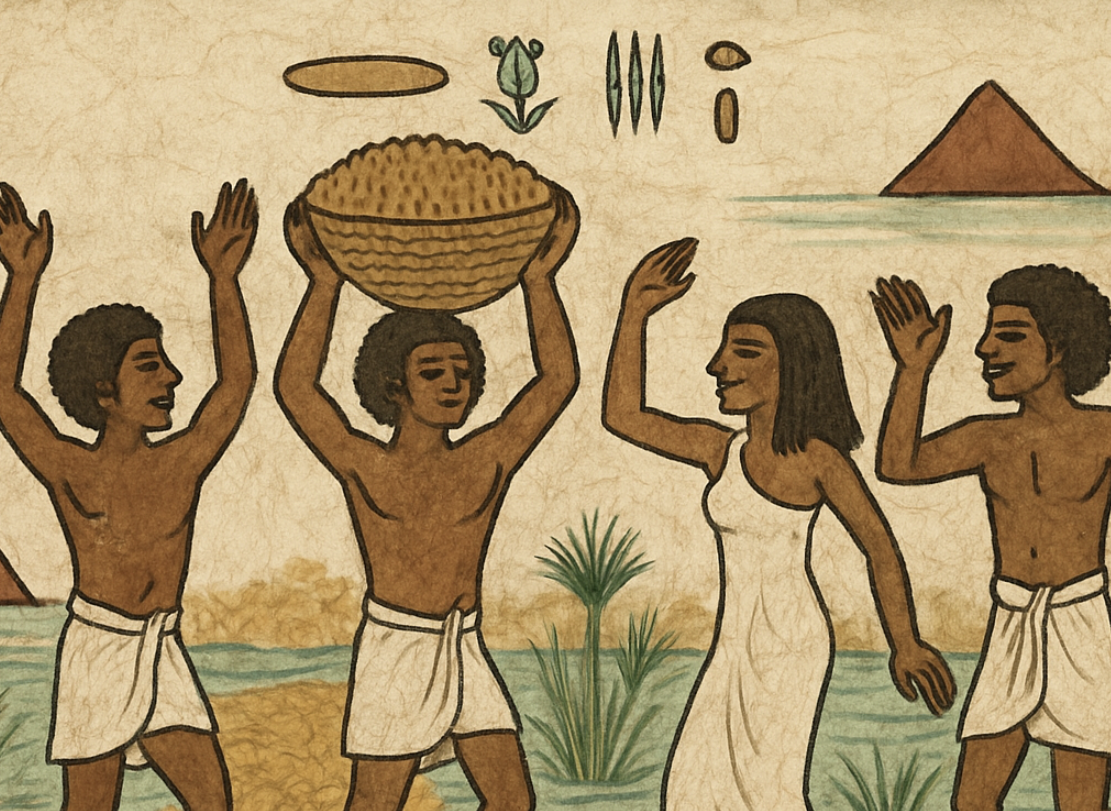
The ancient Opet festival lasted for an unexpected length of time which will astonish you. The event extended beyond a single weekend. The festival during Thutmose III's 18th Dynasty rule lasted for a period of 11 days. The empire's growing wealth enabled them to expand their festive observances. The festival evolved into a public holiday that lasted for 27 days during the rule of Ramesses III in the 20th Dynasty.
The Royal Connection: The Ultimate Divine Endorsement
The Opet rituals depended on the Pharaoh because his role constituted the most important part of the whole ceremony. The pharaoh served as the main high priest who connected the sacred divine space with the human earthly space.
The Luxor Temple procession path began when the procession arrived at its core forbidden areas which maintained strict access control. The pharaoh performed the holy marriage ceremony which joined him with Amun at this location. The union did not represent a physical wedding but rather a theological union which both parties regarded as the kamutef ritual. The pharaoh's divine vital force or ka combined with the eternal ka of Amun-Ra.
The pharaoh achieved symbolic rebirth through this spiritual experience which confirmed his right to rule for one more year.
Understanding the Timing and Geography
The full context of this event requires examination of Theban religious practices which occurred during the Akhet season. The Inundation season began with Akhet. The agricultural fields became submerged in water which allowed the farming population to avoid their regular work schedule. The state-sponsored religious festivals attracted a large audience who showed their willingness to work for the event.
The Opet Festival offers an interesting comparison with the Feast of the Valley which stands as Thebes' second most important annual celebration. The Feast of the Valley which happened earlier in the year functioned as a solemn yet beautiful funeral procession for the dead, during which families traveled to the West Bank to celebrate at their ancestors' tombs, while the Opet festival dedicated itself completely to the East Bank, which represented the Land of the Living. The Opet festival brought forth a dynamic display of royal power through its demonstration of agricultural prosperity and vibrant display of life.
Uncovering the Past: How We Know What We Know
The ancient Egyptian festival route has been reconstructed by historians through their exceptional research work. The research shows us the precise locations where the festival stopped, the specific hymns which were performed, and the exact items which were presented as gifts.
The complete details of The Luxor Temple reliefs most important archaeological discoveries have preserved The Luxor Temple reliefs commissioned by Amenhotep III and finished by Tutankhamun and Horemheb act as a stone storyboard which shows the complete story through its wall decorations. The detailed carvings show military personnel and musicians and fat sacrificial oxen and towering barques which permit us to "watch" the festival unfold 3,000 years later.
Modern history enthusiasts should follow these actionable tips.
Travelers to Egypt need to use these practical tips, which are essential for their research work.
The Egyptian government has completed restoration work which allows visitors to walk the fully excavated Avenue of Sphinxes. The ancient way of walking which connects Karnak and Luxor temples allows visitors to experience the sacred path which ancient people used at sunset.
The Colonnade Hall of Luxor Temple offers visitors a better experience than the entrance, so they should go there. Visitors to Luxor Temple should bring a flashlight or use their phone to create light which allows them to see the carvings through different angles, as this technique reveals the ancient reliefs of the procession in visually striking detail.
The reconstructed way-stations of the Karnak Open Air Museum, which include the White Chapel of Senusret I, show visitors the actual size of the boat shrines used by the deities.
Conclusion
The obet Festival in ancient Egypt functioned as both a display of wealth and the spiritual foundation for the New Kingdom. The festival brought people together to celebrate which proved the pharaoh's divine status while they paid tribute to Thebes' great gods. The Nile River area still reflects the happiness of an ancient parade through its remaining tall ruins and well-preserved reliefs.





-webp.webp "Hilton")
-webp.webp "dusit")
-webp.webp "Marriott Hotels")
-webp.webp "Azimut Hotel")
-webp.webp "Golden Tulip")
-webp.webp "sheraton")
-webp.webp "westin hotel")
-webp.webp "Movenpick")