
 English
 Italy
Italy
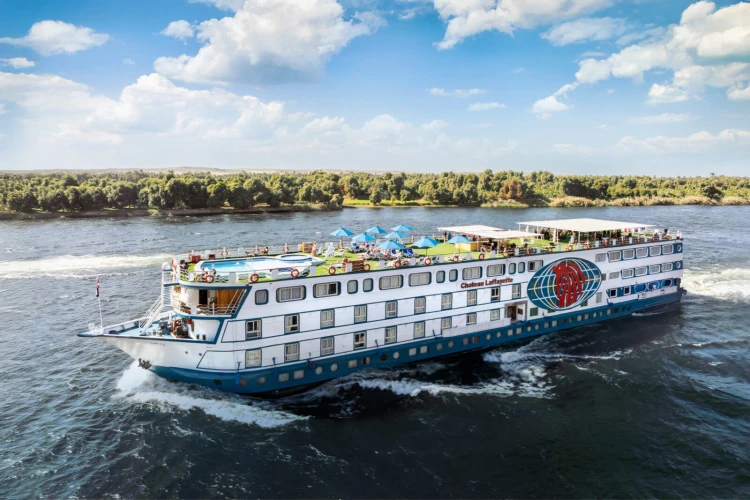
Nile Cruise Guide: Best Routes, Itineraries, Ships, and Travel Tips
Complete Guide to Nile Cruise Routes in Egypt: Sailing Through History
There’s a kind of distinct, almost hypnotic magic to moving along the Nile River. As your ship slides smoothly across the calm, mirror-like water, it’s like the modern world just kinda vanishes. One moment you’re thinking about everything, the next you’re just watching the landscape breathe. On one bank you can look out over lush, emerald-green palm groves where local farmers work their fields, in a way that feels familiar to their ancestors—thousands and thousands of years ago. On the other bank, stark sun-bleached golden sand dunes rise pretty dramatically from the ground, like quiet sentinels protecting the ancient stone temples connected to Egypt’s pharaohs.
Sure, there are many ways to explore Egypt, but a Nile cruise still feels quintessential, classic, and sort of “you have to do this” if you really want the experience. Basically it’s a luxurious floating hotel that carries you with almost no fuss between world-class historical sites, without that constant stress of packing and unpacking each night, or trying to figure out chaotic highway traffic while you’re tired.
That said, picking the right itinerary can feel a bit overwhelming, especially if it’s your first time. What route should you choose? How many days is actually enough, not too little, not too much? And should you sail downstream or upstream… because both sound tempting, but they’re not the same, not even close.
This guide goes through the main Nile cruise routes, the biggest stopovers, how the sailing logistics usually work, and a bunch of practical travel tips, so you can land on the absolutely perfect voyage for your Egyptian adventure.
1. The Classic Route: Luxor to Aswan (and Vice Versa)
That legendary bit of river between Luxor and Aswan, honestly it feels like the absolute core of Nile cruising. Most of the classic Nile cruises run right along this roughly 200 kilometer stretch of Upper Egypt, it has the densest mix of huge temples and royal tombs, like in the whole country.
When you book this famous route, you mostly have two real options, even if it sounds simple at first.
Option A: Luxor to Aswan (4 Nights / 5 Days) — Sailing Upstream
Going south from Luxor to Aswan means you’re pushing upstream, more or less against the river’s flow. Since the boat kind of glides a little slower, the trip usually works out to 4 nights and 5 days. You get a relaxed kind of rhythm, no rush, and you can actually breathe between tours.
Best For: People who want more down time, like extra hours on the sun deck, unhurried lunches and dinners, and a sightseeing plan that stays calm, and not constantly squeezing you.
Option B: Aswan to Luxor (3 Nights / 4 Days) — Sailing Downstream
Going north from Aswan toward Luxor is downstream, so you follow the river current. Because the ship moves faster, this comes as a tighter 3 nights and 4 days itinerary, yet you still see the same big temple highlights. It just happens in a shorter window, but the major historic stops stay the same.
Best For: Travelers who have limited vacation days, and they want to maximize the experience without skipping the key sites.
2. The Daily Itinerary: What You Will See Along the Way
Whether you end up sailing north or south, the classic Luxor–Aswan itinerary gives you a nonstop, awe-filled run of ancient monuments, sort of one after another:
Luxor: The world’s biggest open-air museum
Your time in Luxor really splits in two on either side of the river. On the East Bank, you wander among the massive stone pylons of Karnak Temple and the softly glowing, beautifully lit courtyards of Luxor Temple. On the West Bank, you go down into the lively, underground painted tombs of the Valley of the Kings, then you go see the mortuary temple connected to Queen Hatshepsut, after that you just stand in front of the colossal Statues of Memnon.
Edfu: The Temple of Horus
As your boat drifts between Luxor and Aswan, it also pauses in Edfu. This is where you visit the Temple of Horus, which many people call the most surprisingly preserved cult temple in all of Egypt. Since it was buried beneath desert sand, and Nile silt for centuries, its enormous entry pylons and its roofed stone halls are still almost fully there , intact.
Kom Ombo: The dual temple of the crocodile deity
Kom Ombo sits on a high bend above the water, so the views feel dramatic, specially when you arrive around sunset. It’s dedicated at the same time to two different deities: Sobek (the crocodile god) and Harakhte (Horus the Elder). Right by the temple, you can also step into the Crocodile Museum, to view ancient mummified crocodiles that were found close by.
Aswan: The Golden South
Aswan comes with a clearly Nubian vibe , you know the kind that feels calm colorful, and somehow very scenic. Your cruise here tends to focus on a few nice stops like seeing the impressive Philae Temple, which is dedicated to the goddess Isis and sits on its own sort of romantic little island. Youll also get to look at the giant Unfinished Obelisk , it lives in the granite quarries. And there is a quiet ride too on a traditional wooden Felucca sailboat, drifting around Elephantine Island , slow and easy.
3. The Grand Route: Long Cruises Between Cairo and Aswan
For real history lovers who have a bit more time on hand, there’s a different option than those short Luxor–Aswan sailings, it’s the Long Nile Cruise.
This one runs along the river the whole way between Cairo and Aswan (or Cairo and Luxor), and it follows an epic route that stretches almost 900 kilometers. Most trips take about 10 to 14 days, depending on the season and ship.
Why pick the long cruise?
Off-the-beaten-path exploration, basically you can see Middle Egypt in a way that most people never really get to, including the rock cut tombs of Beni Hasan and the ancient capital of Akhenaten at Tell el-Amarna.
Total, downshift relaxation, because you spend slow and calm days cruising through remote rural parts of the Nile. It feels far from the thick tourist crowds, and the atmosphere stays a lot more quiet.
4. Practical Survival Tips for Nile Cruisers
To make sure your ride along the river feels smooth, try to keep a few travel notes in mind, just like this, don’t skip them.
Best time to sail: The nicest cruising season usually falls between October and April. In Upper Egypt the weather stays warm, dry and kind of bright, sunny most of the days. In contrast, the summer window, June through August, can be brutally hot and temperatures often push past 40°C (104°F) and stay there.
Packing essentials: Pack light breathable linen clothing, add high-SPF sun screen, bring a wide brim hat, plus polarized sunglasses. Also, get shoes that are really comfortable for all those long temple walks, since you will be standing around a lot more than you think.
Prepare for early mornings: To avoid the harsh desert heat and also those bigger tour crowds, most temple visits kick off around 06:00 AM. After that, plan on slow afternoons. It helps to take relaxing little naps on the sun deck to balance out those early wake ups. You know, recover a bit.
Secure travel bookings: When you book your Nile cruise package from home, make sure your reservations are processed through safe, certified check out setups like WeTravel or payment paths supported by Stripe. These platforms use PCI-DSS Level 1 encryption so they can safely tokenize your card details, helping keep your financial settings protected while you lock in your dream river holiday.





-webp.webp "Hilton")
-webp.webp "dusit")
-webp.webp "Marriott Hotels")
-webp.webp "Azimut Hotel")
-webp.webp "Golden Tulip")
-webp.webp "sheraton")
-webp.webp "westin hotel")
-webp.webp "Movenpick")