
 EN
 IT
 ES
 FR
 ZH
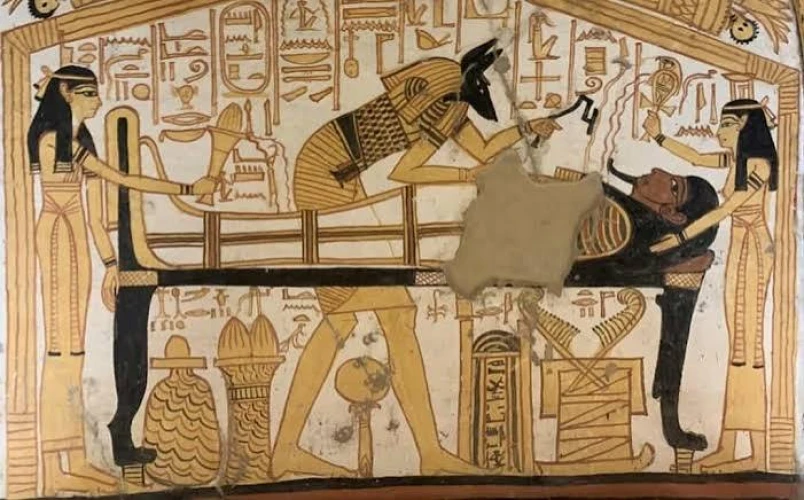
Mummification in Greco-Roman Egypt: How Ancient Traditions Evolved
Mummification was a central part of ancient Egyptian funerary beliefs, with mummifying the body an essential requirement in order for the soul (ba) and spirit (ka) to identify itself, and gain eternal life in the afterlife of Osiris. However, after Alexander the Great conquered Egypt in 332 BCE, and Rome took control of Egypt in 30 BCE, there was a huge change in Egyptian society. Despite this, the Macedonian Greeks and Romans who ruled Egypt embraced mummification. The process was adapted in terms of the art style, the technology and who could use it. This produced a completely unique time in history where Pharaonic mummification methods were combined with Hellenistic naturalism and Roman portraiture. The mummification methods, artistic styles and changes in religion and society will be discussed below.
1. Increased Social and Economic Status
During the Old, Middle and New Kingdoms only the highest members of society such as the King, high priests and wealthy nobles could afford to have themselves mummified. However, during the Greco-Roman period mummification became more widely available.
A. Increased Social Availability
Due to more money becoming available during the rule of the Ptolemies and Romans, trade increased which led to a larger middle class, including merchants, local officials and veterans. This led to many more families throughout the Nile Valley and Fayum Oasis wanting to have their loved ones mummified.
B. Mummification Businesses
With such a high demand for mummification, mummification businesses became very popular. Embalmers offered different packages to suit any budget. From extravagant month-long treatments and using imported resins and fine linen to simple oil baths and resin baths. This meant mummification became a popular activity for all members of society.
2. Mummification Techniques
With mummification becoming more popular during the Greco-Roman period, new mummification techniques began to appear.
A. More Bitumen, Resins and Oils Used
Whereas the New Kingdom embalmers would carefully remove the internal organs, dry the body using Natron and shape the body, the Greco-Roman embalmers would heavily coat the body with melted bitumen, pitch, resin from conifers and oils. The body would often be soaked in dark resins. This helped to keep the body dry and help prevent bacteria but caused the body underneath to become black and hardened.
B. Bandage Art
Whilst the internal mummification had become standardised, the bandaging became extremely artistic. The linen bandaging was turned into a beautiful art:
Geometric Patterns: The body was wrapped in fine linen strips creating beautiful geometric patterns such as diamonds, criss-cross and zig-zag. These were then sewn in place with beautiful golden buttons.
Body Shape: The body would be shaped to create a smooth rectangular or shaped figure. This meant the body became a beautiful white platform for the face decorations.
3. Artistic Changes: Cartonnage and Mummy Portraits
The most eye-catching change to mummification during the Greco-Roman period was the beautiful art that was used to decorate the face and top of the body.
A. Ptolemaic Cartonnage Masks
During the Ptolemaic Period, embalmers continued the tradition of putting gold Cartonnage masks over the head of the mummy. During the early Roman Period, these masks became three-dimensional. The masks were beautifully carved to show individual features, Greek hair styles and Roman jewellery.
B. Fayum Mummy Portraits
During the first century CE, a new art style developed mainly in the Fayum Basin and places such as Hawara, Antinoopolis and Akhmim. These are known as the Fayum Mummy Portraits.
Painted Portraits: The portraits were painted onto thin pieces of wood or fabric using Tempera or Encaustic (pigment mixed with melted bees wax). They replaced the wooden masks that would be put onto the coffin.
Naturalistic Features: The portraits were painted by expert artists who specialised in naturalism. This meant the deceased had realistic skin tones, large expressive eyes, subtle shading and Roman hairstyles, clothes and jewellery.
Spiritual Purpose: The portrait would be tied directly onto the face of the mummy using the outermost layer of bandages. This meant when the ba (soul) returned to the tomb it would be able to instantly recognise its body and live forever. It also celebrated the deceased persons life on Earth.
4. Spiritual Changes: Osiris/Serapis and Classical Gods
Alongside the changes to the body, there were also changes to the religious beliefs.
A. Osiris and Serapis
The deceased continued to be associated with Osiris, the god-king of the underworld who defeated death. However, they were also associated with Serapis, the supreme Hellenistic God introduced by Ptolemy I Soter. Serapis was a combination of Osiris, Apis, Zeus and Hades. The mummies were often shown on their shrouds being greeted by Serapis or having their heart weighed by a mixed panel of gods.
B. Classical Style Gods
The Pharaonic gods who protected the deceased were shown in a classical style:
Anubis: Anubis (jackal headed mummification god) was often shown wearing Roman army armour. He wore a cuirass, tunic and carried a spear.
Isis and Nephthys: Isis and Nephthys (goddesses of mourning) were painted wearing classical Greek clothing (peplos) and had Hellenistic hairstyles. They performed traditional Pharaonic rituals to protect the deceased.
5. Animal Mummification
During the Greco-Roman period animal mummification became at its peak. There was a huge amount of devotion to animals during this time.
A. Millions of Animals
Many pilgrims travelled to holy places such as Saqqara, Tuna El Gebel, Abydos and Bubastis to buy mummified animals to offer to the gods. Millions of ibises and baboons (Thoth), cats (Bastet), falcons (Horus) and crocodiles (Sobek) were mummified. They were then wrapped in beautiful patterns of linen and buried in massive underground catacomb’s.
B. Animal Industry
This created jobs for thousands of embalmers, potters, breeders and temple priests. X-Rays of the animal mummies from this time show that many contained full animals but some did not. Some only contained parts of the skeleton or were man-made. This shows how much pressure there was on the temples to create millions of mummies for the devout pilgrims.
Conclusion
Mummification in Greco-Roman Egypt is a perfect example of how culture can survive. Ancient Egyptian funerary beliefs were changed to adapt to the new influences from the Mediterranean. The ancient Pharaonic mummification beliefs were combined with Hellenistic naturalism, Roman portraiture and industrial mummification to create beautiful works of art and spirituality. Examples include the Fayum mummy portraits and catacombs of the Nile Valley which are unique to world heritage. The mummies have survived the test of time and are immortal reminder of our universal desire to conquer death through faith, art and memories.