
 English
 Italy
Italy
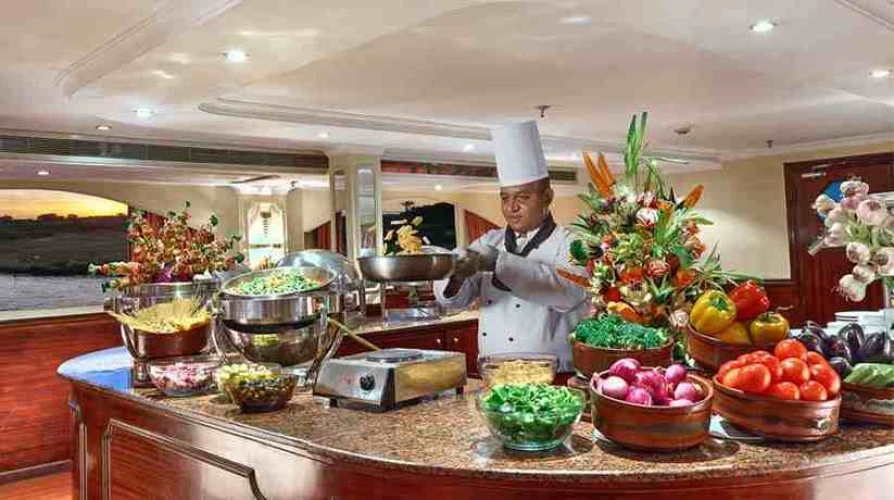
Inside the Kitchen: What Goes Into Cooking for 200 Guests on a Boat?
Inside the Kitchen: What Goes Into Cooking for 200 Guests on a Boat?
As you walk aboard the Nile dinner cruise through the carpeted aisle and sit down at your candlelit table, everything seems to flow smoothly and seamlessly around you. A white tablecloth lies before you, the friendly waiter brings you your water, and before long, you find yourself strolling over to an enormous, elegantly laid-out open buffet of delicious steaming meats, savory rice dishes, refreshing vegetable salads, and mouthwatering traditional Egyptian desserts.
However, have you ever stopped to think about what goes on just beyond those swinging stainless steel doors of the kitchen?
Preparing an elegant, multi-course buffet for 150-200 hungry guests in a moving ship sailing along a busy river is a fantastic culinary accomplishment, a test of both timing and logistics, a feat that requires a lot of careful engineering and organization. Let's have a look at what it actually takes to operate a floating kitchen restaurant on the Nile.
1. The Ultimate Space Challenge: Cooking in Miniature
If working in the kitchen of a traditional restaurant is a highly pressured environment, imagine what would happen when you shrink the size of the kitchen to half and put it in a boat floating through slow river currents and wakes of other ships!
Space in the kitchen of the Nile cruise ship – known as galley – is an absolute luxury. There isn’t a single square inch in this room which has not been used in a precise way:
Vertical Kitchen: Pots, pans, heavy frying pans, and dry ingredients are hung from overhead storage racks or are placed in specially constructed wall cabinets which can hold up to the rocking motion of the boat.
Efficient Prep Workstation: Preparing food workstations, cutting boards, and plating counters are compactly placed to enable all chefs of the kitchen to move around without knocking each other.
Heavy Duty Equipment: Commercial kitchen equipment like ovens, grills, and large freezers are bolted permanently in the heavy steel surface of the boat deck.
This is like a well-choreographed performance by chefs in the kitchen!
2. The Sourcing, Delivery, and Prep Marathon
However, the cooking art of such a dinner is not initiated by the movement of the boat from the wooden dock; it is a much more extensive process starting in local markets and preparation kitchens long before the start of a river cruise dinner.
The cooking of high quality and safe dishes of Egyptian and international cuisines for about 200 guests involves huge amounts of fresh ingredients: hundreds of pounds of beef, chicken, and fresh fish, boxes of herbs, sacks of onions and garlic, and countless heaps of long-grain rice and seasonal vegetables.
The Early Preparation Process: Long before the arrival of any of the guests to the pier, sous-chefs and line cooks are working on preparing the meals by slicing vegetables, marinating the meat in special mixes of spices, cooking tomato sauce and baking pastries and bread.
The Stringent Requirements for Food Safety: In order to provide guests with a safe food during their trip on the water, every single food component undergoes careful check, washing in purified water, and storing in huge walk-in refrigerators situated in the ship hulls.
3. Service Time: Managing the Floating Line
As boarding takes place and guests get seated in their spots, the kitchen moves into action immediately. It is here that professional discipline distinguishes the chaos in the galley from an exquisite cooking machine.
Unlike the ordinary restaurant which will have food orders coming in steadily over three hours in the evening, the buffet in a cruise ship has to have all foods ready, steaming hot, perfectly cooked and displayed in the most beautiful manner when the dining hall opens.
The Hot Holding Dilemma: To keep the food hot, moist and fresh in the stainless steel chafing dishes for two hours without overcooking it needs a high level of temperature control. The meats are prepared in such a way that they rest to completion just as service starts; the rice has to be kept fluffy through proper steam management and sauce is mixed regularly to avoid separating.
Live Action Stations: Most of the cruise ships have live grilling or carving station close to the buffet line. It is amazing and entertaining to see how a chef carves the roasted beef or grills the skewers of shish tawook.
4. Navigating the Waves: Keeping Steady Hands
One of the most unique and interesting problems associated with being a chef in the Nile is the river itself.
Though today’s dinner cruise ships are equipped with broad and very stable hulls to provide the highest level of stability, a passing cargo barge, sudden winds, or wakes from other tourist boats can sometimes make the ship sway just a little.
Try to think about making a delicate drizzle on a delicate pastry, stacking delicate garnish, pouring soup in such conditions when the floor you stand on sways just an inch.
Cruise ship chefs possess amazing dexterity and balance similar to those of dancers.
5. The Grand Finale: Quick Turnarounds
As the last of the diners finish their dessert, drink their mint tea, and make their way to the upper deck where they can dance to the music and feel the cool breeze in their hair, the night is certainly not yet over for the chefs.
Even as the boat comes to port and the passengers disembark, ready to enjoy their Egyptian night out in Cairo, the race against time commences. Stainless steel surfaces have to be scrubbed, inventory checked, and waste safely disposed of.
Final Thoughts: Appreciating Every Bite
Next time you board a Nile dinner cruise, go up to the buffet table and fill up your plate with all the lovely hot food that is there, but take a moment to think about the hidden army that works hard behind those swinging doors.
It is the magic of passion, perfection, teamwork, and amazing skills working together on the ever-flowing stream of history.





-webp.webp "Hilton")
-webp.webp "dusit")
-webp.webp "Marriott Hotels")
-webp.webp "Azimut Hotel")
-webp.webp "Golden Tulip")
-webp.webp "sheraton")
-webp.webp "westin hotel")
-webp.webp "Movenpick")
