
 English
 Italy
Italy
How to Extend Your Trip: Moving from the Nile to the Red Sea
Moving from the "Green Ribbon" of the Nile to the "Electric Blue" of the Red Sea is the quintessential Egyptian pivot. It is a transition from the verticality of stone temples and history to the horizontal infinity of the horizon and the sea. In the 2026 season, this "Temple-to-Turquoise" extension has become the standard way to end a journey, allowing the brain to process the intensity of the Valley of the Kings while the body floats in one of the world’s most saline and buoyant bodies of water.
However, the Red Sea isn't a single destination; it’s a 1,000-kilometer coastline with very different personalities. How you move between these two worlds determines whether your trip ends in a stressful logistical tangle or a seamless transition into paradise.
1. The Route: How to Make the Crossing
In 2026, the "Great Egyptian Traverse" has three primary modes. Your choice depends on your budget and your tolerance for a road trip.
-
The "Desert Shortcut" (Luxor to Hurghada/El Gouna): This is the most common route. It’s a roughly 4-hour drive across the Eastern Desert.
-
The Experience: You leave the lush Nile valley and almost instantly enter a lunar landscape of jagged granite mountains. It is starkly beautiful.
-
The 2026 Pro-Tip: Don't just take a standard taxi. Hire a private driver who can stop at the "Old Roman Quarries" along the way. Arriving at the Red Sea just as the sun sets over the mountains behind you is a core memory in the making.
-
-
The "Sky Bridge" (Cairo/Aswan to Sharm El Sheikh): If you are heading to the Sinai Peninsula, you must fly.
-
The Logistics: In 2026, EgyptAir and boutique domestic carriers have increased the frequency of "triangle flights" (Cairo–Aswan–Sharm). It’s a 60-minute hop that saves you a 12-hour bus ride.
-
-
The "High-Speed Rail" (The 2026 Game Changer): With the new high-speed rail lines maturing this season, connecting the Nile Valley to the coastal hubs has become significantly faster. Check the latest schedules for the "Green Line" connections that link the outskirts of Cairo to the Suez and Red Sea regions.
2. Choosing Your Coastal Identity
Not all Red Sea towns are created equal. In 2026, the "human" vibe of each destination has become more distinct.
El Gouna: The Sophisticated "Venice of the Sands"
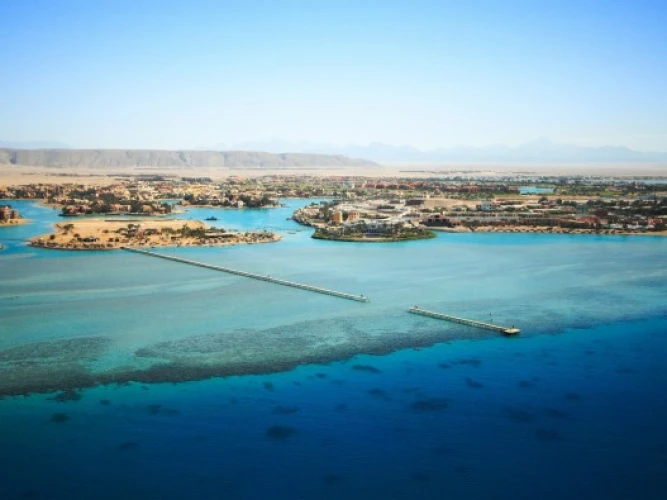
Located 30 minutes north of Hurghada, El Gouna is a privately developed town built on a series of lagoons.
-
The Vibe: It is the "lifestyle" capital. Think bicycle paths, organic cafes, and a world-class kitesurfing scene.
-
The Human Connection: This is where the Cairo creative elite spend their weekends. If you want a "resort" that feels like a real, walkable town with sustainable architecture and a "Digital Nomad" energy, El Gouna is the 2026 winner.
Marsa Alam: The "Untamed" South
If you want to escape the crowds entirely, head further south to Marsa Alam.
-
The Vibe: It is raw, quiet, and focused entirely on the water.
-
The Draw: This is where you find the "Dugong" (the rare sea cow) and giant sea turtles. In 2026, Marsa Alam has resisted the "mega-resort" trend, favoring eco-lodges that prioritize reef conservation over marble lobbies.
Sharm El Sheikh & Dahab: The Sinai Duo
Crossing the Gulf of Suez takes you to the Sinai Peninsula.
-
Sharm: The "Las Vegas of the Red Sea." High-end luxury, sprawling resorts, and world-class nightlife.
-
Dahab: The "Bohemian Heart." Located an hour north of Sharm, Dahab is the land of "Bedouin hospitality." It is the world capital of freediving and offers a low-key, flip-flop lifestyle that is the perfect antidote to the formal feeling of a Nile cruise.
3. The 2026 "Blue" Etiquette: Protecting the Reef
The Red Sea is one of the most resilient reef systems in the world, but it requires human respect. In 2026, the "Green Fin" initiative is strictly enforced.
-
Sunscreen Secrets: Most resorts now ban sunscreens containing oxybenzone. Buy "Reef-Safe" zinc-based cream before you arrive or at the local pharmacy.
-
Look, Don't Touch: The salt content of the Red Sea makes you incredibly buoyant. You don't need to "stand" on anything to stay afloat. Touching the coral doesn't just hurt the reef; it can lead to some nasty stings from stonefish or fire coral.
-
The "Plastic-Free" Coast: In 2026, many Red Sea towns have banned single-use plastics. Bring a high-quality reusable insulated flask; your hotel will have "Water Stations" to refill it.
4. Transitioning Your Wardrobe & Mindset
| The Nile Vibe | The Red Sea Vibe | The "Human" Pivot |
| Linen & Boots. | Swimwear & Sarongs. | Trade your "Temple Shoes" for sturdy reef sandals. |
| Hieroglyphics & History. | Marine Biology & Reefs. | Swap your Egyptology book for a fish identification guide. |
| Early Morning Temples. | Late Morning Brunches. | Allow yourself to sleep in. The sea isn't going anywhere. |
| Dry Desert Heat. | Humid Coastal Breezes. | The humidity will make it feel different; hydrate accordingly. |
5. Essential Red Sea Activities for 2026
-
The "Sunset Boat" (Felucca vs. Speedboat): While you’ve spent a week on the Nile, a sunset boat trip on the Red Sea is different. The water is deep indigo, and the backdrop of the mountains turning purple is a visual "closing ceremony" for your trip.
-
Snorkeling the "House Reef": In 2026, the best resorts are those with a "House Reef"—a coral garden accessible directly from the beach or a jetty. You don't need a boat to see 50 species of fish; you just need a mask and a pair of fins.
-
Star-Gazing in the Eastern Desert: Take a Bedouin-led "Star Safari." Away from the lights of the coast, the Milky Way over the Red Sea mountains is so bright it almost casts a shadow.
6. The 2026 Logistics Table
| Destination | Best Way to Get There from Luxor | Travel Time | Vibe |
| Hurghada / Gouna | Private Car / Shuttle. | 4 Hours. | Active, Chic, Accessible. |
| Marsa Alam | Private Car. | 5.5 Hours. | Wild, Quiet, Natural. |
| Sharm / Dahab | Flight (via Cairo). | 4-6 Hours total. | Iconic, Diverse, Sinai Soul. |
7. The Human Side: Processing the "Stone" Through the "Water"
Travelers often find that the first two days at the Red Sea are spent in a "temple trance." You’ll be sitting on a beach chair, but your mind will still be in the tomb of Seti I.
-
The "Slow-Down" Period: Don't book a scuba diving course for the very first morning. Give yourself 24 hours of "doing nothing" by the water. The sound of the waves is a natural "reset" button for the brain.
-
Reflective Journaling: This is the time to look back at your photos from the Nile. There is something about the blue of the sea that helps you organize the "gold and brown" of the desert in your mind.
8. Final Advice for the Extension
If you are extending your trip in 2026, stay at least four nights.
One day to travel and arrive, two days to fully relax into the "sea rhythm," and one day to prepare for the flight home. Anything less feels like a rush, and the whole point of moving to the coast is to remove the word "rush" from your vocabulary.
In Egypt, they say the Nile is the "Father" (the provider) and the Red Sea is the "Mother" (the nurturer). To see one without the other is to only know half the family. When you finally stand on that shoreline, looking across toward Arabia, you’ll realize that the Red Sea isn't just an "add-on" to your trip—it’s the deep breath you’ve been waiting to take.





-webp.webp "Hilton")
-webp.webp "dusit")
-webp.webp "Marriott Hotels")
-webp.webp "Azimut Hotel")
-webp.webp "Golden Tulip")
-webp.webp "sheraton")
-webp.webp "westin hotel")
-webp.webp "Movenpick")
