
 English
 Italy
Italy
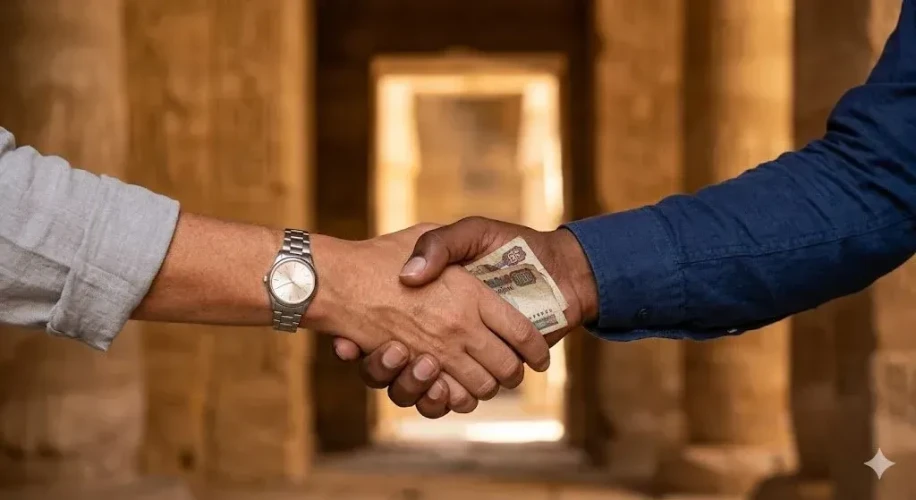
Guide to Tipping in Egypt
The Art of Baksheesh: A sort of human guide for slipping through Egypt tipping culture, more or less.
If you stand outside the Khan elkhalili bazaar in Cairo just as the afternoon sun starts to dip behind the minarets, you can catch this kind of, almost constant, symphony of noises. There’s the frantic honking of ancient black and white taxis and the rhythmic clink of metal cups from a wandering hibiscus juice seller, plus somewhere under all that one little word that gets murmured,said,and argued over a thousand times a day Baksheesh.
To the uninitiated Western traveler, people often translate “baksheesh” like it’s only “a tip.” But turning it into a simple credit card receipt line misses the entire heartbeat of Egyptian daily life. Baksheesh is not merely a payment, it’s a cultural ecosystem. It’s this intricate, centuries-old social agreement built from a blend of Islamic tradition, hard economic reality, and communal hospitality that keeps moving.
At first, trying to navigate it can feel exhausting. You might think you’re basically a walking cash machine or you go the other way and fear you’re causing offense without meaning to. Still, once you see the personal histories behind those outstretched hands, tipping in Egypt shifts from awkward worry into something deeper, a way to connect with the people who help keep this ancient place running.
The Economy of a Smile: Why Baksheesh Matters
To understand baksheesh you kind of have to get the daily reality of the people who are greeting you. Egypt is a country of immense warmth, but it is also a place where the economic landscape demands constant resilience , like all the time.
The base wages for service workers the man hauling your 30 kilogram suitcase up a set of stairs, the woman tidying your hotel room , the guard holding his ground for twelve hours under a brutal desert sun at the Valley of the Kings— are incredibly modest. For these people tips are not really a bonus for premium almost luxurious service. Instead it is more like the main route for buying groceries,covering school fees and keeping the electricity running at home.
When you give baksheesh you’re stepping into a localized, hands-on form of wealth reshuffling. There’s no corporate middleman anywhere in the chain. The 50 Egyptian Pounds you slip to a bathroom attendant goes straight into their pocket, it bypasses the macroeconomic stuff entirely. Once you shift the idea of tipping not as a kind of tax on your holiday but as direct positive ripples for a local family, the whole experience changes , noticeably.
The Tipping Blueprint
While baksheesh is deeply relational it still works inside a kind of overall expectation grid, you know, the “what people usually do” vibe. The Egyptian economy has seen big shifts in recent years so older guidebooks can look kinda wrong with their numbers. So to help you budget and move through your days with more confidence, here’s a realistic sort of breakdown for standard gratuities.
1. The Guardians of your Journey: Tour Guides and Drivers
Your guide is your storyteller, your quiet protector, and your cultural bridge. They do much more than just say dates , they interpret the whole feeling of the trip, kinda like translating the hieroglyphs of your experience.
Private Tour Guides: Expect around EGP 1,000 to 3,000 per day (roughly $20 to $30 USD), depending on how much they really tailored things for you.
Drivers: Moving through Egyptian traffic is an extreme sport , honestly. A solid driver keeps you safe and not stressed. Tip EGP 500 to 1,000 per day, and do it separately from the guide, if possible.
2. The Hospitality Heroes: Hotels and Cruises
The people working behind the scenes at your stay, are the ones that quietly make everything feel like a sanctuary instead of just a stop.
Hotel Housekeeping: Leave EGP 50 to 100 per day. Small but crucial method: put it there daily on your pillow, don’t wait for a lump sum at the end of the week, because hotel rotations change constantly.
Luggage Porters: EGP 50 to 100 per bag is normal and genuinely welcomed.
Nile Cruise Crew: Cruise ships often coordinate tipping together so the behind-the-scenes team (galley cooks, engine room workers, and that sort) are covered properly. It’s customary to leave $10 to $15 USD per person, per night, in an envelope at the front desk when you check out, just as a heads-up.
3. Everyday Interactions: Cafes, Restaurants, and Taxis
Sit-Down Restaurants: Try to look twice at your bill. You will almost always spot a 12% “service charge” tacked on. Watch out though, because that money is for the restaurant management, not for your server exactly. If you want your waiter to be properly appreciated, add something extra, like another 5% to 10% left as cash on the table.
Taxis and Uber: With regular taxis, agree on the fare first, then round it up to the nearest comfortable note. For example if the ride is EGP 170, go with 200. With Uber, using the app to leave a digital gratuity is totally fine, no real issue there, but handing over a cash EGP 50 directly to the driver often gets you a more noticeable, brighter reaction.
The Bathroom Attendant: You can expect a person there at nearly every public restroom near historical sites. They keep the stalls neat, and they will give you tissues. Make sure you keep a small stash of EGP 10 to 20 notes, just for that, because it helps.
The Street Smart Guide: Mechanics of Tipping
Knowing how much to tip is only half of it. The logistics of how you carry your money, and how you pass it over, will really decide how at ease you feel once you’re there on the ground.
The Sacred Stash of “Small Notes”
Your biggest problem in Egypt won’t be the heat or even the vendors… it will be hunting down change. If you hand a vendor, or a driver, a 200 EGP note for a 20 EGP service, they will almost certainly act like they do not have change, and you’ll get that “maybe later” vibe.
Make it a habit to build a “tipping pocket.” Every morning, break your larger bills at a supermarket, a hotel front desk or a big pharmacy. Keep your EGP 10, 20, 50, and 100 notes like they’re treasure. Put them in a pocket that’s easy to reach, separate from your main wallet, so you don’t end up pulling out a whole cash brick in public, every time you pay a porter.
Cash Is King, but Which Currency…?
Even though Egypt is going more digital, baksheesh stays a cash based world. For small, day to day gratuities, Egyptian Pounds (EGP) are the rule. A bathroom attendant cannot just take a 1-Euro coin and walk it over to a bank, for an exchange.
Still, for the bigger stuff like your personal guide at the end of a week long tour, or the crew working your Nile cruise Dollars or Euros are extremely appreciated. Just make sure that the foreign paper money you give is crisp, clean, and without any rips. Egyptian banks are known for rejecting damaged foreign notes, even when it feels minor.
The Dance of Unsolicited Help
One of the most common cultural shocks for travelers in Egypt is the sheer proactivity of the hospitality, it’s kind of unreal at first. If you look slightly lost near a temple, someone shows up, like, to point you toward a hidden corridor. And if you’re struggling to get both yourself and the Pyramids into a selfie, a local guard will, in a very polite way, take your phone for a second and direct you to pose like you’re jumping through the air.
This is where the line between genuine friendliness and an expected transaction starts to blur. It’s crucial to realize that unsolicited help almost always comes with a tacit expectation of a tip.
So if a guard brings you to a “secret room” or hands you a piece of traditional clothing just so you can pose with it, then a small EGP 50 to 100 baksheesh is pretty standard.
And if you do not want the help, the real trick is calm, confident, immediate politeness. Smile, put your right hand over your heart (that universal sign of respect across the Middle East), meet their eyes, and say firmly: “La, shukran” (No, thank you). Then keep moving. If you hesitate, start a longer chat, or look uncertain, people tend to read it as, basically, you inviting them to continue assisting you.
The Human Element: Grace Over Transactions
Ultimately, baksheesh is not some stressful mathematical equation or whatever. It’s more like a quiet acknowledgment of human labor, you know.
So when you hand someone a tip, don’t do it with that annoyed look , and don’t treat it like a chore. Look them in the eye, really. Smile . Say “Shukran” (thank you), or if you want to truly delight them say “Al-hamdulillah” (praise be to God) as you pass it over, like you’re recognizing that good fortune is also being shared.
And when you meet it with an open heart, and your pocket has a stack of small notes, the whole baksheesh system stops feeling like a barrier. It starts feeling like what it actually is: a beautiful, fluid, human exchange that keeps the wheels of Egyptian life moving .





-webp.webp "Hilton")
-webp.webp "dusit")
-webp.webp "Marriott Hotels")
-webp.webp "Azimut Hotel")
-webp.webp "Golden Tulip")
-webp.webp "sheraton")
-webp.webp "westin hotel")
-webp.webp "Movenpick")
