
 English
 Italy
Italy
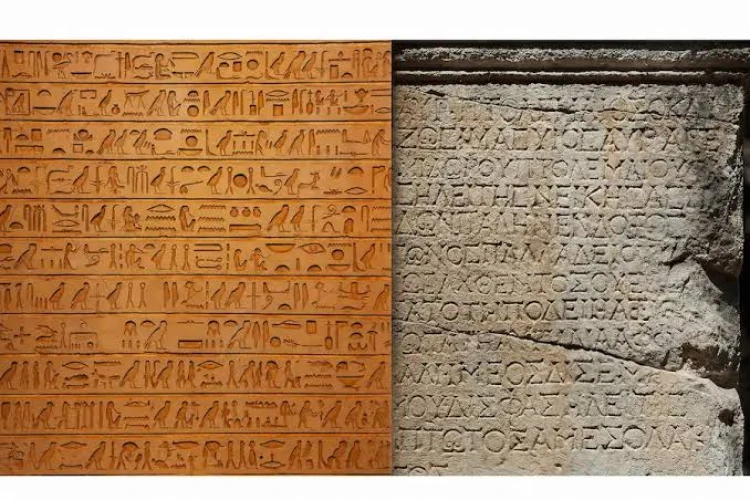
Greek Inscriptions as Sources for Ancient Egyptian History
When historians and epigraphers read ancient Egypt, their minds intuitively jump to hieroglyphs carved in sandstone or hieratic and demotic scripts inked on papyrus. However, when ancient Egypt entered the Hellenistic and Roman periods (332 BCE – 30 BCE), a new type of epigraphy emerged and subsequently played a prominent role in the historical development of the region. Indeed, the ancient Egyptian landscape was greatly decorated with Greek inscriptions carved on stone tablets and monumental rocks.
These epigraphic records narrated the story of a multiethnic society, while the native hieroglyphs inscribed the religious doctrines of the gods for the local priests. However, the Greek inscriptions provided the modern historians with a concrete and reliable primary source about the socio-political, cultural, and economic events that took place in ancient Egypt. The following points will expound on the significance of Greek inscriptions as primary sources of information about historical occurrences in ancient Egypt:
1. The royal decrees and bilingual stelae
2. The dedications and syncretism
3. The military, administrative, and economic inscriptions
4. The Roman period inscriptions
1. The royal decrees and bilingual stelae
The largest number of ancient Egyptian inscriptions that modern historians study trace back to the royal decrees. Since Egypt was ruled by the Macedonian dynasty, whose power depended on the native traditional beliefs and institutions, the Ptolemaic rulers had to balance between the needs and interests of the native Egyptian priests and the Greek-speaking authorities. Subsequently, the royal decrees were issued and inscribed in multiple languages, including Hieroglyphic, Demotic, and Greek scripts. The bilingual and trilingual decrees and their associated monuments were primarily meant for the native Egyptian priests and temples, as well as the military and administrative officials of the Macedonian dynasty.
The most prominent example of royal decrees carved in Greek, Hieroglyphic, and Demotic scripts is the Rosetta Stone. The Rosetta Stone was created in 196 BCE by Ptolemy V and marks his transition to full power. Although the Rosetta Stone’s Greek dialect helped Champollion decipher the hieroglyphic writing in 1822, the content of this particular decree narrates about the Ptolemy’s V acts of lowering the taxes of the temples, releasing the prisoners of war, and giving land to his soldiers. Similarly, the Canopus decree and the decree of Memphis demonstrate how exactly the Ptolemaic rulers used to inscribe and communicate their power to the people via monumental decrees.
2. The dedications and syncretism
The Greek inscriptions dedicated to gods discovered in different parts of Egypt provide modern historians with precious information about the religious practices of the ancient Egyptians. After Alexander the Great conquered Egypt, the Greek administrators, settlers, and merchants took over crucial cities such as Elephantine, Edfu, Thebes, Alexandria, Ptolemais, and Fayum. The inscriptions discovered on temples, altars, and statues there demonstrate how successfully the Greeks adapted to the local culture and respected its traditions.
Moreover, the Greek inscriptions help historians understand the syncretism that occurred between the two different cultures. Some inscriptions document the devotion to the state god Sarapis, who was a combination of Osiris, Apis, Zeus, and Hades. Similarly, the Greek-speaking soldiers and sailors who settled in Egypt paid special attention to the goddess Isis. In particular, the Eastern Desert graffiti and the inscriptions found near the ancient Egyptian temples narrate about the admiration and devotion of the Greeks to Isis Megale (Great Isis) and Isis Panthea.
3. The military, administrative, and economic inscriptions
In addition to the royal decrees and dedications to gods, the Greek inscriptions also mark the military, administrative, and economic developments that occurred in ancient Egypt. For instance, the Ptolemaic rulers granted land to the warriors and settlers who fought for them. These plots of land were located in Upper Egypt’s newly developed agricultural lands called the Fayum. The boundary stones and horothesia graffiti dedicated to the Greek landowners reveal the military class’s contribution to the development of the region. Historians refer to such information as the essential source of data about the fiscal system existing in ancient Egypt. Thus, the Greek inscriptions can help them reconstruct and analyze it.
Furthermore, some of the Greek inscriptions found in the territory of the temple of Seti I at Abydos and the Theban wadi narrated about the daily disputes and troubles occurring among the soldiers and travelers. They inscribed the complaints about their journey on the sandstone rock walls. The graffiti marks can tell the reader about the problems experienced by the Greeks in ancient Egypt. In particular, the local inhabitants of Egypt complained about the lack of security, food, and fair pay.
4. The Roman period inscriptions
When Egypt officially became a Roman province in 30 BCE, the Greek inscriptions continued to be used for public and formal purposes alongside with the Latin script that was reserved for the Roman authorities. The Roman rulers realized the importance of monumental inscriptions for the province. Subsequently, the Roman authorities erected buildings and monuments with Greek inscriptions all over Egypt. The inscriptions carved on the temple architraves, triumphal arches, and aqueducts narrate about the territorial and economic development carried out by the Roman authorities.
For instance, the Roman emperors invested significantly into the maintenance of the canals, roads, and temples to ensure the continuous flow of goods from Egypt to the capital. In particular, the Colossus of Memnon, a giant quartzite statue of Amenhotep III, became a popular tourist destination among the Greeks and Roman people. After it was damaged by an earthquake in 27 BCE and began to sing at dawn, hundreds of Graeco-Roman visitors left their inscriptions on the statue’s legs and base.
The Colossus of Memnon’s inscriptions represent the unique and valuable source of information for the modern historians, as they provide them with the first-hand account of the common visitors to the ancient Egyptian monument. The people who left their marks on the ancient statue ranged from soldiers and tourists to Roman senators and writers. In their inscriptions, they wrote their names, titles, and even poems about the miracle that occurred when the Colossus of Memnon began to sing.





-webp.webp "Hilton")
-webp.webp "dusit")
-webp.webp "Marriott Hotels")
-webp.webp "Azimut Hotel")
-webp.webp "Golden Tulip")
-webp.webp "sheraton")
-webp.webp "westin hotel")
-webp.webp "Movenpick")
