
 English
 Italy
Italy
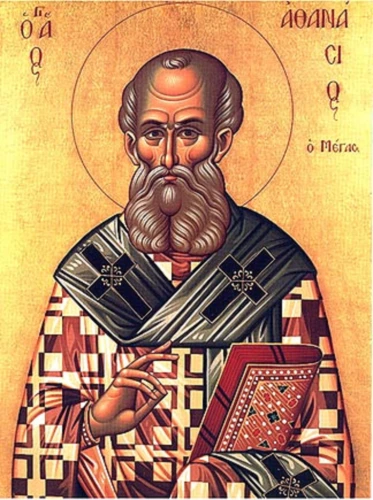
From Nicaea to the Desert: The Legacy and Exiles of Saint Athanasius
Saint Athanasius the Apostolic: The Defender of Faith and Champion of Nicaea
Few figures in Church history have left such a deep, farreaching imprint on global theology as Saint Athanasius the Apostolic (sometimes called Saint Athanasius of Alexandria). He was, in fact , the 20th Pope of Alexandria during those turbulent 4th century years and his constant fidelity to orthodox theology brought him the well known Latin nickname Athanasius Contra Mundum ("Athanasius Against the World").
Back then, everything seemed to move around shifting political agreements , imperial meddling , and a harsh doctrinal fracture across the Roman Empire. Yet Athanasius kept his footing. He defended the divinity of Christ , helped to shape the Nicene Creed , and even recorded the stories of the early desert fathers. In a way he built a theological groundwork that still holds , and keeps being read , in Catholic, Eastern Orthodox, Coptic, and Protestant circles today.
Below you’ll find the full account of the life, the theological legacy, and the historical weight of Saint Athanasius the Apostolic, laid out from beginning to end.
1. Early Life and Formative Years in Alexandria
Athanasius was born around 296 AD in Alexandria, Egypt , the intellectual capital of the Roman Mediterranean.
He grew up during the Great Persecution under Emperor Diocletian, and as a young boy he saw, firsthand the huge sacrifices made by Egyptian martyrs for their faith. That early exposure sort of planted in him a durable spiritual toughness, not just fleeting enthusiasm.
There is a well known story, later historians recorded it, that describes Pope Alexander of Alexandria standing back , watching from a window while little children played along the seashore. Pope Alexander saw Athanasius , carefully reenacting the Christian baptism ritual with unusual solemnity and solid accuracy. Alexander was impressed by the boy’s intellect and devotion, so he brought him under his mentorship, and took responsibility for his theological training as well as his classical education.
2. The Council of Nicaea (325 AD): A Young Champion Emerges
By his late twenties, Athanasius was ordained a deacon and served as the personal secretary to Pope Alexander, kind of side by side, so to speak, though not fully in the spotlight. During that period, a big theological disturbance broke out across the Christian world, it’s often referred to as Arianism, and it was pushed forward by Arius, a priest in Alexandria who taught that the Son (Jesus Christ) was a created being, and not co-eternal with God the Father.
Then, in 325 AD, Emperor Constantine convened the First Ecumenical Council at Nicaea (near modern-day İznik, Turkey), basically to repair unity across the Empire.
Even so, Athanasius was still only a young deacon, and he couldn’t vote directly, yet his smart conversations and sharp theological defense of Christ’s divinity mattered a lot. He argued that if Christ were merely a created being, then his death wouldn’t be able to ransom humanity properly, neither could devotion, or worship, of him really be justified. In the end, his lines helped form the key wording of the Nicene Creed, where Christ is declared to be “consubstantial (homoousios) with the Father.”
3. The 45-Year Papacy: Five Exiles Under Imperials
After Pope Alexander died in 328 AD , Athanasius was picked by popular acclamation as the 20th Patriarch of the See of Saint Mark in Alexandria, at least that’s how it is usually told.
His 45 year time as pope was marked by real turmoil and unusually sharp disagreement. As new Roman emperors—one after another—seemed to drift toward Arian sympathies, mostly for political comfort, Athanasius kept refusing each imperial order to soften orthodox doctrine, or to let Arius back into communion without proper repentance.
So, because of that unshaken position , Athanasius got banished from his see five different times, and it happened under four separate Roman emperors:
First Exile (335–337 AD): Constantine sent him away to Trier , in modern Germany.
Second Exile (339–346 AD): Constantius II expelled him, and Athanasius spent years in Rome, strengthening connections, between the Western and Eastern churches , even when things looked tense.
Third Exile (356–362 AD): He was pushed into hiding across the Egyptian desert, after imperial troops raided his church in Alexandria while a service was happening.
Fourth Exile (362–363 AD): Julian “the Apostate” sent him away again, viewing Athanasius as a danger to his plans for restoring paganism , or at minimum that’s the sense conveyed by the accounts.
Fifth Exile (365–366 AD): A short exile followed under Valens, during which he hid in his family’s ancestral tomb just outside Alexandria.
Overall , Athanasius spent more than 17 years away from Alexandria. Still, even with threats from emperors and accusations that were plainly false, he continued to lead his diocese from a distance—through letters and written treatises—staying, somehow, deeply cherished by the people in Egypt.
4. Connection with the Desert Fathers and Literary Works
During his long third exile, Athanasius found a refuge deep in the Nitrian Desert, and also in Upper Egypt with the early Christian hermits and monks. It was kind of a whole hidden life, very far from everything else.
The Life of Saint Anthony
When he lived among those monks, Athanasius seemed to form a tight friendship with Saint Anthony the Great, often called the father of Christian monasticism. After Anthony passed away, Athanasius wrote The Life of Saint Anthony, or Vita Antonii as some people say. Once it was translated into Latin, the book became an ancient sort of bestseller and it caught on fast, inspiring countless readers across Italy, Gaul and North Africa. Even Saint Augustine, you could say, was among those who turned toward monastic and ascetical life, in earnest.
Defining the New Testament Canon
In 367 AD, Athanasius released his well known 39th Festal Letter, also called the Easter Letter. In that letter he laid out the exact 27 books that today make up the New Testament canon, and he instructed believers to regard these texts as holy scripture. This letter is generally taken as the earliest surviving formal listing of the New Testament, the one recognized now.
5. Death and Lasting Legacy
In 373 AD, after years and years of struggle, Athanasius finally passed away peacefully in his home at Alexandria, with his clergy and faithful followers around him, kind of close, as if no one wanted to miss it.
And unlike quite a few of his earlier predecessors and some contemporaries, he didn’t die because of executioners. Still, the long burden of suffering he carried for orthodox theology earned him the name “Apostolic”, and also made him known as a confessor of the faith.
Then, in 1973, right on the 1600th anniversary of Athanasius’s death, Pope Cyril VI and Pope Shenouda III arranged for part of Saint Athanasius’s relics, to be brought back from Rome to Egypt. Nowadays, those sacred relics are enshrined beneath Saint Mark’s Coptic Orthodox Cathedral in Cairo.





-webp.webp "Hilton")
-webp.webp "dusit")
-webp.webp "Marriott Hotels")
-webp.webp "Azimut Hotel")
-webp.webp "Golden Tulip")
-webp.webp "sheraton")
-webp.webp "westin hotel")
-webp.webp "Movenpick")
