
 English
 Italy
Italy
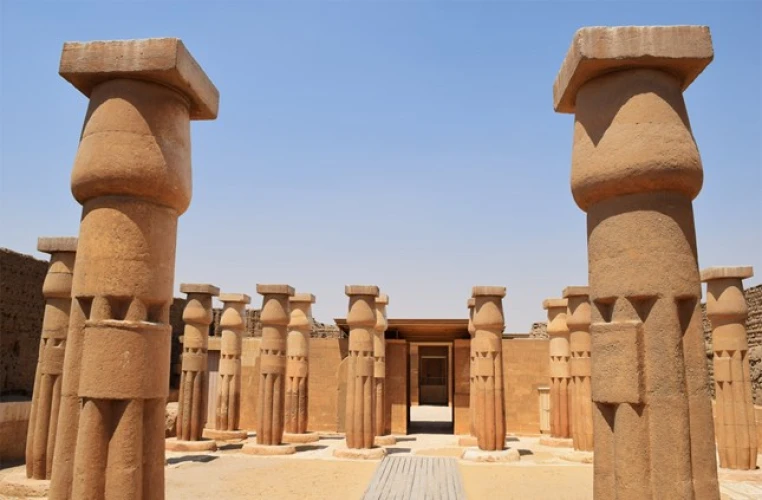
From Mastabas to Valley of the Kings: Inside Egypt’s Sacred Burial Grounds
The Royal Necropolises of Ancient Egypt: Cities of the Dead, Gateways to Eternity
To the ancient Egyptians, life on Earth was kinda only a short, flickering part of a bigger, still-lasting eternal narrative. The palaces of the pharaohs were mostly mudbrick, kinda practical stuff, meant to host a temporary mortal living, but the tombs? Those were different, cut right into solid bedrock, stacked with weighty stone blocks, and arranged like they would just keep going and going.
These huge sacred burial places were called necropolises, which is basically “cities of the dead” in a neat little translation.
They ran along Egypt’s western bank of the Nile River, where the sun sets each evening like it’s slipping into the underworld. Over something like three millennia, the royal necropolises weren’t fixed, they shifted and evolved, starting with early mudbrick layouts, then moving toward towering stone pyramids, and later, to deep hidden subterranean rock cut tombs.
So, this is the full account of Egypt’s best known royal necropolises, from Abydos and Saqqara, over Dahshur and Giza, and then into the Valley of the Kings , and also how these places nudged human history forever.
1. Abydos: The Cradle of Royal Burials
Long before that first stone pyramid ever rose into the desert sky, the story of royal burials start, more or less, in Upper Egypt around Abydos (in ancient times called Abdju)
The first Pharaohs
In the Early Dynastic Period (Dynasties 1 and 2 , c. 3100–2686 BC), the so called legendary kings who first managed to unify Upper and Lower Egypt like Narmer, Aha, and Djer, put their tombs at the desert place of Umm el-Qa'ab in Abydos
Mastaba tombs: Those early royal burials were put together as underground chambers, lined with mudbrick and then covered by low rectangular mounds with flat tops, people often refer to these as mastabas (from the Arabic word for “bench”).
The domain of Osiris: Abydos was treated as the mythical burial spot and spiritual home of Osiris, the god of the underworld and rebirth, and for thousands and thousands of years Egyptians viewed Abydos as the most sacred pilgrimage place in the whole country.
2. Saqqara: The Birthplace of Monumental Stone Architecture
As the Old Kingdom started around 2686 BC, royal power kind of drifted north, toward Memphis , the main administrative center. Not far from there, Saqqara sat on a broad plateau, and it gradually turned into the main royal burial ground for centuries.
Imhotep and the first pyramid, sort of
This is where the story really bends, at least according to what we know, during Pharaoh Djoser in the Third Dynasty. His able vizier and royal architect, Imhotep , had a bold, almost audacious notion: rather than raising a plain mudbrick mastaba, he arranged six stone mastabas one above the other, each time smaller.
What followed was the well known Step Pyramid of Djoser, often described as the world’s first big stone structure. After that, Saqqara swelled into a major necropolis, filled with dozens of royal pyramids, noble mastabas, and the underground passages of the Serapeum. There, sacred Apis bulls were laid to rest inside massive granite sarcophagi, which felt pretty monumental for the period.
3. Dahshur: The Engineering Laboratory of the Pyramids
A few kilometers south of Saqqara, Dahshur sits quietly, like it s trying not to be noticed, yet somehow it matters a lot. This necropolis played the most critical role in figuring out, step by step, the geometry of pyramid construction.
King Sneferu’s masterpieces
In the Fourth Dynasty, Pharaoh Sneferu, the father of Khufu, turned Dahshur into his personal architectural workshop—more or less, a real test ground for ideas:
The Bent Pyramid: it s known for a steep 54-degree angle, and during construction, ground instability showed up, so the team adjusted the upper part, flattening it to 43 degrees mid-build. That change is what gives it its recognizable bowed silhouette, sort of like a careful correction halfway through.
The Red Pyramid: once the builders understood how weight and load behave from the Bent Pyramid, Sneferu had them raise the Red Pyramid at the stable 43-degree slope. In result, they achieved what many historians call humanity's first successfully built, smooth-sided true pyramid, a straight answer after the earlier experiment.





-webp.webp "Hilton")
-webp.webp "dusit")
-webp.webp "Marriott Hotels")
-webp.webp "Azimut Hotel")
-webp.webp "Golden Tulip")
-webp.webp "sheraton")
-webp.webp "westin hotel")
-webp.webp "Movenpick")
