
 English
 Italy
Italy
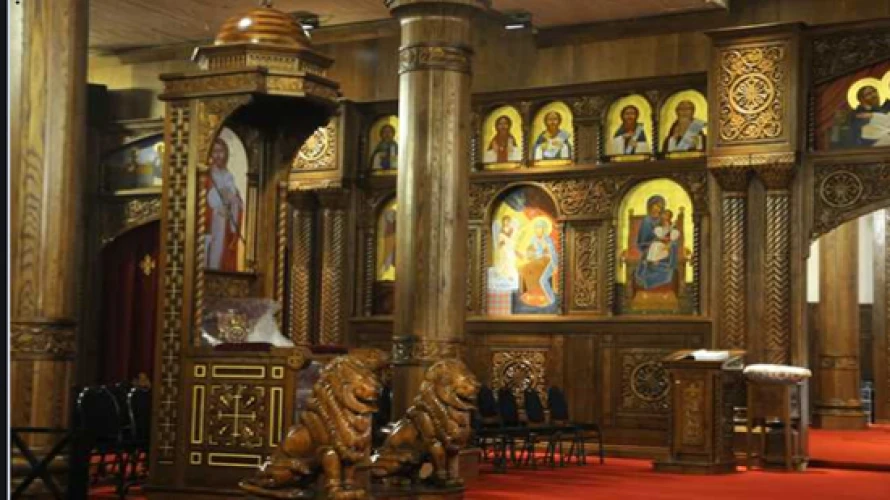
From Mark to Modern Papacy: The Intellectual and Spiritual Legacy of Alexandria
The See of Saint Mark in Alexandria: History, Legacy & Spiritual Authority
Standing as one of the oldest and also most historically important patriarchates across all of Christendom, The See of Saint Mark in Alexandria (Al-Kursi al-Marqasi) has a kind of singular place in the wider religious history of the world, honestly.
Long before Rome or Constantinople were all the rage in ecclesiastical leadership, Alexandria acted like an intellectual engine, a theological heart, and a spiritual center for the entire Mediterranean sphere. It was founded in the 1st century AD by Saint Mark the Evangelist and from there, this sacred See really helped give rise to early Christian scholarship, it also shaped core doctrines, and it even pushed forward desert monasticism .
If you’re looking into the deep history of African Christianity, early church councils, or the modern legacy of the Coptic Orthodox Church, then here is the complete narrative—of the historic See of Saint Mark in Alexandria, in full.
1. The Founding: Saint Mark and the Alexandrian Succession
The tale of the See kind of begins around 42 AD, when Saint Mark the Evangelist— writer of the Gospel of Mark and companion of Saints Peter and Paul— came in to the Mediterranean coastline near Alexandria.
Back then, Alexandria was basically the intellectual capital of the Roman Empire. It was well known for its huge philosophy schools, massive libraries, and this diverse cultural mix of Greeks, Romans, Egyptians and Jews, yes all together.
As the story goes, Mark’s mission got started after he healed a local cobbler, named Anianus. His hand had been pierced while he was repairing Mark’s sandal. Anianus accepted the faith, and when Mark was ready to go further, he ordained Anianus as the very first Bishop of Alexandria. In that moment, the Holy See of Alexandria was formed, and it set the stage for an unbroken thread of apostolic succession that still reaches the Pope of Alexandria today.
2. The Intellectual Engine of Early Christianity
In the 2nd and 3rd centuries , the See of Alexandria sort of distinguished itself , not via political power as such, but more by unmatched scholarship and this steady intellectual defense of the faith.
The leaders there set up the world famed Catechetical School of Alexandria. Scholars from all over Europe, Asia Minor, and North Africa journeyed toward Alexandria , to learn from remarkable minds such as Clement and Origen. In the end, the school basically showed the ancient world that Christian theology could indeed engage classical Greek philosophy on equal ground and even move past it, as it were, without losing the thread.
3. Leadership in Ecumenical Councils and Defense of Orthodoxy
In the 4th and 5th centuries, the Alexandrian See kinda played a decisive role, in shaping the core doctrines of global Christianity, through those early ecumenical councils that people keep referencing. It sounds straight forward, but it was also deeply political, and liturgical all at once
Saint Athanasius the Apostolic (20th Patriarch)
When he was a young deacon, and later as Pope of Alexandria, Athanasius defended the orthodox understanding of the Trinity against Arianism at the First Council of Nicaea, (325 AD). He was exiled five times by Roman emperors for his stance, and honestly his persistence just kept paying off, so much that people gave him the title Athanasius Contra Mundum , meaning "Athanasius Against the World".
Saint Cyril of Alexandria (24th Patriarch)
Cyril was often called the "Pillar of Faith". He guided the See while the Council of Ephesus was underway (431 AD). During that time he defended Mary’s title as Theotokos, or "God-bearer" , and he helped articulate early Christological doctrine, as if it had to be said clearly, even when things were tense.
The Role of Determining Easter
Because Alexandria had advanced astronomical know how, the First Council of Nicaea officially assigned the Patriarch of Alexandria the job of calculating the accurate annual date of Easter , also called Pascha, for all Christian churches worldwide. This duty was announced through annual Festal Letters, which arrived like a yearly signal, from the city’s learned circles.
4. Historical Shifts: The Seat Moves to Cairo
While Alexandria stays the spiritual foundation and the title bearer of the See (The Pope of Alexandria and Patriarch of the See of Saint Mark), in practice political changes, over time, nudged the real seat of administration away from the older place.
After the Arab conquest of Egypt in the 7th century, and then with Cairo being founded in 969 AD, the center of political life kind of moved inland. By the 11th century, during Pope Christodoulos (66th Patriarch), the official administrative seat was shifted from Alexandria to Cairo’s Hanging Church (Al-Mu'allaqa), and later it was moved again to the Saint Mark Coptic Orthodox Cathedral complexes in Azbakeya, and Abbassia.
Even with that shift in administration, every Pope of Alexandria is still consecrated in Alexandria, so the continuous spiritual chain stays rooted in that Mediterranean city, without interruption.
5. Physical Landmarks of the See Today
People who want to actually walk through the tangible heritage connected with the See of Saint Mark can drop by a few key spots in Alexandria and also Cairo, a bit here and there, you know.
1. Saint Mark’s Coptic Orthodox Cathedral in Alexandria
Right in the middle of Alexandria, this cathedral is on the same historical ground, where Saint Mark is said to have raised his original church in 42 AD . And it’s also the place connected with his martyrdom in 68 AD. Inside, you’ll find the head of Saint Mark along with the tombs of well known Alexandrian patriarchs.
2. The Hanging Church, Old Cairo
This old basilica from the 3rd century, in Old Cairo, actually worked as the official administrative base of the See of Saint Mark for many centuries throughout the Middle Ages, even if the style changed over time.
3. St. Mark’s Cathedral Complex in Abbassia, Cairo
This is the modern seat of the Coptic Orthodox Papacy, opened in 1968 by Pope Cyril VI. Here, in a quiet but very meaningful way, the returned relics of Saint Mark rest today .





-webp.webp "Hilton")
-webp.webp "dusit")
-webp.webp "Marriott Hotels")
-webp.webp "Azimut Hotel")
-webp.webp "Golden Tulip")
-webp.webp "sheraton")
-webp.webp "westin hotel")
-webp.webp "Movenpick")
