
 English
 Italy
Italy
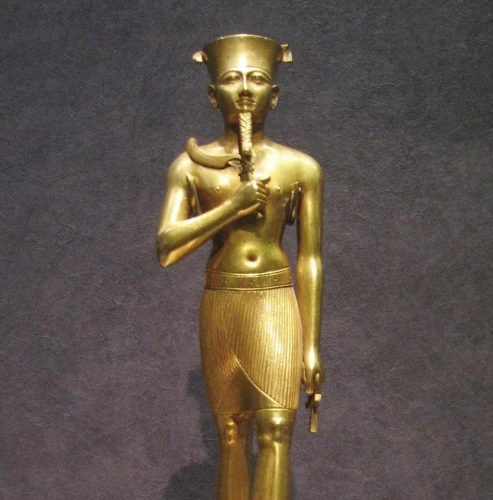
From Local Wind Deity to Amun-Ra: How Thebes Built an Empire
Amun: The Hidden One, King of Gods, and Sovereign of the Empire
In the sprawling pantheon of ancient Egypt, no deity really went through a more astounding political and theological change than Amun , (you might see Amen or even Ammon in old writings). His name literally comes across as “The Hidden One” or maybe “Unseen Power,” depending on how you translate it.
Unlike gods tied to what you can actually see in the world—like Ra’s sun disk, or Osiris with his rich, life giving mud—Amun began as something harder to grasp. At first he stood for the unseen air, the mysterious wind, and that invisible breath of living things.
Still, even starting out as a local deity in Upper Egypt , Amun somehow climbed and climbed until he became the unquestioned King of Gods, the divine patron of the New Kingdom empire, and to be honest arguably the most powerful religious presence across the ancient Near East.
So here is the whole account of Amun, sort of all at once: his strange beginnings, his rise into imperial power, his sacred blending with Ra, and the breathtaking architectural legacy he left behind, mainly at Karnak.
1. Primordial Origins: The Mysterious Wind of Creation
Amun shows up pretty early in ancient Egyptian theology, kind of as a member of the Ogdoad of Hermopolis, you know, that group of eight primordial gods who were there before anything was actually created.
The Invisible Force
In the Hermopolitan creation story, the whole universe starts out inside chaotic primal darkness, and it’s shown through four pairs of male and female deities, each one sort of standing for abstract, impersonal powers:
Nun and Naunet: Primeval waters
Kuk and Kauket: Darkness
Huh and Hauhet: Boundlessness
Amun and Amaunet: Hiddenness, and this unseen air
So, the other pairs mostly point to formless chaos and emptiness, but Amun and Amaunet are a little different. They represent the hidden, generative breath of air that moves over the dark waters, and then it kind of ignites the very first moment of creation. And since Amun stays unseen, like wind does, he’s thought to be everywhere at the same time, only.. at the same time impossible to really understand.
2. The Rise of Thebes: From Local Deity to Imperial Sovereign
For much of the Old and Middle Kingdoms, Amun stayed kind of a modest local deity, worshipped in the southern city of Thebes (today’s Luxor). but then, during the Second Intermediate Period, the Theban princes started this rather ferocious war of liberation, to push out the foreign Hyksos invaders from Egypt, and of course the whole thing was fought under the banner of their local champion god, Amun.
The Divine Patron of the Empire
Once the Theban princes managed to reunify Egypt, and founded the glorious New Kingdom (c. 1550–1070 BC), they explained their whole military success as Amun’s blessing, so yeah it wasn’t just coincidence.
They basically did two big moves:
- The Imperial God: Amun got elevated from a regional deity into the national supreme god of the state.
- The Treasury of Nations: As pharaohs like Thutmose III, Seti I, and Ramesses II pressed into territories from Nubia all the way to the Euphrates River , a huge share of their war booty, gold, slaves, and tribute was funneled straight into Amun’s temples.
The priesthood of Amun grew so wealthy and influential that they rivaled the power of the pharaoh himself, controlling vast estates, merchant fleets, and thousands of temple workers.
3. Amun-Ra: The Supreme King of Gods
To solidify Amun’s supreme status across the whole country, Theban priests did this brilliant kind of theological syncretism in the New Kingdom: they kinda merged Amun with the ancient sun god Ra and—yeah—made Amun-Ra.
That “mix” pulled together two sides that feel opposing, but still complementary about the cosmos:
Amun (The Hidden): the transcendent, invisible creator, who sits beyond human sight
Ra (The Revealed): the visible, present sun god whose light and warmth, keep illuminating the world, every single day
So as Amun-Ra he was then hailed as “King of Gods,” “Lord of the Thrones of the Two Lands,” and also the supreme creator of all living beings. He wasn’t only “Egypt’s” god anymore; instead he became seen like a universal divinity whose power reached over, and managed, all foreign nations and cosmic forces too.
4. Visual Symbolism and Sacred Forms
On temple reliefs and statues, Amun shows up in a few distinct visual forms, the ones that really lean into royalty and fertility, kind of like, you know, it’s meant to be obvious:
**The Double-Feathered Crown:** Amun is probably the most recognizable as a tall, royal man wearing a flat-topped crown, on top of which sit two massive vertical ostrich feathers (Shuti). Those feathers stand for truth, air, and this highest divine status, it kind of makes him look unreachable.
**The Ram Form:** Amun was often portrayed as a ram, with curved horns that spiral downward, but sometimes it’s a human body with a ram’s head instead. The ram, well that stands for masculine fertility, untamed physical strength, and also rough protective leadership over his flock, even if the scene is quiet.
**The Blue Skin:** In tomb paintings, Amun’s skin is frequently painted a deep blue. This is supposed to point to his link with the cosmic sky, the primeval waters, and the invisible air that no one really sees, but everyone sort of feels around them.




-webp.webp "Hilton")
-webp.webp "dusit")
-webp.webp "Marriott Hotels")
-webp.webp "Azimut Hotel")
-webp.webp "Golden Tulip")
-webp.webp "sheraton")
-webp.webp "westin hotel")
-webp.webp "Movenpick")