
 English
 Italy
Italy
From Chiefdoms to Kingdom: How Naqada II Forged the Architecture of Kingship
Naqada II Culture: The Gerzean Expansion and the Dawn of the Egyptian State
Developing along the Nile Valley roughly between 3500 BC and 3200 BC, the Naqada II Culture—also called the Gerzean Culture in history books— marks that really big turning point of Predynastic Egypt, you know the kind that changes everything a bit.
After the artistic traditions of Naqada I, this period brought sudden, kind of explosive urban growth, and then there was really far reaching international trade, plus technological leaps, and also the emergence of strong regional chiefdoms. All of that together created the groundwork, for a single unified state, under the first Pharaohs.
Here is the complete guide to Naqada II, its most iconic art, major urban centers, social evolution, and historical legacy.
1. Ceramic Revolution: Decorated D-Ware Pottery
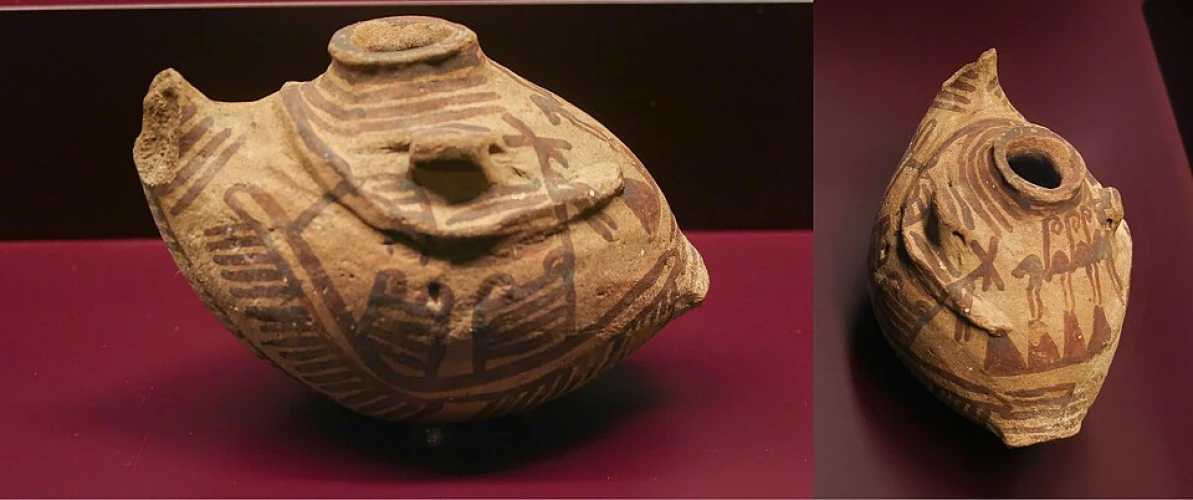
Artisans in Naqada II did something pretty important, they made one of the most recognizable ceramic looks in world prehistory, people often call it Decorated Ware or D-ware, even if sometimes it is treated like it’s just “a style”.
Buff Clay body: Potters moved away from red Nile silt and started using a finer more dense marl clay from desert wadi beds. That change helped them get a smooth buff, or sometimes beige sort of surface.
Red ochre paint: Then, with reddish brown ochre they laid down vivid pictures, not random marks, but kind of story like scenes, you can see it in the way the figures are set.
Nile boats: You get large ships with multiple oars, little cabins, and sacred emblems, or standards. They feel deliberate, like symbols are part of the design, not just decoration.
Desert wildlife: There are herds and groups, flamingoes and gazelles and ibexes, also ostriches, plus hunting dogs. It’s busy but still organized in a way.
Human figures: On top of that, there are ritual dances, priestesses with arms raised, and hunters carrying weapons, all of it feels tied to ceremony and activity.
2. Urbanization and Fortified Chiefdoms
Naqada II kind of marked this shift, from small farming villages over to walled, more urban centers. And then power… it got sort of locked up into three big regional chiefdoms across Upper Egypt, like not just one place leading everything.
Hierakonpolis (Nekhen): basically the political plus religious heartland, with early elite residences around, big pottery workshops, and those monumental mud-brick shrine enclosures too.
Naqada (Nubt): it sits close to the rich gold routes along the Eastern Desert, and it became a huge trade and exchange hub, also a manufacturing center, so there was constant activity.
Abydos (Abdju): this was the sacred burial ground for early rulers and elites, and it set up the whole groundwork for royal necropolises such as Umm El-Qa'ab.
In the meantime, many communities built mud-brick defensive walls around their towns. The idea was to keep their amassed wealth, the agricultural surpluses, and even the trade goods safer from rival chiefdoms , since conflicts were common.
3. Pear-Shaped Maceheads and Elite Regalia
As warfare and political leadership started getting more organized, symbolic objects kind of shifted toward showing authority , and this military prowess feel, more in your face:
Pear-Shaped Maceheads: The older disc-shaped macehead from Naqada I gave way to heavier, pear-shaped stone maceheads. These were carved from tough limestone or porphyry, and they quickly became basically the top sign of royal power . You can see them all over later Pharaonic “smiting” scenes, where the whole idea is dominance and control.
Flaked Flint Knives: Meanwhile, skilled stoneknappers crafted flint knives that were unbelievably thin and ripple-flaked, often paired with ivory handles. On those handles there were intricate depictions, like ceremonial processions , animals, and combats. A well-known example is the Gebel el-Arak knife.
Zoomorphic Slate Palettes: Slate palettes also grew bigger , and got more elaborate over time. They moved beyond just being practical devices for grinding eye paint and became something like symbolic canvases. In other words, they highlighted victory over chaos, and not-so-subtle scenes about conquering enemies.
4. Expanding International Trade Networks
Naqada II saw a sort of sudden and really un comparable uptick in far reaching trade, like it just spilled well beyond the Egypt borders in a way that was, honestly, unprecedented.
In Lower Nubia there was continual deal making for cattle, ivory, ebony, and also incense.
Then for Sinai and the Levant, Egyptians brought in things like copper ore, wine, olive oil, and cedar wood, with Lebanon in the mix too.
And when it comes to Mesopotamia and Elam, there was either a direct, or kind of indirect, contact with the Uruk culture, which fed into Egyptian art. You start seeing cylinder seals, lapis lazuli beads and architectural vibes—some examples are the recessed brick niches—showing up there.





-webp.webp "Hilton")
-webp.webp "dusit")
-webp.webp "Marriott Hotels")
-webp.webp "Azimut Hotel")
-webp.webp "Golden Tulip")
-webp.webp "sheraton")
-webp.webp "westin hotel")
-webp.webp "Movenpick")