
 English
 Italy
Italy
From Astrolabes to Crystal Ewers: The 10 Most Extraordinary Islamic Art Masterpieces
10 Must-See Masterpieces Inside the Museum of Islamic Art in Cairo
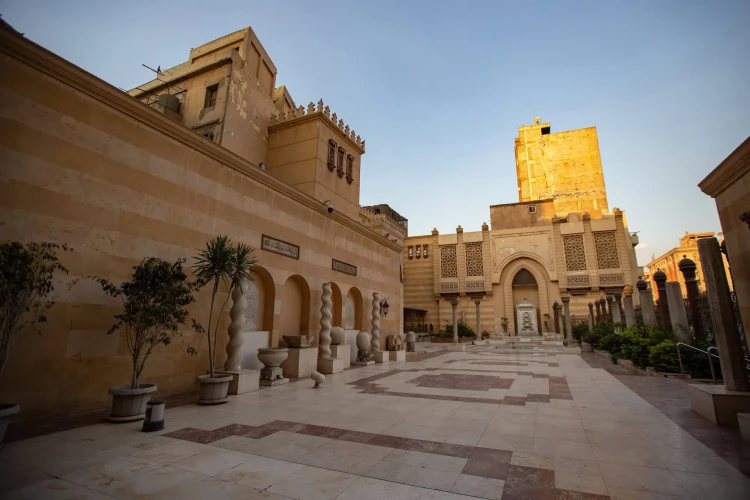
When you step inside the Grand Hall of the Museum of Islamic Art (MIA) in Cairo, the first response is pretty much always this quiet, awestruck kinda silence. The loud, messy roar of Cairo street traffic just goes away, and then there’s this soft glow from low hanging brass chandeliers, it reflects across immaculate polished marble floors, like everything suddenly got calmer.
Stretching across more than a thousand years of history, the MIA carries the world’s biggest and most thorough collection of Islamic relics. And with over 100,000 treasures stored in its archives , showing stories tied to empires that reached from sun-drenched Andalusia all the way to lively western China trading harbors, it is honestly easy for a first time visitor to get sensory overload, even before you fully figure out where to look.
So to help you move through this huge vault of human cleverness we picked a clear list—10 absolute must-see masterpieces—those that really set the tone for the artistic, scientific, and spiritual peaks of medieval Islamic civilization.
1. The Astrolabe of Shah Jahan
It’s in the Science and Medicine Gallery, and it really looks breath taking , like one of those futuristic pocket watch things , only… made out of brass. You can almost say it resembles a complex astrolabe, yes, but it feels more like something you’d find in a dream of gears and time. It was crafted in India during the 17th century, for the Mughal Emperor Shah Jahan, the same visionary who built the Taj Mahal. Honestly, it’s an absolute marvel of medieval engineering.
The brass plates are hand etched, with tiny mathematical grids, zodiac marks, and calligraphic calculations, all layered together like they were done with extremely patient hands. This piece works as a gorgeous physical testament to a period when artistry and cutting edge science weren’t separate at all, not even a little.
2. The Fatimid Rock Crystal Ewer
Carved in Egypt somewhere around the 10th century, this legendary water pitcher is, frankly, one of the rarest lapidary treasures you can even think about. Artisans worked slowly, scooping out the heart of a single, flawless lump of solid quartz crystal, and then scraping the inner surfaces down until the interior walls felt almost paper-thin, delicate, and completely translucent (like you can see through it without any doubt).
The outside isn’t plain either. It has fine raised reliefs, with stylized cheetahs and floral designs that almost seem to shift when the light hits. And since rock crystal was thought to carry magical, cleansing qualities, it was kept only for the private treasuries belonging to the Fatimid caliphs, no exceptions.
3. The Mamluk Enameled Glass Mosque Lamps
When you step into the glass galleries, your gaze kind a sticks to this striking lineup of 14th-century mosque lamps. They’re hand-blown out of thick, weighty glass, and they were made to order for the big stone complexes belonging to Mamluk sultans, like really grand places.
You can see the surfaces are dressed up with deep, vivid blue, red, and golden enamels. Along them, there is fine Arabic calligraphy, it includes a quotation from the well known “Verse of Light” in the Holy Quran (“Allah is the Light of the heavens and the earth…”). Once the vessels are filled with olive oil, and the wicks are allowed to float, they throw this cozy ,almost mystical glow over the old Cairo sanctuaries, stone after stone.
4. The Inlaid Brass Basin of Sultan al-Nasir Muhammad
This monumental metal basin is kind of a masterclass in Mamluk metallurgy. It was hammered out of one solid sheet of brass in the early 14th century and somehow every square centimeter of its surface ends up being heavily crusted with inlaid silver and gold wire, you can see it up close.
The interior plus the exterior have those incredibly detailed bands of script, laying out the long royal titles of Sultan al-Nasir Muhammad, and they are broken up with lively medallions showing court musicians, horse-mounted knights and soaring falcons. Overall it gives off that immense wealth vibe and also this sharper military pride, from the Mamluk golden age.
5. The Umayyad Inscribed Key to the Holy Kaaba
Going back to the 14th century, this simple but also deeply sacred iron key is kind of one of those emotional anchors, for the museum’s religious art collection. It is made from forged iron and it ’s heavily inlaid with nice silver wire, and honestly it’s considered the oldest key that still survives, connected to the Holy Kaaba in Mecca.
The rectangular handle is beautifully engraved with Quranic lines, plus the name of the reigning Mamluk sultan who commissioned it as a pious present to the holy sanctuary. It works as a vivid emblem of political legitimacy ,and spiritual devotion.
6. The Mosaic Marble Fountain of the Mamluk Palaces
Kinda resting right in the center of the main architectural gallery, there’s this big octagonal indoor fountain, which used to be the luxurious heart of a Mamluk residential palace , sort of. It’s assembled from thousands and thousands of very small tiles, each one individually cut , in red jasper, green porphyry, and white marble. When the water bubbled up quietly from its central nozzle, the rippling liquid would help those intricate geometric patterns look like they shift, kind of breathe, and somehow start to live.
7. The Wooden Mihrab of Sayyida Ruqayya
Sent from her historic shrine in Cairo, this portable wooden prayer niche ( mihrab ) is often seen as one of the finest masterpieces in Islamic woodwork that was ever created. It was built in the 12th century, and it is carved all the way through from premium teakwood.
The panels show this dizzying mix of deep, interlocking arabesque vines, geometric stars, and graceful calligraphic frames. The carvers managed, somehow, to reach a level of depth so intense that the wood appears almost yielding, like woven lace rather than rigid timber.
8. The Andalusian Ceramic Lusterware Platters
Coming out of 15th-century Moorish Spain, these huge earthenware plates kinda show the famous lusterware painting craft, yes the legendary kind. Artisans went on ahead and used a particular glaze, with metallic oxides from silver and copper mixed in , then they fired the pottery already made first, and after that they baked it again in a kiln, smoke swirling around, with less oxygen than you’d expect. The outcome was this wild, iridescent metallic glow, kind of like it was pretending to be solid gold. And honestly these luxury ceramics were very much wanted , by European royalty as well as by merchant trade people.
9. The Ottoman Iznik Floral Tile Panels
Bringing this massive burst of color to the ceramic wing are those large wall panels made with Iznik tiles from 16th-century Turkey, yes.
These brilliant quartz fused tiles are world-famous for their stark, white backgrounds and for their use of a very highly unique raised tomato-red underglaze. The panels are worked with flowing organic compositions of curved tulips, blooming carnations, and graceful cypress trees, all of it like the essence of a paradise garden indoors, really.
10. The Imperial Mughal Miniature Paintings
Somehow tucked safely in the climate-controlled paper and manuscript gallery, there are delicate jewel-toned miniature works, from the Mughal Empire. Theyre painted with single-hair brushes, and pigments that were ground from real emeralds lapis lazuli and pure gold leaf… so yes, these book illustrations are unbelievably detailed, I mean.
They show close up and intimate moments from royal court life. Like polo matches in royal gardens, emperors meeting foreign ambassadors, and those quiet poetic gatherings under moonlit skies, really.
Practical Tips for Your Masterpiece Hunt
To really enjoy your stroll through these ten iconic treasures, just keep a few visitor logistics in your mind, so you don’t end up wandering around, half lost and in a hurry.
Try a curated pace: don’t attempt to look at everything in one stretch. Use the museum map to find these particular areas (Science, Glass, Metalwork, Wood and Ceramics) so your route feels almost natural, instead of rushed.
The best time to visit: aim to arrive close to 10:00 AM on a weekday. It’s usually very calm then, which means you can zoom in on the fine textures and intricate details without big tour groups constantly stepping into your line of sight.
Booking, in a safe way: if you want the real depth behind the deep historical, scientific, and calligraphic stories tied to each object, consider hiring a licensed private guide. It makes a difference, genuinely.
And when you’re setting up your museum day tours with Cairo operators while you’re at home, make sure your reservations go through a secure checkout flow. Use platforms like WeTravel, or payment pathways backed by Stripe. These systems use certified PCI-DSS Level 1 encryption, so they tokenize your card details securely. That way your payment data stays hidden from external sales staff, letting you lock in your historic Cairo itinerary safely, with more calm than you’d expect.





-webp.webp "Hilton")
-webp.webp "dusit")
-webp.webp "Marriott Hotels")
-webp.webp "Azimut Hotel")
-webp.webp "Golden Tulip")
-webp.webp "sheraton")
-webp.webp "westin hotel")
-webp.webp "Movenpick")