
 English
 Italy
Italy
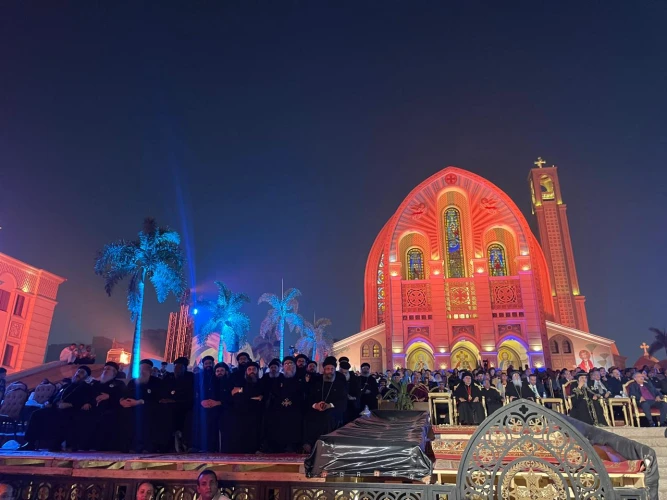
From Alexandria to Nicaea: The Egyptian Church’s Definite Role in the Nicene Creed
The Council of Nicaea and the Leadership of the Egyptian Church
In the year 325 AD, there was this sort of pivotal gathering happening in the ancient city of Nicaea, which is modern day İznik in Turkey, and honestly it ended up changing the course of religious history, maybe forever. It was convened by Emperor Constantine the Great, and the First Ecumenical Council of Nicaea brought together more than 300 bishops from all over the Roman Empire to settle serious theological disputes that were starting to press on both the church and the state.
Even though leaders came from Asia Minor, Syria, Rome, and Greece, the intellectual push and the theological compass of the council seems to come from one place in particular: Egypt.
The Alexandrian delegation, led by the aging Pope Alexander I and by his sharp young deacon Athanasius, really shaped the outcome. They defended orthodox doctrine, helped craft the Nicene Creed,and then they laid down traditions that are still followed, in one form or another, across the whole world today.
Below is the full story of the Council of Nicaea, and the central role played by the Church of Egypt.
1. The Seeds of Conflict: Arius and the Controversy in Alexandria
To understand why Nicaea was called, you kind of have to look at an ideological crisis that started inside the city of Alexandria, really not long after.
Around 318 AD, an Alexandrian priest named Arius began preaching a doctrine that was… well, controversial. Arius maintained that if Jesus Christ was the “Son” of God, then there would logically have been a time before He existed. In Arius’ view, Christ was the most exalted of all created beings, but still a created one— not equal, nor co-eternal with God the Father.
That message, it sparked fierce dispute across the Mediterranean. Local synods in Egypt, led by Pope Alexander I of Alexandria, looked at Arius’ teaching, and then condemned it, with the aim of making it clear that Christ is truly divine and co-eternal. Still, Arius also formed political friendships beyond Egypt, and that spread of support caused division that got too big to ignore, so it finally reached Emperor Constantine.
Constantine wanted unity and stability across his newly unified empire, so he summoned bishops from across Christendom, to meet at his imperial residence in Nicaea.
2. The Egyptian Delegation at Nicaea
When the bishops arrived in Nicaea in the summer of 325 AD many of them bore physical scars from the imperial persecutions under Diocletian and Maximinus Daia, just a decade earlier. Among these respected figures the Egyptian delegation sort of stood out for both spiritual resilience and scholarly capability, you know.
While Pope Alexander led the delegation officially his young secretary Deacon Athanasius emerged as the sharpest debater on the council floor. Even though Athanasius was too young to hold a bishop’s vote, his deep knowledge of Scripture, along with his mastery of Greek philosophy, and the clear logic he used, really captivated the assembly.
3. The Great Debate: Defining "Homoousios"
The main theological challenge at Nicaea was basically trying to craft a formal statement of belief that clearly affirmed Christ divinity, while also not leaving any opening for reinterpretation by those Arian sympathizers. You know, the kind of ambiguity that can slide in quietly.
Athanasius , and the theologians in Alexandria pushed hard to include one specific Greek word right inside the creed: Homoousios, which is “of the same essence” and it also carries that consubstantial idea. Not just some poetic phrasing but a deliberate term.
Then there was the Arian proposal, where they tried to offer Homoiousios instead, meaning “of similar essence” , and in their view that small change kept a real distinction between the Father and the Son. They were basically holding the line that the Son isn’t truly equal, only kind of related.
But the Alexandrian defense came back strong. Athanasius argued that a single letter really did make a huge theological difference. If Christ were only of similar essence , then He would be a creature, in a sense, and His death on the cross would not be able to provide divine redemption for humanity. That’s the heart of it.
After a long run of debate, most of the 318 bishops actually leaned toward the Alexandrian position. And eventually the term homoousios was formally adopted in the original Nicene Creed, so it would say Jesus Christ is “begotten, not made, being of one essence with the Father.”
4. Key Decisions entruested to Alexandria
The Council of Nicaea handled more than doctrinal statements or creeds; it also worked out organizational rules for the wider church ,and it leaned, pretty strongly, on the administrative and scientific authority connected with Alexandria.
About setting the date of Easter
Before Nicaea, churches in different places followed competing ways to figure out when Easter, also called Pascha, would happen. Since Alexandria was regarded like the astronomical hub of the ancient Mediterranean, the council gave the Patriarch of Alexandria the job of computing the exact date of Easter each year. After that, the Pope of Alexandria sent notices to the main churches around the world, using those annual Festal Letters.
How jurisdiction was confirmed
Canon 6 of Nicaea, in fairly direct terms, acknowledged the long-standing administrative authority of the See of Alexandria. It covered the churches in Egypt, Libya, and the Pentapolis, and in doing so, it locked in Alexandria’s place beside Rome and Antioch as one of the big patriarchates of the ancient world.
5. The Aftermath and Legacy of Nicaea
After the Council of Nicaea wrapped up, with the Creed being adopted, and Arianism condemned, honestly the argument didn’t just stop right away, not even close.
In the decades after 325 AD, various Roman emperors kinda leaned toward Arian sympathies , and they tried to undo what was decided at Nicaea. Then, when Athanasius took over from Alexander as Pope of Alexandria in 328 AD, he went on for the rest of his life defending the Nicene decisions. And instead of settling for a softer middle, he endured five separate exiles, over 45 years. Basically he refused to trade the wording of the council for something more “acceptable”.
Because of the steady endurance of Athanasius, plus the Egyptian Church holding the line, the Nicene Creed stayed in place through these political shifts. It eventually became, the universal basis for historic Christian belief, spanning Catholic, Eastern Orthodox, Oriental Orthodox, and Protestant traditions today.





-webp.webp "Hilton")
-webp.webp "dusit")
-webp.webp "Marriott Hotels")
-webp.webp "Azimut Hotel")
-webp.webp "Golden Tulip")
-webp.webp "sheraton")
-webp.webp "westin hotel")
-webp.webp "Movenpick")
