
 English
 Italy
Italy
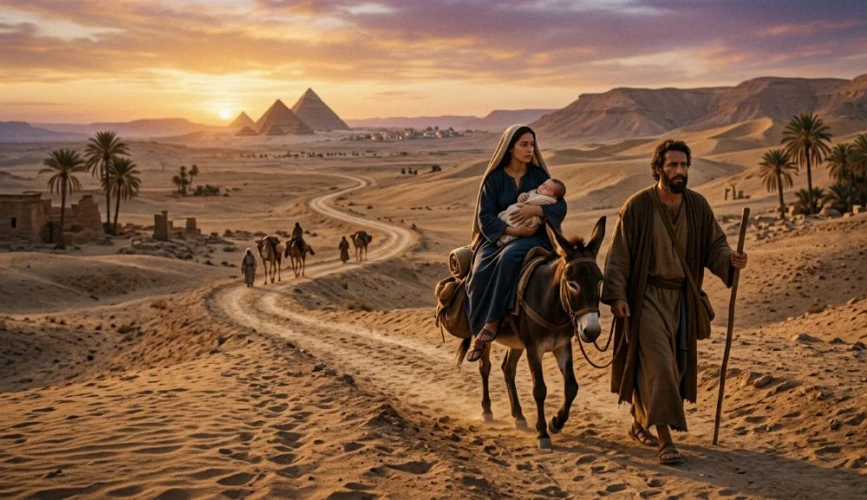
Footsteps of Faith: A Pilgrimage Along Egypt’s Holy Family Trail
Following the Holy Family Trail in Egypt: Complete Travel Guide
For, i guess centuries, pilgrims and travelers have ventured into Egypt to walk in the same tracks as those ancient pharaohs, early saints, and desert hermits. Still, there’s one journey that feels weirdly quiet yet spiritually profound, and also thick with history. It’s the Holy Family Trail.
In Christian tradition, and as the Gospel of Matthew suggests, when King Herod tried to harm the infant Jesus, an angel came to Joseph in a dream, like plain and simple, telling him to flee to Egypt. So the Holy Family—Jesus, Mary, and Joseph—set out on a harsh trek across the Sinai Desert, then crossing the Nile Delta, traveling down through Cairo, and eventually sailing deep into Upper Egypt. Today, this roughly 3,500-kilometer route connects dozens of sacred places, old wells, cave shelters, and historic churches spread across the country.
Whether you want a really prayerful pilgrimage, or you’re just a history lover who wants to explore Egypt past the usual tourist spots, here is a full travel guide for following the Holy Family Trail, step by step.
1. Entering Egypt: The Northern Delta & Valley Stops
The trip started in the rough wilderness out in Northern Sinai, after that they brought the Holy Family over into those fruitful stretches of the Nile Delta, somehow.
Tel Basta
Close to what we now call Zagazig, Tel Basta was among the families first big stops in Egypt. As tradition says, when the baby Jesus came into the town, those old pagan idols fell over onto the ground. Then Joseph pressed down on the earth and a wondrous spring burst up, like a sacred well, that you can still visit today with the nearby archaeological remains
Sakha
In the middle Delta, in the city of Sakha, you’ll find the historic Church of the Virgin Mary. This place is known for keeping the Bikha Isous, a preserved stone slab that tradition says shows the footprint of the infant Jesus , left behind when the family rested during their escape
Wadi El Natrun (The Desert Valley)
Before they went south toward Cairo, the Holy Family went across Wadi El Natrun, also called the Natron Valley. They blessed the land as they traveled through, and later this peaceful desert oasis turned into the actual beginning of Christian monastic life, in the 4th century. From there came four major working monasteries, which still receive pilgrims now
2. Coptic Cairo: The Urban Heart of the Trail
As the family kept going south, they looked for shelter in the historic district people know today as Old Cairo or Coptic Cairo. It sits sort of tucked inside the ancient stone walls of the Roman Fortress of Babylon, and there you find some of the best known sanctuaries along the route.
Church of Saints Sergius and Bacchus (Abu Serga)
Built in the 4th century, Abu Serga is usually seen as the key stop in Cairo. Deep under the main altar, there’s a small, vaulted underground crypt. Tradition says the Holy Family stayed in that same rocky shelter for three weeks, and they relied on a local well that is still kept inside the church, so it kinda remains there like a quiet witness.
Virgin Mary Church in Maadi
Further south, along the Nile waterfront in Maadi, this peaceful church marks the place where the Holy Family boarded a small wooden boat to head upstream toward Upper Egypt. The church stands by a stone terrace overlooking the water, and from there visitors can notice the old stone steps going down to the river’s edge, very clear if you look at an angle.
In 1976, a surprising miracle event gave the place even more attention. A big Bible was reportedly seen drifting on the Nile waters, then it washed up at the church steps. It opened to the Book of Isaiah, with the words: "Blessed be Egypt my people."
3. Upper Egypt: Caves, Monasteries, and Mountain Sanctuaries
Sailing south , pushing against the Nile’s current , the family made its way into Upper Egypt, kind of drifting from one riverside overlook to another , pausing at a few places along the river bluffs.
Gabal Al-Teir (Minya)
Up on a steep, almost vertical cliff above the Nile in Minya governorate sits the Monastery of the Virgin Mary at Gabal Al-Teir. The church was actually carved straight into the cliffside rock , in 328 CE, by Empress Helena, mother of Constantine the Great. Tucked inside, visitors can pray in the small rock-cut cave, where the family reportedly hid for several days.
Deir Al-Muharraq (Asyut)
Down near Asyut, at the base of Jabal Qasqam, Deir Al-Muharraq is often considered the most sacred stop along the whole trail. The Holy Family stayed here for more than six months, which is the longest stretch they spent in any one place within Egypt.
The Ancient Chapel
That monastery’s ancient church is built directly over the cave where the family lived. The stone altar there is traditionally seen as the oldest thing in continuous Christian use anywhere in the world, or at least that’s how people describe it.
The Return Angel
And it was in this very same cave that the Angel of the Lord appeared again to Joseph , letting him know that Herod was dead , and that it was safe to head back to Nazareth.
Practical Tips for Traveling the Trail
Transportation and Logistics: For the sites around Cairo and the Nile Delta, getting there is pretty straightforward using a private car, or by a guided day tour. But when it comes to Upper Egypt places, like Minya and Asyut, it really works better if you arrange things through established travel agencies that focus on Coptic heritage, sort of that niche expertise thing.
Respectful Etiquette: Remember that every stop along the trail is a living place of worship—monasteries, ancient shrines, and the like. Visitors should dress modestly, keep shoulders, chests and knees covered , and also don’t forget to switch off flash photography when you enter ancient crypts, and small chapels too.
Best Time to Visit: The sweet spot for traveling across Egypt, in order to follow the trail, is between October and April. During that time the air feels cooler thanks to autumn and winter, so exploring desert monasteries and outdoor ruins becomes more comfortable.





-webp.webp "Hilton")
-webp.webp "dusit")
-webp.webp "Marriott Hotels")
-webp.webp "Azimut Hotel")
-webp.webp "Golden Tulip")
-webp.webp "sheraton")
-webp.webp "westin hotel")
-webp.webp "Movenpick")