
 English
 Italy
Italy
Following the Holy Family Trail Through Egypt
Imagine being able to walk on the grounds of a biblical narrative that took place over two thousand years ago. For Christian pilgrims, history buffs and curious wanderers, the ancient Holy Family Trail in Egypt is not only a chance to see some of the country’s most important cultural heritage—it is a truly unique spiritual adventure.
Tracing the footsteps of Holy Family—Mary, Joseph and the baby Jesus—this trail follows their story from the time the family had to seek safety in Egypt from Herod’s persecution. The Holy Family walked and traveled the region—deserts, ancient cities and the banks of the Nile—for three and a half years, covering a distance of around 3,500 km.
Today, the Egyptian Ministry of Tourism and Antiquities has mapped and restored 25 key ancient sites in eight different governorates along the trail. The trail is an accessible route for a wide range of explorers, from those seeking a quiet pious pilgrimage to people who wish to discover the great variety of Egypt’s cultural treasures.
Follow this travel guide to learn how the trail works, what to see and what to look out for.
The Northern Delta – Where Miracles Began
The Virgin Mary, Joseph and baby Jesus traveled the wadis of the Sinai before reaching the verdant, fertile lands of the Nile Delta. Locals believe they stopped in the northern part of Egypt, where the family experienced several miracles that the area’s residents still remember.
Perhaps the most well-known early stop along the trail is Tell Basta (ancient Bubastis). According to tradition, the family had to travel through this pagan city when a spring of fresh water emerged to slake their thirst. Moving further into the Delta, the small, agricultural town of Sakha is famous for the relic of “Bikha Isous” found in the Church of the Virgin Mary.
This large stone bears the imprint of baby Jesus’ footprint and is a popular destination for international Catholic and Orthodox pilgrims. The next notable stop in the north is the village of Mustorod, or, locally known as “Al-Mahamma” which means “the bathing place.”
Tradition holds that the Virgin Mary bathed the baby and washed his old clothes in the well. Today, the ancient church built over the well still stands as a popular place of prayer and meditation, where visitors can also drink from the same well that refreshed the Holy Family back in the first century AD. In the neighboring Samannoud, the Church of the Virgin Mary is known to possess a large ancient granite basin, which Mary is said to have used for kneading dough, and an ancient water well.
Wadi El Natrun – Desert Monastic Roots
Further west, the trail leads into the Nitrian Desert (or the Wadi El Natrun), a region that stretches around 100 km to the northwest of the capital, Cairo. This isolated, rocky valley is known to have been the birthplace of Christian monasticism in the 4th century AD.
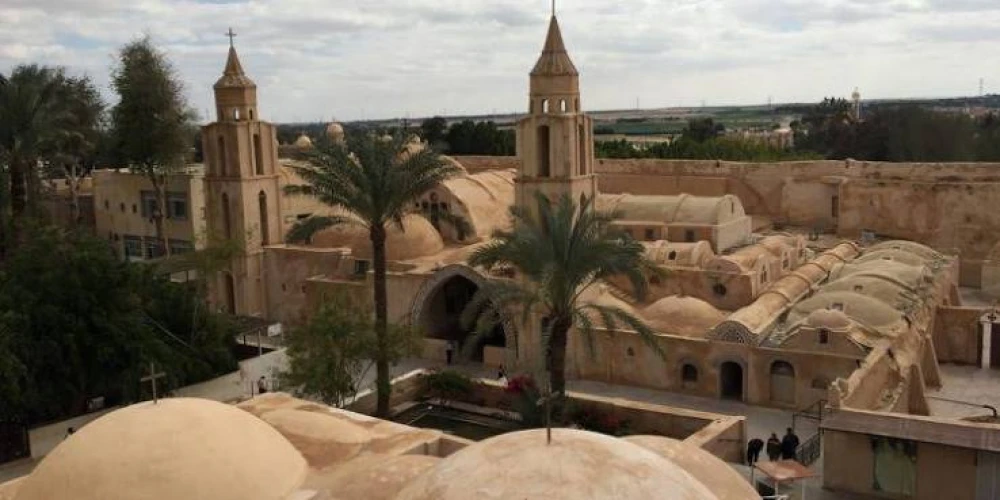
Its history is closely linked with the holy family trail, as it was here that pious monks built heavily fortified monasteries along the desert roads, which had been blessed by the infant Jesus and his family. Today, four impressive Coptic monasteries dot the region: The Monastery of Saint Macarius (Abu Makar), The Monastery of St. Bishoy, The Monastery of El-Baramus and The Monastery of El-Suryan.
The architecture of these vast, imposing complexes takes the visitor back to medieval times. Wander through their enclosed courtyards, admire the ancient domed vaults and vibrant medieval frescoes brought back to life, and get lost in the captivating scent of frankincense and the ethereal chants of the Coptic monks. The stillness and mysticism of these desert monastic enclaves provide a striking contrast to the hustle and bustle of modern-day Cairo.
Coptic Cairo – The Holy Heart of the Trail
Further south, the trail leads to Old Cairo (or Coptic Cairo), the tightly-knit area at the heart of the modern-day pilgrimage.
The most important monument in this part of the trail is the Church of Abu Serga (St. Sergius and Bacchus). This impressive 5th-century church is built over the crypt where the holy family is said to have taken shelter for several weeks. Entering this excavated, dimly-lit cave is an unforgettable experience as it provides a tangible connection to the past.
Not far from the church, through a complex network of narrow ancient streets, lies the breathtaking Hanging Church (Al-Muallaqa). Perched atop the ancient Roman Babylon Fortress, this stunning basilica boasts a beautifully carved wooden ceiling in the shape of Noah’s Ark and an interior decorated with luminous ancient wooden icons.
Before leaving the capital, most visitors make a pilgrimage to Mary’s Tree in Matariya, a northern suburb of Cairo. According to legend, the Virgin Mary rested under the shade of this ancient, sprawling sycamore tree. Jesus is said to have provided the spring that watered the nearby balsam tree, the fragrant oil of which was used to make holy chrism for the church.
Finally, the family arrived at the leafy riverside district of Maadi, where today the Church of the Virgin Mary in Maadi still hosts a set of worn stone steps that lead straight down to the rippling waters of the Nile. According to tradition, it was from this riverbank that the family embarked on a small sailing vessel on their journey down the Nile toward Upper Egypt.
Middle and Upper Egypt – Cliffside Sanctuaries and Long Stays
Further south, the trail crosses some of Egypt’s most picturesque landscapes. The lush green strips of the Nile Valley give way to dramatic limestone cliffs along the banks of the great river.
The first major stop in the province of Minya is the village of Gabal Al-Teir (The Mountain of the Birds). An amazing, austere monastery complex is hewn into the steep cliffside, where locals believe the infant Jesus miraculously stopped a falling rock that threatened to crush the family’s wooden boat passing by below.
Further south in the Assiut governate, the picture-perfect Monastery of Al-Muharraq perches over the cliffs of Mount Qusqam. This site holds a special place in the hearts of Coptic Christians as it is here that the holy family took shelter in a cave for over six months—the longest stay during their journey through Egypt.
The cave where the family stayed is said to have been turned into an altar and the ancient church built around it is recognized as one of the oldest continuously consecrated Christian places of worship in existence.
At the very end of the southern leg of their journey, the holy family arrived at the breathtaking Drunka Monastery. Nestled high in the steep limestone mountains facing the vast agricultural plains of Assiut, it was at this remote location that Joseph is said to have received an angelic message that King Herod was dead and it was safe to return home.
The climb up to Drunka offers spectacular views of the valley below and the atmosphere is one of joyous and vibrant community spirit, particularly if the visitor happens to be there during the annual summer festival of the local villagers.
Modern Upgrades for the 2026 Pilgrim
If you are thinking of taking on this amazing journey, you will be pleased to know that a huge number of upgrades have taken place in the trail in the past year. Officially opened in early 2025, the government has completed the major development phase, which has vastly improved conditions for travelers and pilgrims. All 25 major sites along the trail have benefited from extensive road upgrades, improved lighting and general accessibility upgrades.
Moreover, several of the trail’s sights have been recognized for their historical and cultural significance by UNESCO World Heritage programs. As a result, travelers can enjoy the comforts of modern-day amenities. For example, in the Assiut region at the Al-Muharraq Monastery, brand new visitor centers and accommodation have been built to alleviate pressure on the region’s hotel capacity in the deep south. The local souks also offer a chance to browse the beautiful local handicrafts.
Every year on June 1st, local communities gather to mark the anniversary of the Holy Family’s entry into Egypt and it is an incredibly vibrant and exciting time to get out and explore.





-webp.webp "Hilton")
-webp.webp "dusit")
-webp.webp "Marriott Hotels")
-webp.webp "Azimut Hotel")
-webp.webp "Golden Tulip")
-webp.webp "sheraton")
-webp.webp "westin hotel")
-webp.webp "Movenpick")