
 English
 Italy
Italy
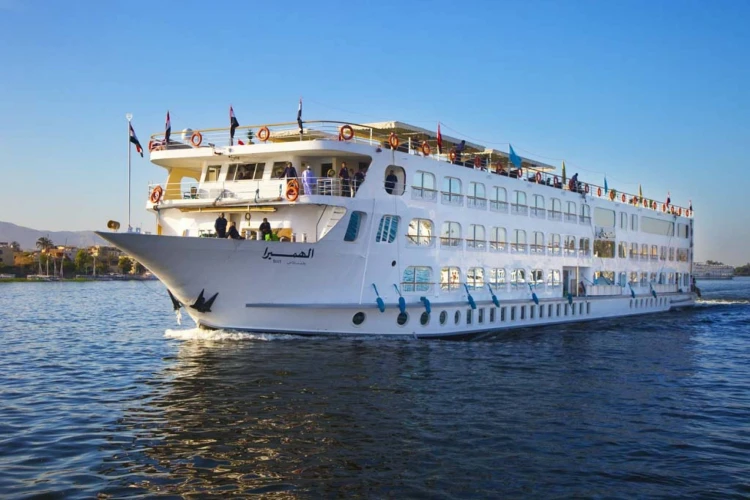
First Time in Egypt? Why the Luxor to Aswan Nile Cruise Is the Ultimate Choice
Best Nile Cruise Route for First-Time Visitors to Egypt
Planning a first trip to Egypt is a thrilling experience, but it can also feel kinda overwhelming. Between ancient pyramids, noisy city bazaars, and all those historical places spread out along the desert, figuring out how to organize your travel plan takes real thinking, like more than you expect.
If you ask almost anyone who has already visited Egypt, they will usually say the same thing: a Nile cruise is kind of a must. Floating down the river on a multi-day sailing gives you this front row seat to five thousand years of history, and you basically glide between famous temples and less visible underground tombs, with minimal hassle, no constant re packing your bags every single night.
But then, once you start looking into it, you notice quickly there are different routes and sailing directions. Do you go north or go south? Do you begin in Luxor or start in Aswan? And honestly, how many days should you spend aboard before it starts to feel like… too much?
For first time travelers who want that best possible mix of legendary monuments, smooth logistics, and a little downtime that actually feels relaxing, there’s one itinerary that tends to stand out more than the rest. It’s the 4-Night Upstream Cruise from Luxor to Aswan.
Here’s a detailed guide to help you understand why this exact route is, hands down, the best pick for your very first Egypt trip.
Why the Luxor to Aswan Route Wins for First-Timers
When planning your first Nile cruise, you mostly end up choosing between two directions you know, like downstream from Aswan to Luxor (usually 3 nights) or upstream from Luxor to Aswan (usually 4 nights). And yes, both ways hit many of the same historic spots, but honestly the Luxor to Aswan route has a few real perks that make it feel much better, especially for first time travelers.
1. The “Story Arc” of History just kind of makes sense
One of the best parts about going from Luxor to Aswan is how the past unfolds in an almost clean chronological way, not forced, not random, more like you can actually feel it moving forward.
Luxor is basically the peak of ancient Egypt’s imperial power, in the New Kingdom period. When you start there, you drop right into that huge world of gigantic stone temples, massive obelisks, and those underground pharaonic tombs, which are… pretty hard to top.
Then as your ship goes south toward Aswan, the timeline shifts. You pass through later chapters, including the Ptolemaic and Roman periods, and you see how that changes the art and the vibe at places like Edfu , Kom Ombo, and Philae. By the time you reach Aswan, you get that different atmosphere all at once—the granite boulders, the warm Nubian culture, and that open river scenery. It almost feels like watching a great historical film where each scene connects to the next, and you are not just collecting sites.
2. A slower rhythm, more breathing room, less “on the go” stress
When you sail upstream, your ship moves against the river current. Since the journey speed tends to be a bit gentler, the trip naturally spreads over four nights instead of three.
That extra day, or more exactly, about 24 hours, matters more than you think. On a tight 3-night cruise you often go from a morning temple tour straight into an afternoon excursion, then suddenly it’s dinner and you’re already drained. With the 4-night route you get those roomy afternoons to unwind. You can lounge by the pool up on the top deck, sip something cold, and just watch rural Egyptian farmlands drift by… without feeling like you’re late for your own vacation life drift slowly past the palm trees.
3. Less Travel Friction, Better Logistics (kind of)
Most international flights into Egypt touch down in Cairo. Once you’re there, a quick domestic flight straight over to Luxor feels pretty seamless. If you begin your cruise in Luxor, you can fall into the sights immediately, no extra fuss.
Then, by the time you wrap up your cruise in Aswan four days later , you’re ideally placed for a relaxed day excursion to the well known Abu Simbel temples by the southern boundary , or if you prefer , you can grab a fast direct flight from Aswan back to Cairo and line up your international flight home.
What You Will See on the Ultimate First-Time Route
To give you a sense of why this route is so iconic, here is a day by day little peek at what your itinerary is like when you sail from Luxor to Aswan
Day 1: Arriving in the World’s Greatest Open Air Museum
Your trip starts in Luxor. After you check into your cabin on the ship and you grab lunch onboard, you go out to wander the grand East Bank of the river
You begin at Karnak Temple, it’s the largest religious complex ever built on Earth. Walking through its Great Hypostyle Hall, surrounded by 134 towering sandstone columns is one of those moments that almost every first time visitor ends up totally quiet for a second. Later in the afternoon, you visit Luxor Temple, which sits right in the middle of town, and as twilight comes in soft floodlights highlight the colossal statues of Ramses II
Day 2: The Realm of the Dead and Setting Sail
On your second day you set an early alarm so you can make your way to Luxor’s West Bank before the desert heat really kicks up. From there you head down into the subterranean Valley of the Kings, where you’ll explore tombs that are still brightly painted, including those tied to ancient pharaohs like Ramses IV and also King Tutankhamun
After that, you take in Queen Hatshepsut’s impressive terraced temple, carved into the steep mountain cliffs, and it feels almost unreal. Then you come back to the ship for lunch. The rest of the day is pure calm: your vessel lets go of its ropes and starts sailing south toward Esna while you enjoy your first long afternoon just unwinding on the open deck
Day 3: Riverbank Temples , of the Gods (kinda)
On the third day, your ship makes a stop at Edfu, which is basically home to the Temple of Horus. For centuries it has been half hidden under desert sands, and Edfu is well known because it’s the most complete, and also the best preserved ancient temple in Egypt, like really intact.
Back on board, you kinda spend the afternoon cruising south, then you reach sunset at the Temple of Kom Ombo. This place sits in a pretty distinctive way, perched on a high bend of the river. It’s an unusual dual temple, made not just for Sobek, the crocodile god , but also for Horus the Elder. And yes, you even get to step into the nearby museum to see actual ancient mummified crocodiles, which is… surprisingly fascinating.
Day 4: Aswan, and the Magical Island thing of Isis
By the fourth morning, you arrive in Aswan, the picturesque southern gateway of Egypt. You take a motorboat ride across those blue waters to get to Philae Temple, and it’s on its own little island, kind of romantic and quiet looking. The temple is dedicated to Isis, goddess of magic, and the whole sanctuary is known for its elegant column halls and a peaceful atmosphere that feels almost unreal.
In the afternoon, you visit the ancient granite quarries to see the Unfinished Obelisk, and then you also look around at the massive Aswan High Dam. After all that, you finish the day with one final special dinner on board your ship.
Day 5: Feluccas, and a Gentle Goodbye
On your last morning, after you disembark from your cabin, you can take a calm ride on a traditional wooden felucca sailboat around Elephantine Island. Then, whenever you’re ready, you head to the airport, or you keep going with your Egyptian adventure, like more stories from somewhere else.
Essential Practical Tips for First-Timers
For your very first Nile cruise, so it runs as smoothly as it possibly can, try to keep a few practical things in mind, kind of right from the start.
Timing Matters: In general the best window to take a Nile cruise is between October and April, because Upper Egypt gets that warm, pleasant sunlight. Now the summer stretch, June through August, can feel like extreme desert heat, especially around mid-day when you’re walking through temples, so it may become a bit too draining.
Pack Smart: Pack lightweight, breathable clothes, add a high-SPF sunscreen, grab a broad-brimmed sun hat, and wear comfortable supportive walking shoes since temple floors can be uneven, you know stone there isn’t always flat.
Hire a Certified Guide: Honestly, seeing ancient temples without context is like staring at a book and skipping the reading. Your cruise should include a licensed Egyptologist guide, someone who can bring the ancient wall carvings and hieroglyphics into a clearer story, not just “stand here and look”.
Book via Secure Channels: When you’re reserving your cruise package online from home, don’t rush it. Stick with reputable agencies and use secure checkout platforms, ideally with bank-grade protection. Payment services like Stripe or WeTravel are good examples— they rely on strong encryption standards so your payment details stay protected while you lock in your dream itinerary.





-webp.webp "Hilton")
-webp.webp "dusit")
-webp.webp "Marriott Hotels")
-webp.webp "Azimut Hotel")
-webp.webp "Golden Tulip")
-webp.webp "sheraton")
-webp.webp "westin hotel")
-webp.webp "Movenpick")