
 English
 Italy
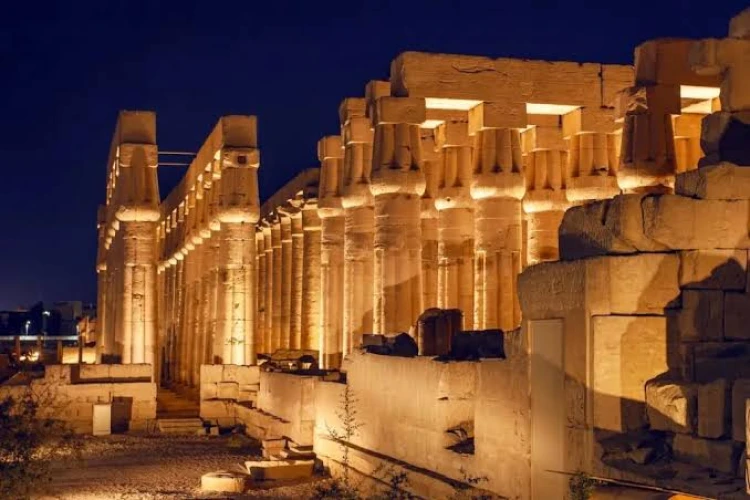
Festivals in the Egyptian Temples During the Graeco-Roman Period: Rhythms of Divine Continuity
The Graeco-Roman period in the history of Ancient Egypt stretches from Alexander the Great’s conquest of Egypt in 332 BCE to the fall of the Byzantine Empire. Despite the foreign Macedonian and Roman rulers, the traditional religious life of the people of the Nile valley was not abandoned but adapted and given new life in fascinating and ingenious ways. The Graeco-Roman period is famous for its majestic temples with their breathtaking sandstone reliefs. Most of these sacred edifices were designed to host large-scale temple festivals that honored the gods and goddesses of Ancient Egypt. It is interesting to explore what the Graeco-Roman religious festivals were like, how they were organized, what role they played in society, and what impact they had on culture.
1. The Religious Philosophies Behind Graeco-Roman Era Festivals
There are several reasons why the Graeco-Roman period saw an unprecedented flowering of architectural and ritual sophistication in Egyptian temple festivals.
A. The Need to Preserve the Balance
To the minds of the ancient Egyptians, the entire universe was a fragile entity held in a precarious balance, called maat , between cosmic forces of harmony and order and the disruptive tendencies of chaos and disarray. It became the sacred duty of the priests in the time of foreign – Greek and Roman – rulers to ensure the preservation of Egyptian religious traditions and worldview against the tides of external influence. Hence, it was seen fit to invest more effort in the organization of temple festivals in order to obtain the gods’ favor and the renewal of cosmic and earthly cycles.
B. Gods and Goddesses, Past and Present
The gods and goddesses of Ancient Egypt featured prominently in the religious festivals of the Graeco-Roman period. Mostly because the classical religious traditions of Greece and Egypt had merged to a significant extent. There are many allusions in the Graeco-Roman era temple walls to the Graeco-Egyptian gods like Serapis, Hermanubis, and Isis-Pharia and Egyptian triads like Horus, Hathor, and Ihy. The Graeco-Roman temple calendar was based partly on ancient Egyptian star observations and partly on the mathematical and cosmological knowledge of the Greeks. It was carefully calculated in order to appeal to the city-dwellers of Alexandria, Memphis, Thebes, and other Graeco-Roman towns and villages.
2. Organization and Implementation
The organization of a large-scale Graeco-Roman festival involved extensive preparations and thousands of participants.
A. Priesthood and Temple Guilds
The religious festivals that took place in the temples of Graeco-Roman Egypt were managed on a daily basis by hereditary priesthoods. The priests had to prepare for the upcoming festivals by consulting the sacred stone calendars of the temple with the dates, provisions, and processions. The temple artisans made repairs to the goddess’s golden barque, while the musicians rehearsed for the singing and dancing that formed part of the festival. Bakers baked thousands of ritual bread rolls of the gods and large honey cakes.
B. The Involvement of the Broader Public
Unlike in previous eras, public participation was actively encouraged during the Graeco-Roman religious festivals. The local villagers, foreigners, pilgrims, and farmers could all gather together in the temple town. Even though ordinary people could not enter the inner sanctum of the temple, the large pylon precincts, surrounding streets, and courtyards were crowded with people from all walks of life. In this way, the religious festivals of Ancient Egypt offered respite to the local population.
3. The Magnificent Graeco-Roman Festivals
The walls of many temples from the Graeco-Roman period contain detailed descriptions and intricate illustrations of the various festivals.
A. The Feast of the Beautiful Reunion
One of the most spectacular festivals in ancient Egypt was called the Feast of the Beautiful Reunion . This festival was popular in the Ptolemaic period and is especially well-documented in the temples of Edfu and Dendera. The festival was dedicated to the goddess Hathor of Dendera and was held when her divine boat arrived on a ceremonial voyage up the Nile to Edfu. Thousands of people gathered to see the beautifully decorated boats with singers, tambourines, incense, and wine. When the boat arrived in Edfu, Horus and Hathor were joined in marriage.
B. The New Year Festival
The New Year was celebrated in the Graeco-Roman temples as an exciting and colorful event. The New Year was heralded by the appearance of the brightest star, Sothis, which signified the onset of the annual inundation of the Nile. The festival was centered around the goddess’s temple and the priestly retinue and the great procession that escorted the goddess. The goddess was carried up the majestic staircases to the roof kiosk where she was exposed to the morning sun. She was then recharged with the energy of the life-giving rays of the sun.
C. The Mysteries of Osiris
Another famous and dramatic mystery play performed during the Graeco-Roman period was the Mysteries of Osiris . The festivities of the holiday were held annually during the month of Khoiak. The play reenacted the murder of Osiris by his brother Seth, the subsequent search for Osiris performed by his wife Isis, the mummification of Osiris, and his triumphant resurrection. The action was performed in subterranean crypts and isolated temple courtyards. This wondrous religious experience offered the ancient Egyptians hope and comfort, telling them that death was not the end, but a beginning of a new life.
4. Political and Economic Aspects of the Graeco-Roman Religious Festivals
A. Foreign Pharaoh and His Needs
Thousands of miles away in Rome, the foreign emperors understood the importance of the Egyptian festivals. The foreign emperors needed to secure the goodwill of the Egyptian priests as a way to maintain favorable political and economic relations with the native Egyptian population. On the sandstone temple walls of Edfu, Kom Ombo, and Philae, one can see the images of foreign emperors, wearing the traditional headdress of the Upper and Lower Egypt, killing sacred bulls and making offerings to the native gods. The foreign rulers actively participated in the grandiose festivals, feasts, and ceremonies that took place in the temple. By funding the religious festivals the foreign rulers of Egypt sent a clear signal to the native population that they were serious about maintaining the status quo.
B. Economic Redistribution and Social Cohesion
The festivals served yet another function that was no less important. The religious festivals helped in maintaining political stability, social cohesion, and economic prosperity. The temples were huge economic entities, owning large tracts of land and accumulating vast riches in the forms of grain, cattle, and beer. These resources were distributed to the citizens in the form of public feasts and alms. The festivals served as a much-needed distraction from the burdens of everyday life. The economic productivity of the festival towns and villages was greatly enhanced as a result of the large-scale festivals.