
 English
 Italy
Italy
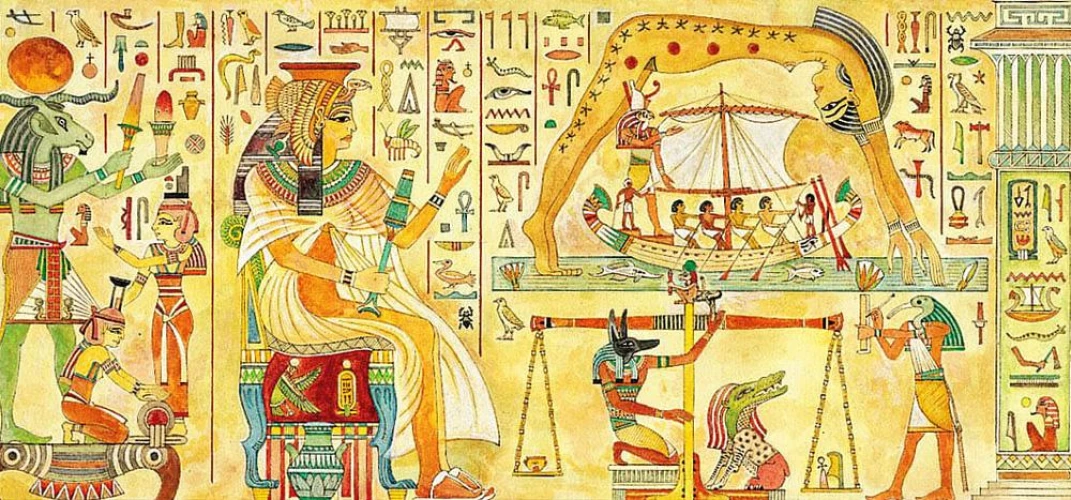
Feast of the Gods: Inside Ancient Egypt’s Greatest Carnival
The Opet Festival: The Glorious Celebration of Rebirth in Ancient Thebes
In the heart of the Egyptian inundation season, when the Nile River overflowed its own banks and turned the dry valley into a kind of fertile inland sea, farming kind of came to a halt. But instead of just sitting around in quiet idleness , the ancient city of Thebes (which we know today as Luxor) became the setting for one of the most spectacular, joy-laced, and spiritually crucial events of the ancient world: the Opet Festival, also called the Beautiful Feast of Opet.
It could last anywhere from eleven days, to almost a full month, and it wasn’t only for regular people who wanted to feast and drink beer. No, it functioned more like a gigantic cosmic ritual, meant to recharge—spiritually, not with batteries— the bond between the pharaoh and the supreme god, Amun-Ra. In practice this was supposed to keep life going, to guard natural abundance, and to maintain divine order across Egypt.
Here’s the complete story of the Opet Festival. From its sacred origins, to its breathtaking journey down the Nile and along the Avenue of Sphinxes, and then into those secret inner rituals. Finally, we’ll look at its lasting cultural legacy, the kind that kept echoing long after everything else faded.
1. Sacred Purpose: Reuniting the King with the Divine Ka
To understand why the Opet Festival was so crucial for ancient Egyptian civilization, you really have to zoom in on how Egyptians saw divine kingship, like day by day, not just in stories.
The Egyptians believed that a pharaoh was sort of both human and sacred. He had an actual earthly body, yes, but at the same time he carried the Royal Ka—the immortal divine presence of kingship that moved from one ruler to another, basically continuing through time.
The problem showed up in a very practical way, or at least that is how it was described. Over the course of a year, while the pharaoh managed the state, led military campaigns, and handled administrative work, his spiritual strength was thought to grow tired. If that fatigue was not properly eased, cosmic order , Ma'at, would slip out of place. And then, things like failing harvests, social disorder, or even a foreign invasion could follow.
So the Opet Festival becomes the ultimate remedy. The king arranged for the sacred statue of Amun-Ra to be carried from his main dwelling at Karnak Temple (Ipet-sut) to the southern sanctuary of Luxor Temple (Ipet-resyt). Standing before his divine father, the pharaoh was “renewed” in a spiritual sense, kind of reborn, and he absorbed new royal power so he could govern for yet another year.
2. The Grand Procession: Journey of the Sacred Barges
The big climax of the festival kicked off from deep inside the Karnak Temple, the inner sanctums, where the high priests started doing these very elaborate purification rites, sort of dressing up the golden figures of the Theban Triad, as if it was all part of some long sacred routine …
Amun-Ra: The King of Gods and supreme creator.
Mut: The divine mother goddess, and queen of heaven.
Khonsu: The god of the moon, time and healing.
The Water and Land Routes
The golden statues ended up in delicate, gilded enclosures—mounted on small, ceremonial shiplike models called barques, yes, these little craft things that still carried a huge symbolic weight.
Depending on the era, and also where they were headed, the procession took one of two magnificent paths, kind of like a choice, not always the same.
The River Voyage: High priests boarded the Userhat-Amun, a massive golden river barge made from imported Lebanese cedar wood and covered with pure gold plating. It was towed upriver even against the Nile current, driven by royal oarsmen and high officials. With the light kind of glowing off it, the barge carried the gods south toward Luxor Temple.
The Avenue of Sphinxes: In moments when the river route was ready, or when the whole group was coming back, the statues were carried on the shoulders of priests along the 2.7-kilometer Avenue of Sphinxes, Tariq El-Kebash. Thousands of carved sandstone sphinxes—ram-headed and human-headed—stood on both sides like silent guardians as the procession moved slowly, through the city.
3. The Street Carnival: A Festival for All Citizens
Even though the inner sanctum rituals were strictly meant for the pharaoh and the high priests, the areas out beyond the temple walls turned into this sort of… lively, month-long carnival for the regular people of Thebes, you know , the everyday population.
In day to day ancient Egyptian life ordinary citizens just weren’t allowed to enter the deep, dark sanctuaries of the state temples. The Opet Festival though was one of those rare breaks where people could actually look closely at the divine barques carrying the gods up close, without the usual distance.
Music, Feasting, and Public Joy
Along the banks of the Nile the mood was honestly charged:
Musicians and Dancers: groups of female dancers, acrobats , and musicians played bronze sistrums, tambourines, flutes, and drums, and the warm air filled up with steady rhythmic chants.
Royal Bounty: the pharaoh opened the royal granaries and livestock pens, letting the city eat. Tens of thousands of fresh loaves, roasted meats, jars of honey, sweet figs, and these endless barrels of red beer got passed out freely to the crowds.
Consulting the Oracle: while the priests carried the sacred barques through the streets, citizens could bring written questions or speak aloud to the gods. And if the heavy barque tilted a little forward or backward in the hands of the priests, it was taken as a direct yes or no reply from Amun-Ra .





-webp.webp "Hilton")
-webp.webp "dusit")
-webp.webp "Marriott Hotels")
-webp.webp "Azimut Hotel")
-webp.webp "Golden Tulip")
-webp.webp "sheraton")
-webp.webp "westin hotel")
-webp.webp "Movenpick")
