
 English
 Italy
Italy
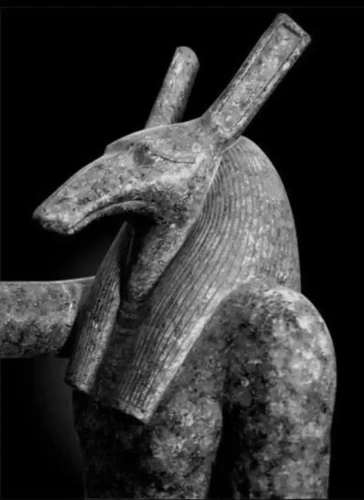
Egyptian God Seth Guide: The Desert Animal, the Defense of Ra, and the Osiris Myth
Seth: The God of Chaos, Deserts, and Necessary Storms
In the tangled pantheon of ancient Egypt, no figure gets misunderstood as much as Seth (sometimes written Set, or Sutekh). Modern retellings tend to oversimplify him, like, a straight up evil villain, or an early stand-in for the devil, but that reading really misses the point. Seth was way more layered, way more necessary in their way of seeing the world. He was connected with chaos, wild sandstorms, burning desert heat , violence and that raw, hard to predict force people feel in nature when it turns feral. The Egyptians didn’t just fear it, they also respected it, because it was real and it could not be negotiated with.
Yes, he shows up as the main antagonist in some foundational stories , but even then Seth isn’t only the “bad guy” . In their wider cosmic logic, he also acts like a protector of order, in his own rough manner. Without that terrifying strength of his, the careful balance of the universe would tip and drift, and the whole system would fail.
Here is the full story of Seth—his strange animal shape, his cosmic job working beside Ra, his relentless rivalry with Osiris and Horus, and how his legacy keeps shifting across roughly three thousand years .
1. The Mysterious Seth Animal: A Divine Enigma
Most Egyptian deities were shown with heads of animals you could usually recognize—like the falcon of Horus, the jackal of Anubis, or the lioness of Sekhmet, right. Seth , though, was drawn as something else entirely, a strange creature that many scholars now call the Seth Animal (or Sha).
What actually was the Seth Animal?
It’s described as a slender, canine-ish four legged creature with a long, curved snout, ears that stand up squared, and a stiff tail that splits at the end. For generations, egyptologists and zoologists basically kept running into the same wall, because it just doesn’t map neatly onto anything living or known.
So why the confusion, theories still stack up. Some researchers think it came from an extinct desert animal, and they toss around possibilities such as a stylized aardvark, a jackal, a desert donkey, or even a saluki hound. Others, prefer the more cautious angle, and say it was made up on purpose, a symbolic composite creature, created for the sole reason of expressing that hostile, hard-to-catalog desert realm.
And when Seth shows up in a more human form, he’s often portrayed as a strong man, with dark skin, brick-red hair, and red eyes. The red part isn’t just color for the sake of it, it points to the sacred shade tied to dangerous sand, blood, and all that fiery heat.
2. Champion of the Sun: Defender of the Solar Barge
Long before people started seeing Seth as a villain in late Egyptian mythology, he kinda had this heroic, irreplaceable part in cosmic theology, like basically the top protector of the sun god Ra.
The clash with Apophis
Every single night, when the solar barge (Meseket) slipped through the pitch black underworld (Duat), it got assaulted by Apophis, a frightening cosmic serpent of pure non-being and disorder. Apophis had this kind of hypnotizing influence, it just froze the other gods on board, as if their limbs forgot what to do.
Only Seth could stand there, with his enormous bodily power, his immunity to the trance, and this furious chaotic drive that could take the hit from Apophis’s stare. He stayed up near the prow of Ra’s vessel, holding a golden spear, and he struck down that massive serpent again and again. Night after night, so the sun could rise once more, and still push bright light toward Egypt.
So in this particular view, Seth wasn’t some enemy of order (Ma'at), not at all. He was, in a sense, its most brutal defender, the one who guarded Ma'at when everything else felt like it would slip away.
3. The Osiris Myth: Seth as the Catalyst of Chaos
Seth’s reputation took this dark dramatic sort of turn, right through his big central part in the Osiris Myth , which is basically the story that defines Egyptian religion.
The Murder and Dismemberment
So, according to the legends, Seth grew really intense jealous of his brother Osiris , the calm king who brought civilization and agriculture to Egypt.
The Trapped Chest
Seth tricked Osiris into climbing into this custom-built wooden chest during a banquet , then he sealed the lid shut and cast it into the Nile.
The Dismemberment
Later, when Isis managed to recover Osiris’s body, Seth found it while hunting wild boar under a full moon. Then, furious, Seth tore Osiris’s body into fourteen pieces, and scattered them across the Nile Valley.
Through all that, Seth stood for this arrival of drought, barrenness, and death in a place that used to be fertile and peaceful.
The Contendings with Horus
Osiris’s son , Horus, eventually grew up and tried to take on Seth for the throne of Egypt. Their conflict went on for eighty years , across land and water, plus court room trials before this divine assembly.
During those huge clashes, Seth tore out Horus’s left eye (and it later became the restored Wedjat eye), while Horus castrated Seth, sort of stripping him of his uncontrolled , destructive virility. In the end, the gods granted the fertile Nile Valley to Horus, but they assigned Seth to rule the wild and arid deserts that acted as a buffer along Egypt’s borders.
4. The Dual Role: Red Land vs. Black Land
To really grasp Seth, you kind of have to zoom in on the stark geography of ancient Egypt, it was divided into two rather clear physical zones:
Kemet (The Black Land) : that fertile dark silt along the Nile valley—held in the care of Osiris and Horus—so it stands for life, cultivation, right order, and steadiness.
Deshret (The Red Land) : the dry red sand deserts—moved over by Seth—so this one means foreign spaces, burning sun, risky oases, and that rough chaotic weather, storms especially.
People there knew life wasn’t one place only. The Black Land is what gave daily food, but the Red Land also had mineral veins, long trade ways, and natural mountain borders that sort of protected Egypt from outside armies. Seth then becomes that severe lord, ruling the harsh outer edges, not just a random figure but the embodiment of those frontiers.





-webp.webp "Hilton")
-webp.webp "dusit")
-webp.webp "Marriott Hotels")
-webp.webp "Azimut Hotel")
-webp.webp "Golden Tulip")
-webp.webp "sheraton")
-webp.webp "westin hotel")
-webp.webp "Movenpick")