
 English
 Italy
Italy
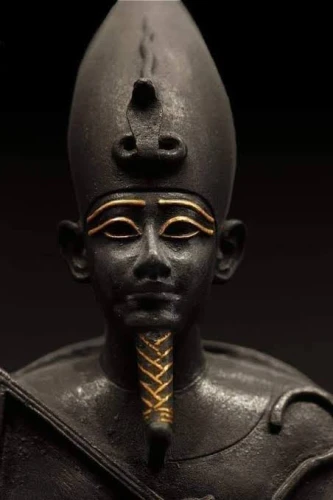
Egyptian God Osiris: The Myth of Isis, the Weighing of the Heart, and Abydos Cults
Osiris: Lord of the Underworld, Judge of Souls, and Symbol of Eternal Rebirth
In the vast and tricky pantheon of ancient Egypt, not one deity caught the human imagination quite like Osiris. The ancient Egyptians called him Wsir, and honestly he was way more than a dim ruler of the dead. Osiris stood for the kind of emotional victory where life pushes back against mortality, the fertile muscle of the Nile, the quiet promise of resurrection, and the moral spine of lasting justice.
And while big sun gods like Ra warmed and lit up the world from above, Osiris seemed to bring something more private to nearly every Egyptian—this strange comfort that death wasn’t really a stop, but more like a shift into a kind of eternal life.
Here is the full tale of Osiris, his betrayal and return from death in dramatic myth, plus his iconography, and the central place he held inside ancient Egyptian belief.
1. The Myth of Osiris: Betrayal, Magic, and Resurrection
The story of Osiris is arguably the most famous narrative in Egyptian mythology, and in a way it becomes like a master blueprint for the nation royal ideology and also its funerary practices, even if people tell it differently over time.
The Wise King— or well, wise ruler
In the legend as it goes, Osiris was first a wise and benevolent earthly king , the son of the earth god Geb and the sky goddess Nut. Together with his sister-wife Isis, Osiris nudged humanity toward civilization, teaching Egyptians agriculture, law, music, and religious observance. Under his calm reign the land stayed lush and steady, in that rhythm of harmony people call Ma'at.
The Jealous Betrayal by Seth
Osiris’s radiant rule, it seems, lit up jealousy inside his brother Seth. Seth is the chaotic deity connected with storms, deserts, and sheer destruction. So Seth planned to murder Osiris , with more trouble than anyone expected.
The Trapped Chest
Seth built a splendid wooden chest, decorated and made in such a way that it matched Osiris measurements perfectly. At a royal banquet, Seth presented it as a gift, but with a condition , anyone who could fit inside it just right would take it.
The Murder
When Osiris finally stepped in , Seth and his helpers shut the lid on him, sealed the whole thing with molten lead, and tossed it into the Nile. The chest drifted downstream until it reached the Mediterranean Sea, and later it washed ashore near Byblos , in what is now modern-day Lebanon.
The Devotion of Isis
It started with grief, Isis just kept searching far and wide, kinda like she couldn’t stop. Eventually she found the chest tucked inside a massive cedar tree, near Byblos. Then she carried her husband’s body back home to Egypt, hiding it in the Nile Delta marshes, quietly.
But of course, Seth noticed it later. He was out hunting at night, and when he discovered the body, he went into a rage. Right then Seth dismembered Osiris into 14 separate pieces and scattered them across the Nile Valley, so there would be no chance of burial, ever.
Isis didn’t back down. She teamed up with her sister Nephthys, plus Anubis the jackal god and Thoth, the ibis god. All together they hunted down every fragment of Osiris’s remains, except for the one eaten by a Nile fish. After that they bound the pieces together with linen wrappings, sort of creating the very first mummy. And with her strong magical abilities, Isis managed to bring Osiris back to a kind of temporary life, just long enough for her to conceive a son, Horus, the rightful heir.
2. Risen as Lord of the Underworld (Duat)
Since Osiris had died, and then been pieced back together , he couldn’t really go back to be in charge of the realm of the living. Instead, he slipped down into the underworld (Duat) to sort of become the highest ruler and judge over the dead.
Meanwhile, his son Horus grew up in hiding and, at some point, he squared off with Seth in this huge legal, and physical contest. Horus came out on top, taking the throne of living Egypt, while Osiris stayed as the final authority of what comes after.
The Pharaoh’s Dual Identity
This mythic push and pull kinda became the backbone of pharaonic divine kingship:
The Living King: was seen as a living, earthly stand-in for Horus.
The Deceased King: after death, blended with Osiris, to govern the afterlife.
Later on, in the Middle Kingdom and the New Kingdom, the whole idea got spread out more. It stopped being something only pharaohs could count on. Every single Egyptian, in theory at least, could look forward to becoming an "Osiris" after death, as long as they lived decently, in step with Ma’at.
3. Visual Iconography and Symbolism
In various temple reliefs and tomb paintings, Osiris shows up right away because of a particular cluster of sacred signs, they kind of stick out even when things are worn.
His mummified form, is usually shown as tightly wrapped in white linen, like a mummy, and it’s meant to show he has triumphed over the whole problem of bodily decay.
Then there is the skin color detail too, it’s commonly green, which points toward new growth and rebirth, like plants coming back, or else it’s black, which is connected with the thick, fertile silt the Nile leaves behind after the flood, some people say it feels almost earthy and alive.
He also wears the Atef crown, a tall white crown with two ostrich feathers on the sides, and that’s tied to his rule over truth and justice, kind of like an unquestionable authority.
Finally the crook and flail are crossed over his chest. The shepherd’s crook (Heka) is there for guidance and leadership, while the agricultural flail (Nekhakha) stands for protection and the harvest, and together they just make the whole scene feel steady, like a promise.
4. The Judgment of Souls: Weighing of the Heart
So, as the supreme judge of the afterlife, Osiris kinda presided over the final spiritual test in the Hall of Two Truths, like it is stated in the Book of the Dead.
When a deceased person arrived in the hall, their heart (Ib) got put on a golden balance scale opposite the feather of Ma'at (truth and justice), and yeah that feather acted like the measuring stick.
If the heart was light: it ended up balanced with the feather, and that meant the person lived in a righteous way. Then Osiris welcomed them into the Field of Reeds (Aaru), which is basically a paradise , that looks like Egypt at its most idealized and eternal.
If the heart was heavy: the heart got burdened by sin, and Ammit devoured it (that terrifying beast, part crocodile, lion, and hippo), and the soul faced the “second death” and simply stopped existing forever .





-webp.webp "Hilton")
-webp.webp "dusit")
-webp.webp "Marriott Hotels")
-webp.webp "Azimut Hotel")
-webp.webp "Golden Tulip")
-webp.webp "sheraton")
-webp.webp "westin hotel")
-webp.webp "Movenpick")