
 English
 Italy
Italy
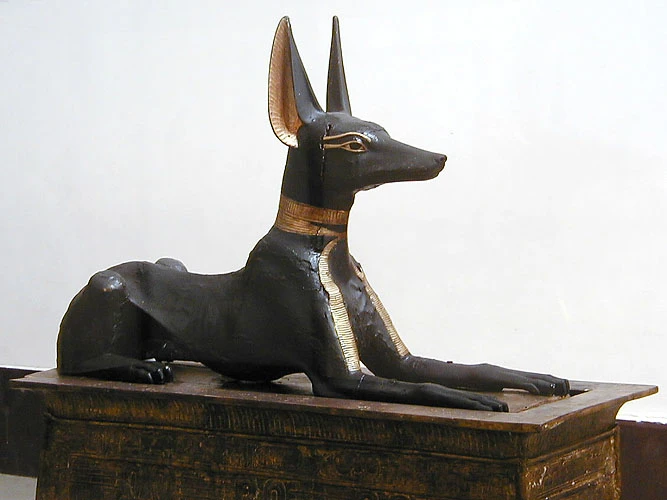
Egyptian God Anubis Guide: The Jackal Form, Mummification Secrets, and the Scales of Justice
Anubis: Lord of the Sacred Land, Master of Mummification, and Guide of Souls
In the shadow filled realm of ancient Egyptian mythology, few figures tug at the mind with so much intrigue, mystery, and deep reverence as Anubis. The old Egyptians called him Inpu or Anpu , and he was that dark jackal headed deity who stood right at the absolute threshold between life, and eternity
Long before Osiris became famous, rising like a national standard as king of the underworld, Anubis already held real control over the realm of the dead. He was portrayed as the master of craft who essentially shaped mummification , yes the one who made it work , the vigilant watcher of tombs and also the gentle escort who guided fragile human souls through those perils in the afterlife
Here’s the full account of Anubis—his beginnings, his trailblazing role in embalming, his core presence in the judgment of souls , and the lasting iconic legacy he left behind
1. The Divine Jackal: Why a Scavenger Became a Protector
To get why the ancient Egyptians picked a jackal to stand in for their most important funerary god, you kind of have to stare at the geography at the desert edge a bit, really. Back in those days, Egyptians buried their dead in plain graves, dug right into the dry desert sand along the Nile Valley’s border. And at night, wild jackals, along with desert dogs, would often roam those western cemetery areas. Sometimes they would root around, unearth shallow burials, and yes, they would mess with human remains.
Turning fear into something like divine shelter, or well protection
Instead of battling the animals directly (which sounds exhausting anyway), they used this clever psychological and spiritual idea:
The guardian of tombs: They basically raised the wild jackal into a sacred protector. The logic was simple enough, if they honored a supreme Jackal God, he would guard the tombs, and not come back to disturb them.
The sacred color black: In their art, Anubis shows up as a melanistic, black jackal, or as a jackal-headed man. That black wasn’t a signal for death, evil, or even plain fear. For Egyptians, black meant fertility, the dark Nile silt they called Kemet, and also the dark staining on preserved bodies during mummification. So overall it pointed to resurrection, and renewed life, like rebirth, not doom.
2. Mythic Origins and Divine Kinship
Over thousands of years, the story about Anubis’s parentage kind of shifted and changed, like it was being retold again and again, each generation adding or adjusting little bits until it fit their own beliefs.
In the Old Kingdom, at the time when the Pyramid builders were building, Anubis was seen more like an independent primordial being. People treated him as if he were the son of the sun god Ra or sometimes the cow goddess Hesat. In that early era, he didn’t feel like a minor role at all. He was basically the absolute ruler of the underworld, wearing big names and grand epithets like Khenty-Amentiu , “Foremost of the Westerners” , which was a sort of nod to the dead buried on the west bank of the Nile.
Later, during the Middle and New Kingdoms, the Osiris myth became really well known. And as that happened, priests started weaving Anubis into the main divine family line, not just leaving him out there on his own.
For example, there is the Secret Birth version. In later accounts, Anubis is described as the son of Osiris and Nephthys, who is also the sister of Isis. Nephthys concealed her pregnancy, mostly because she feared her husband, the chaotic god Seth. After that she abandoned the infant out in the Delta marshes , as if it was the only option.
Then Isis steps in. Isis finds the abandoned child, and raises him as her own son, teaching him divine magic, and a kind of sacred know how.
And when Seth murdered Osiris, the whole thing turns even more dramatic. Anubis then uses his deep understanding of herbs , oils and linens to put Osiris back together. Some stories say he performed what was essentially the first mummification ritual, giving Osiris a way to resist physical decay. By doing so, Anubis supposedly sets the holy template for all later human funerals.
3. Master of Embalming (Imy-ut)
Anubis held the sacred title Imy-ut (“He Who is in the Place of Embalming”) and honestly it kinda sounds like a job description but divine style. He was regarded as the divine founder, and also the supreme patron of the embalming profession, like the whole practice is under his watch.
Priests who acted as a Living Anubis
In those delicate, weeks long stages of mummification, the human priests worked under Anubis’s direct spiritual command, not just influence, more like real authority in a very strict sense:
The Jackal Mask, or whatever you want to call it
The chief embalmer, hery-seshta meaning “Master of Secrets”, wore a heavy painted ceramic mask shaped like Anubis’s head while working on the body.
Chanting spells (not really optional)
As the priest wrapped linen bandages, and tucked protective amulets between layers, he recited the sacred incantations from memory. In a way he became the physical avatar of Anubis on Earth, step by step, no breaks.
Anubis personally oversees it
He was believed to personally supervise each stage, from washing the body in Nile water, to removing vulnerable internal organs and storing them in canopic jars, then drying the flesh with natron salt. After that, he was tied to the use of fragrant resins and sacred oils, meant to preserve the dead for eternity.
4. Guide of Souls and Weighing of the Heart
After mummification was complete and the deceased was laid to rest, Anubis kind of fulfilled his second major duty, acting as Psychopomp, guide of souls.
He met the soul (Ka) at the entrance of the tomb, leading it through the dark and demon-haunted corridors of the underworld (Duat) until it finally reached that great Hall of Two Truths, where everything gets decided.
The Judgment Scale, yeah
Inside the judgment hall, Anubis stood right beside the golden balance scale of justice.
Placing the heart: Anubis carefully took the heart (Ib) of the deceased, the place people associate with memory, feeling, and morality—then he put it on one pan.
The feather of Ma'at: On the other side, he laid the white ostrich feather of Ma'at, which stands for truth, cosmic order, and being right in a kind of righteousness sense.
Calibrating the scale: With meticulous accuracy Anubis adjusted the plumb line, checked the balance, and read the verdict out loud to Thoth. Thoth recorded it on papyrus, no delay.
If the heart balanced perfectly with the feather, Anubis declared the soul pure and led it by the hand to be presented before Osiris, then welcomed into the eternal paradise of the Field of Reeds.





-webp.webp "Hilton")
-webp.webp "dusit")
-webp.webp "Marriott Hotels")
-webp.webp "Azimut Hotel")
-webp.webp "Golden Tulip")
-webp.webp "sheraton")
-webp.webp "westin hotel")
-webp.webp "Movenpick")
