
 English
 Italy
Italy
Dynasties in Stone: How Four Empires Built and Rebuilt Historic Cairo
The Story of a Thousand Minarets: The History of Islamic Cairo
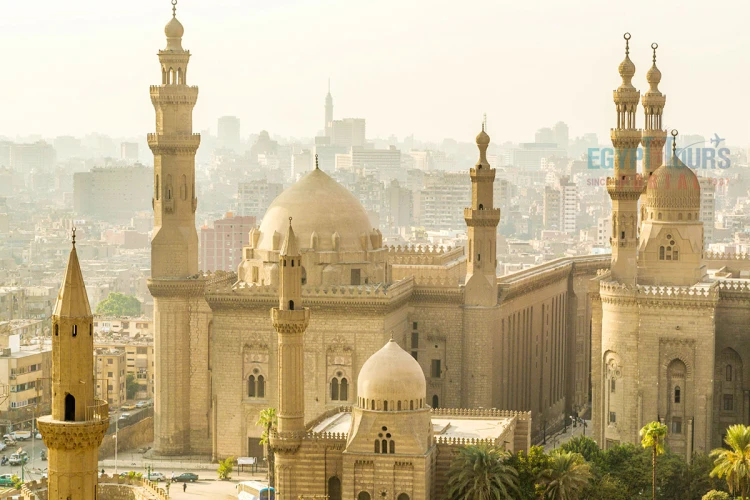
When you look down over that endless, sand-colored skyline of Cairo, the view is sorta dominated by this absolute sea of stone structures, like everything just keeps going. Thousands of graceful , pencil-thin minarets, massive defensive stone walls, and beautifully rounded domes cut into the hazy sky.
And even though the ancient pyramids sitting on the western desert plateau really stand for Egypt’s grand pharaonic past, this sprawling medieval urban center feels more like its living, breathing historic soul—Islamic Cairo, yes.
Spanning more than a thousand years of continuous human history, Islamic Cairo is not some forgotten abandoned archaeological site. It’s the largest, most complete medieval city center left intact anywhere in the world.
To walk through its narrow, winding alleys is almost like flipping through chapters of an epic historical novel. Every empire that conquered Egypt didn’t just rule it, they rebuilt it in stone. So we should trace the historic rise, the golden ages, and the incredible architectural transformations of Cairo, from its beginnings under the Fatimids to its last imperial chapter under the Ottomans.
1. The Birth of Cairo: The Fatimid Royal Sanctuary (969 – 1171 CE)
Before 969 CE , the place we now call Cairo, sort of didn’t exist , not in the way we mean it today. There were older Islamic administrative centers close by, like Fustat… but the real start of the modern city kind of belongs to the Fatimid Dynasty , a strong Shia caliphate that pushed across North Africa from Tunisia.
When the Fatimid commander Jawhar al-Siqilli took Egypt, he did not really waste time. He set out to put together a brand new fortified capital, and he named it Al-Qahira, which means The Victorious . That name then, over time, slipped into the modern word: Cairo.
The Fatimid city plan was basically this huge rectangle, enclosed by thick walls made of mud brick. It was meant to be an elite royal refuge , not a neighborhood for everyday people. Regular citizens were kept out , they stayed in the lively trading zones of Fustat to the south, while the new capital stayed more… ceremonial.
At the core of it all was one big central spine of a street—today’s Al-Muizz Street—connecting directly between two enormous palaces , side by side, like the whole layout was pulling toward them.
Architecturally, the Fatimids left this long lasting imprint. In 970 CE , they founded the Al-Azhar Mosque, and it quickly turned into one of the oldest and most respected centers of learning anywhere. You can still spot the character of Fatimid design in the keel shaped stone arches, the carefully made stucco writing, and the grand stone entrance gates like Bab Zuweila, which still stand as solid sentinels, guarding the memory of those old city walls.
2. The Shield of the City: The Ayyubid Fortress Age (1171 – 1250 CE)
The luxury of the Fatimid palaces, kind of came to a crashing end when that dynasty grew weak, and had to deal with threats from Crusader armies invading out of the Levant. Step in Salah ad-Din al-Ayyubi , known to the West as Saladin, the brilliant military general who basically overthrew the Fatimids and then set up the Ayyubid Dynasty.
Saladin also changed the geography of Cairo in a pretty complete way. He understood that a city broken into separate unfortified quarters was… well, it was easy to take. His idea was to bind the older royal city of Al-Qahira together with the commercial districts of Fustat under one gigantic protective shield, like a single umbrella but for defense.
In 1176 CE, Saladin started building what people call his masterpiece: The Citadel of Cairo. It was a massive fortress made of limestone, perched up high on a rocky cliff in the Muqattam hills. For the next 700 years that heavy, towering place would stay the political, military, and administrative center of Egypt.
With Ayyubid architecture, they discarded the delicate, courtly look you associate with the Fatimids, and instead went for more functional defensive military stonework. They used heavy rusticated stone blocks, added deep machicolations openings meant for dropping rocks on attackers, and built fortress entrances that twist and turn, almost impenetrable, and not exactly welcoming to invaders.
3. The Golden Age of Stone: The Mamluk Sultans (1250 – 1517 CE)
If the Fatimids kind of birthed Cairo and the Ayyubids held the line around it, then it was the Mamluk Dynasty that really, turned it into the ultimate architectural capital of the medieval world.
The Mamluks were a strangely distinctive ruling group: they were elite military slaves, mostly Turkic and Circassian in origin, and at some point they overthrew their Ayyubid masters and seized power across the empire. Even with their brutal internal power fights, the Mamluks somehow became among the greatest patrons of art, and architecture in human history, no joke.
In the Mamluk period, Cairo turned into the richest trading crossroads between Asia and Europe. The sultans leveraged that huge wealth to raise monumental stone complexes, multi-ton kind of projects, stretching along Al-Muizz Street and the nearby districts around the Citadel.
The Great Mamluk Innovations
The Complex Layout: Mamluk buildings were architectural Swiss Army knives. One complex, like the well known Qalawun Complex (1285 CE), or the Mosque-Madrasa of Sultan Hassan (1356 CE) would blend a congregational mosque, an institutional school (madrasa) , a public water fountain (sabil) and then a massive hospital or royal mausoleum too.
Ablaq Stonework: Artisans started alternating horizontal bands of light cream limestone with deep red stone, and that made a punchy, high-contrast striped illusion on the outside faces of buildings.
The Carved Domes: Mamluk architects pulled off an engineering miracle: they moved from smooth brick domes to massive stone domes, fully wrapped in deep hand-carved geometric star patterns and winding floral arabesques, like the whole ceiling became ornamentation.
4. The Imperial Suburb: The Ottoman Era (1517 – 1798 CE)
In 1517, the unstoppable armies of the Ottoman Empire, steered by Sultan Selim I, moved into Egypt and brought down the last Mamluk sultan. Cairo, basically lost its spot as the glorious hub of a sovereign empire, practically overnight turning into a provincial capital, governed by a steward dispatched from Istanbul.
While a few early historians insisted this caused an architectural downturn , the more recent archaeology tells a different tale . The Ottoman age, somehow, gave Cairo streets a nuanced and very recognizable stylistic mix , like a kind of refined blending you can still notice today.
The Ottomans were especially strong with domestic and civic building. They raised magnificent residential palaces , such as Bayt al-Suhaymi (1648 CE), with cool, open air inner courtyards, plus wide hand carved Mashrabiya wooden screens . These latticed panels let breezes pass to cool the rooms, but they also kept firm privacy, so the family inside stayed largely unseen .
They went further too, with dozens of graceful Sabil-Kuttabs. Those were charitable structures where fresh filtered water was supplied to pedestrians at street level, for free, and above that , an orphan school functioned .
5. Practical Guide for Navigating the Timeline
If you want to actually trace this thousand year history on the ground in Cairo, you’ll need a rough but structured plan, even if it’s not super neat.
Start by following the geography: Begin your historical walk near the northern gates of Bab al-Futuh (that Fatimid era spot), then go south along Al-Muizz Street. There you can glance at the Mamluk madrasas and the layered facades, then finish your day up high inside The Citadel. Think of it as an Ayyubid fortress layout with later Ottoman mosque additions.
Wear proper footwear: the stones around Islamic Cairo have survived centuries, so yes they look sturdy but they are uneven, partly polished from long use, and honestly they really do demand shoes with serious support.
Also, secure professional bookings: the calligraphy, heraldic crests, and the architectural phases are incredibly complex. So exploring Islamic Cairo tends to go smoother with a private, certified Egyptologist guide, someone who can connect the symbolism and the changes over time without getting lost in the details.
When you’re organizing these tailored walking tours through Cairo based agencies, try to make sure your reservations go through secure, bank-grade checkout options like WeTravel or other transaction pathways backed by Stripe. Those platforms use certified PCI-DSS Level 1 encryption, so your financial parameters can be safely tokenized. In practice that means your card details aren’t handled externally, and you can lock in your cultural holiday itinerary with a lot more peace of mind.





-webp.webp "Hilton")
-webp.webp "dusit")
-webp.webp "Marriott Hotels")
-webp.webp "Azimut Hotel")
-webp.webp "Golden Tulip")
-webp.webp "sheraton")
-webp.webp "westin hotel")
-webp.webp "Movenpick")