
 English
 Italy
Italy
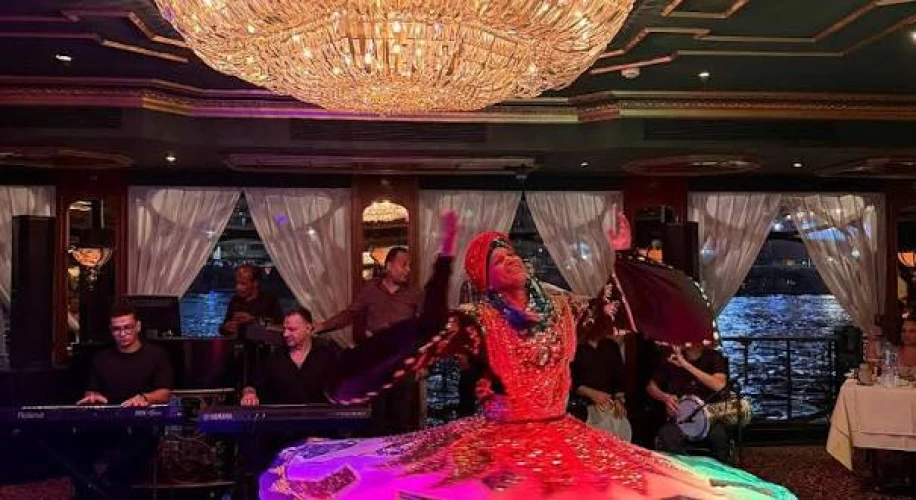
Cultural Rhythms on the River: Experiencing Live Egyptian Performances at Dinner
Cultural Rhythms on the River: Experiencing Live Egyptian Performances at Dinner
There is a special point in time during a Cairo dinner cruise that marks a change in the dining hall. Conversation stops, the smell of spiced kofta and fragrant pita bread fills the air, and a first heavy beat from the tabla echoes under the wooden floors. From outside, the lit Cairo Tower passes by silently, while inside the dining room becomes alive with rhythm, color and thousands of years of tradition of performance.
Nile River dinner cruise is usually considered either a sightseeing meal or romantic date, but at the core of such an evening, there is a unique chance to get acquainted with the traditions of folk art of Egypt without any effort needed to sit in a formal theater.
In order to understand better every step, movement and beat during your Nile dinner cruise, there is a full guide for you below.
1. The Musical Backbone: Middle Eastern Instruments
Even before the first dancer steps foot on stage, the mood of the night is set by the live orchestra. Unlike modern pop music, the traditional Egyptian music is devoid of any synthetic beat; instead, it is a combination of natural acoustic instruments which form part of centuries old stories from the region.
Tabla (Darbuka): Shaped like a goblet, the hand drum is the soul of the performance. It sets the pace with rapid finger taps and palm strikes.
Oud: "King of Arabic Instruments," is an Egyptian fretless stringed pear-shaped instrument known for its rich resonance. It forms the melody (maqam) of Arabic love songs.
Nay: Simple reed instrument played diagonally with its breathy tones reminiscent of the stillness of the Egyptian landscape and deserts.
Riqq: An elegant tambourine covered with small brass cymbals for creating metallic rhythm.
2. The Tanoura: Spiritual Motion Turned Folk Art
For most visitors, the Tanoura dance forms the emotional climax of the whole event. Coming from the Sufi religious tradition, where whirling was part of the rituals of the followers of the poet Rumi, Egypt has developed a unique folk interpretation of the ritual.
The Costume and Physics
Tanoura is danced only by men who wear heavy and patterned skirts called tanoura which can reach up to 15 kilograms (33 pounds) in weight. As soon as the dancer starts rotating in continuous counter-clockwise circles, centrifugal force raises the heavy skirts to form a wide floating disc of geometrical colors.
Symbolism and Skill
Celestial Movement: For a Sufi mystic, perpetual spinning is indicative of the cosmic order, planets around the sun and pilgrims around the Kaaba. Usually the dancer’s right hand is held upwards to attract blessings from above, while the left hand is down towards earth to bestow them on earth.
Dexterous Manipulations: With an increase in tempo of the music, the performer undresses the lower layers of skirts, spinning them in the air as if umbrellas, wheels, and swaddles while rotating constantly for 15 to 20 minutes.
Physical Endurance: Not getting dizzy and keeping balance takes years of training and practice.
Once the performer unspins his top layer of the skirt and gives it away to spectators, it is not just another fancy move but a heartwarming expression of connection which makes everyone in the whole dining hall get up and cheer.
3. Raqs Sharqi: The Art of Egyptian Belly Dance
The Tanoura gives way to Raqs Sharqi (meaning “Dance of the East”). Despite being practiced in many variants across the Middle East region, Egypt in general and Cairo in particular are internationally famous for their association with belly dancing.
Classical Expression or Common Myths?
On a luxury Nile cruise with a rating of 5 stars, Raqs Sharqi is represented as a professional and expressive performing art form. The dancer is dressed in a beaded costume and dances improvising in sync with the live band:
Rhythmic Interaction: Pay attention to the performance during the drum solo (solat al-tabla). Every drop of the hips, each torso isolation, and shoulder shimmies done by the dancer get locked in with every tap made by the drummers’ fingers.
Emotional Interpretation: Classical Raqs Sharqi contrasts fast and energetic drum solos with graceful veil dance moves which express the melody of the oud and nay.
Energy Connection: Contrary to common stereotypes that belly dancers never move off the stage, the dancer performs among guests, invites them to clap hands and dance along with her.
4. The Feast: Connecting Flavor to Performance
The cultural journey does not just take place at the stage but continues at the dining area. The live performances are well-timed before a lavish open Egyptian buffet so that you get to try out not only the cultural traditions but also the food of Egypt:
The Mezze Table: Kick off your meal with traditional dips including smoky baba ghanoush, hummus, garlic tahini, and Egyptian aish baladi pita.
The Hot Grills: Taste some of the traditional Egyptian dishes such as spiced kofta meat, chicken shish taook, fish, and rice cooked with local spices.
Traditional Sweets: Enjoy the performance with traditional desserts made from honey such as basbousa (Egyptian semolina cake), kunafa, or Umm Ali (Egyptian bread pudding with milk, nuts, and raisins).
5. Show Etiquette & Cultural Respect
In order to get the most out of the entertainment, consider the following etiquette pointers:
It’s okay to participate, but it’s also okay just to sit back.
Performers often ask the audience to join on stage or clap in rhythm. Feel free to take part with a smile; after all, it’s done in the spirit of Egyptian hospitality and friendliness (Karam).
Record as much as you like, but remember those around you.
Flash photography may cause a sudden shock or blindness to both the spinning Tanoura dancer and stage performers. Turn off the flash mode and record in low light night mode.
Even a little gratitude is very appreciated.
If you really enjoyed the musical act or stage performance, tipping the performers or servers in Egyptian Pounds (EGP) at the end of the day is an elegant gesture of thanks (Shukran).
The Verdict
An Egyptian dinner cruise on the Nile is not just a dining boat; it is a living and breathing tribute to the Egyptian culture. Savoring the soulful sounds of the oud, marveling at the intricate patterns created by the Tanoura dancers, and the rhythmic dance of Raqs Sharqi as one moves through the illuminated skyline of Cairo.





-webp.webp "Hilton")
-webp.webp "dusit")
-webp.webp "Marriott Hotels")
-webp.webp "Azimut Hotel")
-webp.webp "Golden Tulip")
-webp.webp "sheraton")
-webp.webp "westin hotel")
-webp.webp "Movenpick")
