
 English
 Italy
Italy
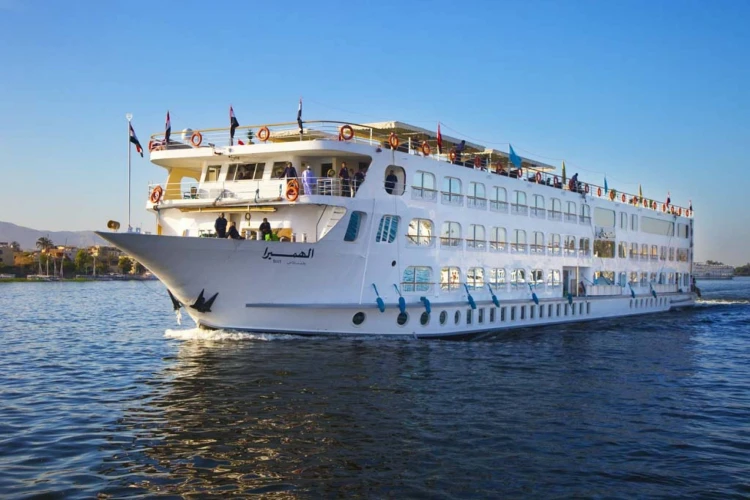
Beyond the Crowds: The Secret Routes of Dahabiya Nile Cruises
Dahabiya Nile Cruise Routes Explained: Where Do They Sail?
If you are really looking for a genuine, slow-ish way to soak in Egypt’s famous river, then taking a Dahabiya Nile Cruise is honestly the very top, like the peak of Nile travel.
Different from those giant 100 cabin motor ships that operate more like floating resorts, a Dahabiya is a traditional twin masted wooden sailing boat, usually with only about 4 to 10 luxury cabins. And because they get pushed along by the desert breeze, or quietly towed by a small support tugboat when the wind is low, the whole feel becomes closer, more private, and honestly quite calm. Like, you can hear your own thoughts.
Also , beyond the gentle luxury onboard, the real standout comes from routing flexibility. Since these wooden sailboats are smaller, and more agile than the bigger cruise vessels, they can drop anchor near remote river islands, slip into tiny rural docks, and reach secluded archaeological corners that large ships simply won’t manage.
Below you’ll find a full, deep guide on where Dahabiyas go, their usual routes, those more exclusive hidden stops, and exactly what makes each itinerary feel so different.
1. The Classic Route: Esna to Aswan (Sailing Upstream)
Most Dahabiya trips from Dahabiya Voyages run along that river bit between Esna (which is only about 50 km south of Luxor ) and Aswan.
Since the bigger motor ships usually dock right in central Luxor, the Dahabiya people often move guests with a private, air-conditioned vehicle. They take you from Luxor over to the calm docks of Esna, so you can hop aboard your sailing boat, like right away. That way you skip all the heavy commercial fuss and you get to start your time on the water with actual peace.
Typical Length: 4 nights / 5 days
Sailing south from Esna toward Aswan means going upstream, so you’re basically facing the Nile river current. Still, with steady river winds helping out, this route generally takes about 4 nights and 5 days.
Why this route feels magical:
Smooth sailing, kind of effortless: The main winds along the Nile blow north to south, so upstream travel on a traditional canvas Dahabiya tends to be calm, gentle, and pretty consistent.
Slow, unhurried mornings: Because there isn’t that strict timetable like the bigger tour groups, you wake up to quieter river mornings. You can enjoy breakfast on the open wooden deck while local fishermen glide past in small boats.
2. The Downstream Route: Aswan to Esna / Luxor
The reverse itinerary heads north, leaving Aswan then going down toward Esna, or sometimes straight through all the way to Luxor.
Typical duration: 3 Nights / 4 Days
Because the ship is gliding downstream with the Nile’s current it generally feels a bit quicker, usually 3 nights and 4 days until you reach Esna.
What to expect:
As the water stream pushes the boat ahead, Dahabiyas cruising downstream often keep small, quiet support tugboats nearby at a respectful distance, just to stay on schedule when the wind weakens or fades. You still get to see the same breathtaking ancient temples, only the day runs with a slightly stricter morning-to-afternoon rhythm.
3. The Exclusive Stops Only Dahabiyas Can Reach
The real charm of a Dahabiya route isnt just the well known temples like Edfu or Kom Ombo— it is those little, half-hidden stops that the big cruise ships basically miss out on, mainly because their water drafts are shallow or they are simply too massive for the local bends.
A. El Kab (Ancient Nekheb)
Set along the East Bank of the Nile, El Kab is one of the oldest places in Upper Egypt. Big cruise ships almost never dock here, but Dahabiyas come in close, right along the muddy shore. You can wander through the huge mud-brick boundary walls, then climb up into the rock cut tombs of ancient New Kingdom nobles, where you still see rare painted scenes… early Egyptian farming, everyday routines, all that kind of life.
B. Gebel el-Silsila: The Ancient Sandstone Quarries
This stop is, honestly, one of the most striking parts of a Dahabiya itinerary. At Gebel el-Silsila the Nile squeezes down a lot, boxed in by steep sandstone cliffs. It served as ancient Egypt’s main sandstone quarry, basically the very stone used for Karnak, Luxor, and even the Ramesseum temples.
Since larger ships cannot anchor here without trouble, Dahabiya guests often end up with the site pretty much to themselves. You step straight off the boat and explore giant carved quarry chambers, older shrines, royal stelae , and the dramatic Speos of Horemheb rock cut temple facing the water.
C. Private Island Dinners & Village Walks
Instead of pulling into the loud, busy commercial piers at night, Dahabiyas tie up near quiet river islands like Besaw Island or Fawaza Island.
From there, visitors can join simple guided strolls through green banana plantations and local farmland, meeting village people away from the usual tourist bazaar crowds. Later, the crew sets up a romantic candlelit barbecue right on the sandy river edge under a sky crowded with desert stars, kinda unreal, really.
4. The Grand Long Route: Cairo to Aswan by Dahabiya
If you’re after the ultimate luxury journey, a few top tier operators run extended 10 to 14 day expedition itineraries, moving all the way from Cairo down to Aswan, or yes, sometimes back the other way
What you’ll typically get, the Grand Voyage kind of highlights
Middle Egypt exploration: You travel through seldom seen stretches of Middle Egypt, pausing to dig into the Middle Kingdom rock tombs at Beni Hasan, and also viewing Akhenaten’s old, sacred city at Tell el-Amarna
Unmatched privacy: You glide for long, quiet hours, sailing through several hundreds of kilometers of pristine and untouched Nile landscapes where international visitors are a genuine rarity.
Practical Tips for Planning a Dahabiya Route
Best Time to Sail: For a Dahabiya, the best season is usually between October and April, when Upper Egypt feels comfortably warm and those easy river breezes really do help the sails stay lively. It’s not too harsh out there most days, so the whole cruise feels calmer.
Mix It With Luxor Sightseeing: Because many well-known Dahabiya routes begin or wrap up around Esna, plan for your tour operator to organize private transfers plus proper guided visits in Luxor. Think West Bank first , like the Valley of the Kings, and then East Bank, such as Karnak. Do these days either before you depart , or after you finish the sailing stretch.
Keep Payment Practices Solid: Dahabiya charters are high-end, boutique style journeys, and cabins are limited, so you’ll want to lock in your dates early. If you’re booking online, make sure the checkout uses secure, certified platforms. Look for options like Stripe or WeTravel. They work with PCI-DSS Level 1 encryption and use tokenization to handle your payment details, so your deposit information and personal data stay protected end to end.





-webp.webp "Hilton")
-webp.webp "dusit")
-webp.webp "Marriott Hotels")
-webp.webp "Azimut Hotel")
-webp.webp "Golden Tulip")
-webp.webp "sheraton")
-webp.webp "westin hotel")
-webp.webp "Movenpick")