
 English
 Italy
Italy
Badarian Culture Guide: Prehistoric Assiut, Early Metallurgy, and Black-Topped Pottery
The Badarian Culture: The Cradle of Upper Egyptian Civilization
Developing along the eastern bank of the Nile in Upper Egypt, primarily around the Assiut Governorate, between roughly 4400 BC and 4000 BC , the Badarian Culture shows up as the last, more polished step of the Neolithic Era and kinda the real early dawn of Predynastic Egyptian life.
It’s named after the type site of El-Badari, and yes this archaeological culture kind of bridged the gap between early farming communities and the more elaborate, state-forming Naqada cultures , which later managed to unify Egypt.
Below you’ll find the full overview of the Badarian culture—how people crafted things, how society was arranged, and what historical footprint it left behind.
1. Exceptional Craftsmanship: Black-Topped Pottery
The most famous hallmark of the Badarian culture is its exquisite ceramic production, which stays a kind of high-water mark for ancient Near Eastern pottery or so it feels like. There’s, too, that sense that everyone can see it.
Ripple-Patterned Ware: Badarian potters managed incredibly thin vessel walls. They used a comb-like tool to make a delicate, combed “rippled” texture along the outer surface, before the firing, almost like a repeatable ripple idea.
Black-Topped Red Vessels: The pots were fired in a rich red clay. Then the upper rims and also the interiors were smothered with organic ash during firing, and the result was a glossy burnished black, very even and rather striking.
Precision and Artistry: The forms were made entirely by hand without a potter’s wheel. That kind of hand-eye coordination really shows, plus this controlled pyrotechnic management, like they understood heat in a practical, calm way.
2. Early Metallurgy and Trade Networks
Even if the Badarians get slotted inside the late Neolithic ideas, they still look like some of the Nile Valley’s early movers when it came to trying metals and chasing trade that went far beyond the local area:
Copper working: in the Badarian burials, excavators turned up little hammered copper beads, pins, and awls. It’s basically the first, or at least one of the first, clear hints of copper metallurgy in Egypt, not just “useful” metal bits, but steps toward a real technique.
Exotic imports: the grave assemblages had seashells from the Red Sea, turquoise coming from Sinai, and basalt from farther north. So, in a very practical sense, these objects suggest that already in the 5th millennium BC, Upper Egyptian groups were tied into broad exchange routes, like a network rather than isolated villages.
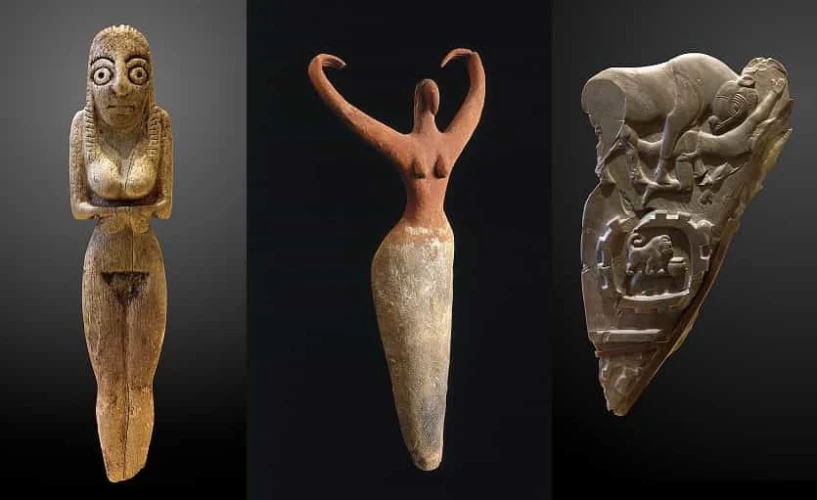
Ivory and bone crafting: they made delicate ivory spoons, hairpins, combs,and even small human figurines. Alongside these, they used slate cosmetic palettes for grinding eye paint, using things like galena and malachite, kind of turning daily grooming into a specialized craft.
3. Social Structure and Burial Traditions
Most of what we think we know about Badarian society seems to come from their rather extensive desert burial grounds, and yeah these places show, step by step, how social life got more complex, along with their religious ideas.
Burial Orientation: The deceased were laid inside oval pits in the sand, usually wrapped in reed mats , or sometimes animal skins. They rested in a fetal like pose, on their left side and looking west, toward the setting sun. It’s kind of an early sign of the kinds of mortuary customs you later see in Egyptian traditions.
Beginnings of a Wealth Hierarchy: Compared with earlier Neolithic burials, which were often more egalitarian, the Badarian cemeteries have noticeable differences in what people were given. Some individuals were placed with dozens of fine pots, ivory spoons and copper beads. That kind of inventory suggests status differences, personal prosperity, and maybe local leadership, all starting to take shape.
4. Economy and Daily Life
The Badarians lived in kind of simple villages made of huts built from reeds, mud, and animal hides, not too elaborate you know. Their economy felt kinda balanced, at least in practice.
Agriculture they grew emmer wheat, barley, and lentils, then they stored the harvest grain in silos lined with mud, so it wouldn’t spoil easily or fall apart.
Herding was equally important, domesticated cattle , sheep and goats were sort of at the center of survival, giving them meat, milk, leather, and even bone.
And then Hunting and Fishing, they added to the farm life by hunting gazelles near the desert edges, and fishing along the Nile using bone hooks and harpoons, fairly straightforward really.





-webp.webp "Hilton")
-webp.webp "dusit")
-webp.webp "Marriott Hotels")
-webp.webp "Azimut Hotel")
-webp.webp "Golden Tulip")
-webp.webp "sheraton")
-webp.webp "westin hotel")
-webp.webp "Movenpick")
