
 English
 Italy
Italy
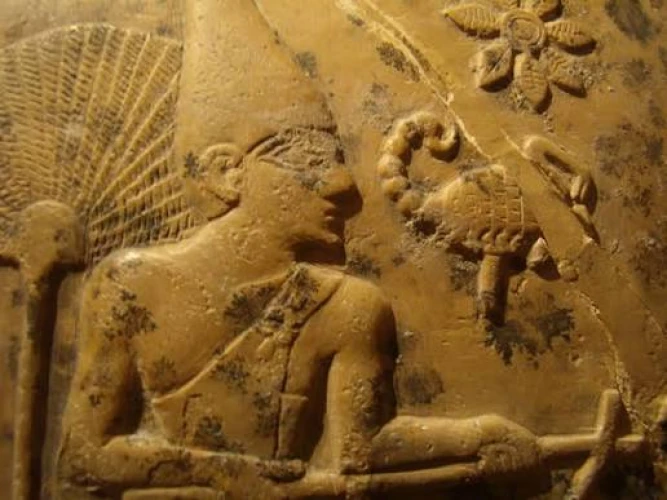
Archaeology vs. Written Records: How Historians Reconstruct Ancient Egypt
The study of ancient Egypt is a unique intersection of two intellectual fields: epigraphy/philology and field archaeology. The former comprises the centuries-old Western reception of Egypt through written sources, such as the classical writings of Herodotus, Diodorus Siculus, and Strabo, biblical traditions, and deciphered ancient texts (hieroglyphic, hieratic, and demotic). The latter is the scientific study of Egypt’s archaeology. With the advent of modern archaeology in the nineteenth and twentieth centuries, it became increasingly evident that the textual tradition, for all its insights, represents only one – albeit crucial – facet of Egyptology.
In essence, historical reconstruction in modern Egyptology is a comparative exercise. Written sources represent the textualized memory of ancient Egypt. Inscriptions on stone were intended to last beyond their makers’ deaths, glorifying dynasts and gods who had power over mortal affairs. By contrast, physical archaeology recovers the empirical reality of ancient societies, their material culture: food remains, housing, pathology, industrial waste, tools’ typology, pottery, and stratigraphy. The comparative study of texts and material culture allows modern historians to juxtapose textualized ancient sources with tangible realities, reconstructing the ebb and flow of Pharaonic history in all its intricacies.
1. The Nature of Written Records: Ideology, Elite Bias, and Preservation
It is important to note that ancient Egyptian sources of the past are the products of a literate administration representing no more than 1-2% of the population at large. For the overwhelming majority of the population, the written word was a novelty and an inaccessible experience. Ancient Egypt is the land of monumental inscriptions on sandstone temples and tombs, pyramids’ hieroglyphic decorations, and papyrus scrolls burned in the vaults of dynasts’ tombs centuries after their authors’ deaths. The former type of sources (epigraphy) dominates the historical annals of ancient Egypt.
A. Monumental Inscriptions and State Propaganda
Inscriptions carved on stone were not intended to provide modern scholars with objective historical context. Monuments’ pylons and victory steles served the purpose of proclaiming the king’s divine right to rule; hence, the pharaoh’s word on his monuments was law. On stone, the king did not lose battles – he always won, and his enemies were eternally defeated at his feet. Moreover, the state religion dictated that the king enforced Ma’at (the principle of natural order) and thus promoted social stability and prosperity. At the same time, the same sources depict a society of slavery, where the king’s word is law, and all the king’s subjects are his slaves. The juxtaposition of ancient sources provides invaluable insights into the social history of ancient Egypt. For example, the royal annals record Ramesses II’s (1304-1244 BCE) legendary military victories during the Battle of Kadesh in Syria. However, the discovered Hittite cuneiform inscriptions record a victory for the Hittite king, a humiliating defeat for Egypt, forcing the Hittite ruler to withdraw within his borders.
B. The Survival Bias of Organic Texts
Texts painted a picture of ancient Egypt, a land of conquests, slave labor, and royal splendor. However, the survival bias of organic texts (as opposed to stone epigraphy) presents an incomplete view of ancient Egypt. Ancient Egypt’s climate and geology determined the survival of documentary sources: animal skin parchment and papyrus were in frequent use but survived mainly in the dry conditions of the desert. Consequently, most of the surviving papyruses originate from the fringes of the Nile Delta – the sandy soils of the region preserved them. In addition to desert tombs, another source of ancient Egyptian papyruses is the monastic cells’ libraries of Upper Egypt, which hold many medieval manuscripts.
2. The Power of Archaeology: Material Culture and Unspoken Realities
Where written sources fail to tell the story of ancient Egypt, field archaeology contributes invaluable primary historical sources. Material sources are more reliable than textual ones since they represent the unvarnished truth about the life of the common ancient Egyptian. While royal inscriptions represent the ideology and interests of dynasts and priests, archaeology recovers the daily life of the typical ancient Egyptian town dweller or farmer.
A. Unearthing Non-Elite Lives
The classical tradition depicts ancient Egypt as a land of grandiose temples and pyramids, their facades decorated with royal inscriptions narrating the deeds of the pharaohs and the gods. However, the archaeology of everyday life paints a different picture. Excavations at ancient Egyptian workers’ villages (the Deir el-Medina and Giza plateau workers’ village, also known as the “lost city of the pyramid builders”, excavated by Mark Lehner) have uncovered a different story. Archaeological findings of animal bones (zooarchaeology) and plant remains (palaeoethnobotany) at the Giza plateau workers’ village showed that the pyramid builders were not the starving slaves of popular imagination. Giza’s port workers were well-fed, with skeletal remains showing signs of a diet rich in meat (beef, sheep, and goat) and dairy products. Archaeological finds of the remains of the workers’ long bones showed that the state provided excellent care for the laborers, treating various fractures and diseases. Thus, a close examination of material sources shows that ancient Egypt was a country with a highly developed feudal economy and national-patriotic education.
B. Settlements and Domestic Architecture
The study of domestic architecture and settlements is another vital aspect of Egyptology. For more than a century, the prevailing historical view of ancient Egypt was informed by monumental architecture: a country of stone temples and pyramids. However, modern urban archaeology has identified numerous towns and their domestic building plans in the Nile Delta and the oases of the western desert. In the first decades of the twentieth century, the Tell el-Daba (Avaris) excavations, Tell el-Amarna, and Kahun discovered domestic architecture and urban planning, revealing the minutiae of ancient Egyptian domestic life.
3. Methodological Synthesis: When Text and Artifact Intersect
The most interesting historical discoveries emerge when written sources and archaeological findings intersect, converse, and sometimes contradict each other.
A. Resolving the Hyksos Transition
One of the most famous examples of the synthesis of sources in Egyptology concerns the so-called Second Intermediate Period (c. 1700-c. 1550 BCE) when Egypt was ruled by the Hyksos – the Fifteenth Dynasty. According to the most popular source, the Hellenistic historian Manetho, the Hyksos were a foreign tribe from Asia who invaded Egypt, burned temples and cities, and enslaved the local population. Hyksos is a composite word meaning “foreign rulers.” For decades, Egyptologists interpreted the Hyksos as an ancient Egyptian equivalent of barbarian tribes from the north, who used siege machines to capture Thebes, Memphis, and eventually the capital city of ancient Egypt, Avaris (Tell el-Daba).
However, decades of meticulous excavations by Manfred Bietak at Tell el-Daba revealed a different story. The stratigraphical findings at Avaris showed that the infiltration of Levantine tribes into the Nile Delta was a slow process that took place over several generations. Moreover, Bietak’s team discovered that the immigrants did not come to conquer Egypt but rather to settle in the eastern Nile Delta. Archaeology thus provided a crucial historical context for the Hyksos’ slow infiltration into ancient Egypt.
B. Epigraphy and Stratigraphy in Chronology
Dating of the ancient Egyptian history is a model exercise in epigraphy and stratigraphy. The textual sources allow the Egyptologists to build an approximate relative chronology based on the epigraphic record of the king lists (Manetho’s History of the Kings of Egypt, the Turin King List, the Palermo Stone, etc.). Archaeology provides absolute dates based on stratigraphy. The relative dating is achieved through the study of stratigraphy – the science of sedimentation. Seriation and typology of pottery’s vessel shapes determine the chronology of material sources. Finally, radiocarbon dating analyzes the isotope composition of carbon in organic matter. Most commonly, the C14 isotope is used to determine the dating of short-lived organisms (seeds, charcoal, linen, etc.) whose remains were found in excavated tombs. By comparing radiocarbon dating results with the traditional epigraphic dating, archaeology provides a solid chronological framework for Egyptology.
4. Bioarchaeology and Environmental History: Expanding the Toolset
Modern interdisciplinary bioarchaeological study of mummies has provided a new and valuable insight into ancient Egypt’s social history. Analysis of mummified bodies using modern medical tomography allows the determination of the health status of Egypt’s ancient population. Moreover, the examination of bone tissue can reveal clues about the population’s food, migration, and genetic predispositions. Analysis of carbon isotopes (C12/C13) in tooth enamel and collagen tissue determines the diet and migration patterns of the population at the time of death. Finally, the examination of palaeopathology identifies the causes of death and the prevalence of various disease conditions.
Written sources rarely record health concerns as relevant to the state religion. Heretofore, the state theology dictated that Egypt was a favored land of the gods. However, a close examination of the long-term trends in health and nutrition revealed by bioarchaeology identified several climate-related causes of disease and mortality. For example, the study of the paleoclimatic history of the Nile has identified periods of prolonged droughts causing Egypt’s economic decline and social upheaval. Climate-related causes of disease and mortality are relevant to modern Egyptology as a whole.
Conclusion
Neither written sources nor archaeological findings are sufficient to piece together the life of ancient Egypt. Epigraphy holds the keys to deciphering the linguistic, theological, and political history of the ancient world. Field archaeology studies the material culture of the ancient world, its settlement patterns, geology, and palaeoenvironment. By maintaining a close dialogue with epigraphy, modern Egyptology examines the lives of ordinary ancient Egyptians, not the self-proclaimed slaves of the Sun God.





-webp.webp "Hilton")
-webp.webp "dusit")
-webp.webp "Marriott Hotels")
-webp.webp "Azimut Hotel")
-webp.webp "Golden Tulip")
-webp.webp "sheraton")
-webp.webp "westin hotel")
-webp.webp "Movenpick")
