
 English
 Italy
Italy
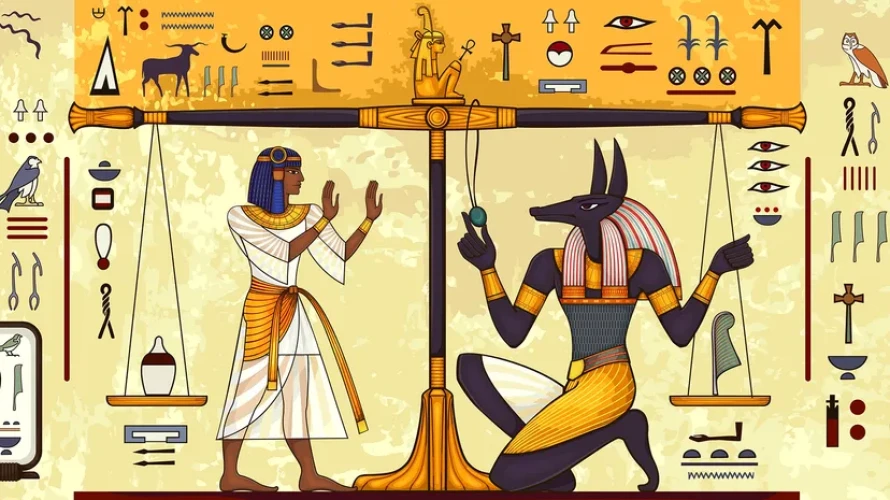
Anubis: The Guardian of Secrets and the Loyal Guide to the Afterworld
The Egyptian deity Sekhmet displays her fierce power through her midday sun concentration while Anubis known to the ancient Egyptians as Anpu serves as the silent protector who watches over dark spaces. His sleek black-headed canine form makes him the most famous character in Egyptian mythology who exists between the living world and eternal secrets.
In the Valley of the Kings and Grand Egyptian Museum Anubis serves as a permanent guide for contemporary visitors. The deity served much more than his title of "God of Death." The deity functioned as a protector who studied holy things while he served as the ultimate guide for the soul's most important journey.
The Iconography of the Jackal: Why Black?
Anubis appears in visual representations either as a male figure with a jackal head or as a complete jackal who assumes a position of rest on a sacred altar. The ancient Egyptians selected the jackal because of its practical benefits in their ceremonial practices. The animals showed their presence by wandering through the desert areas that contained burial grounds. The Egyptians created a protective image through their domestication of the animals which they saw as dangerous because they believed it would safeguard the individuals who had died.
Anubis always appears in the color jet black which holds deep significance according to his character:
The Nile Silt: The Nile river brought forth black soil which created rich fertile land that people believed would bring about new life through its natural cycles.
The Mummification Process: The process created a body appearance that matched the original state of a corpse which had undergone resin and linen conservation methods.
Egyptians saw black as a color which represented new life potential that existed beyond their visible world.
The Master of Mummification: The First Embalmer
Anubis functions as the "Lord of the Embalming Tent." The central Osiris myth describes how Anubis assisted Isis in recovering Osiris body parts after his brother Set murdered and dismembered him.
Anubis conducted the initial mummification process by covering Osiris body with holy linens that functioned as decay protection. He established the fundamental design that leads to everlasting existence through this act. During Ancient Egyptian mummification procedures, the chief embalmer would wear an authentic jackal mask that allowed him to become Anubis and perform the sacred rituals exactly as they should be done.
The Weighing of the Heart: The Ultimate Trial
The "Hall of Truth" (Ma’at) stands as the most recognizable artwork in Egyptian artistic history. Anubis serves his most important duty as he acts as the judge's assistant who safeguards the scales.
Anubis takes the deceased person to the golden scale which stands in the hall.
The Heart of the deceased (the seat of their soul and memories) occupies one side of the scale.
The Feather of Ma’at (the symbol of truth, justice, and cosmic order) occupies the other side of the scale.
Anubis carefully makes adjustments to the scales. If the heart is lighter than the feather, the person is declared "True of Voice" and welcomed into the afterlife (The Field of Reeds). Ammit receives the heart when it becomes heavier than the feather because of sin. Anubis ensures that no one, not even a Pharaoh, can cheat this final moral audit.
Where to Find Anubis Today: A Traveler’s Guide
Anubis can be found throughout Egypt which attracts both history enthusiasts and visitors who want to see its historical sites. The following locations provide the most stunning views of his enduring impact:
1. The Treasure of Tutankhamun (Cairo)
The Anubis Shrine which Anubis Shrine which exists in King Tut's tomb represents the most well-known depiction of Anubis. The sculpture presents a life-sized jackal made from varnished black wood which has gold-leaf ears and a silver-tipped collar that sits proudly on a movable shrine. The object functions as an entrance guard for the treasury room because its current position maintains its protective presence.
2. The Chapel of Anubis at Deir el-Bahari (Luxor)
The Mortuary Temple of Queen Hatshepsut contains a chapel which functions as a dedicated space for Anubis worship. The wall carvings here are some of the best-preserved in Egypt, showing Anubis receiving offerings from the Queen. The colors which include deep blues vibrant ochres and the stark black of the god remain highly impressive after 3 500 years.
3. The Catacombs of Kom El Shoqafa (Alexandria)
In Alexandria people can see Anubis who wears Roman Legionnaire clothing which creates an interesting cultural mix. The 2nd-century AD catacombs demonstrate how the "Guardian of the Dead" developed to match Greco-Roman traditions because people continued to worship him after the Pharaohs lost power.
4. The Saqqara Necropolis
Anubis served as the god who protected the "Sacred Land" which included the desert area of Saqqara. The "Anubieion" temple complex which recent excavations found served as a site where pilgrims dedicated thousands of jackal mummies to Anubis as votive offerings, which demonstrates how common people depended on his protective powers.
The Titles of Authority
The ancient texts use multiple descriptive names to show which of his various duties he performs at different times.
The phrase "He Who is Upon His Mountain" describes the jackal who watches the Valley of the Kings from his high cliff position.
The term "Foremost of the Westerners" uses "Westerners" as a euphemism for deceased people who travel to their afterlife which begins at the sunset point.
The guide who helps the soul navigate the treacherous paths of the underworld.
The guide who helps the soul navigate the treacherous paths of the underworld.
Why Anubis Captivates the Modern World
Anubis functions as an Egyptian legend because his character shows dedication and his ability to change between two states. He plays the role of a loyal companion who stays with you after your death. Every tomb visit becomes more thrilling and mysterious because of his existence.
Anubis serves as the main connection point which links marketing with storytelling elements in his role. He exists as a presence of control and neither brings terror nor creates fear. He handles the process through which people pass from one existence to another with respect and scientific knowledge and equitable treatment.
Final Thoughts
The first step to your research begins when you enter an Egyptian tomb and observe its quiet atmosphere which contains only one sound through its open space. The jackal remains visible on the walls because Ancient Egyptians used this image to express their belief that death should not only frighten people but also should be treated as a natural part of life that requires advanced artistic creation and complex burial practices which would guide deceased individuals to their next destination through their dedicated funerary protectors. Visitors should not miss the mummification displays which exist throughout the National Museum of Egyptian Civilization(NMEC) in Cairo. The Anubis tools and papyri create deep respect for the "God of the Embalming Tent" and his ancient scientists.





-webp.webp "Hilton")
-webp.webp "dusit")
-webp.webp "Marriott Hotels")
-webp.webp "Azimut Hotel")
-webp.webp "Golden Tulip")
-webp.webp "sheraton")
-webp.webp "westin hotel")
-webp.webp "Movenpick")
