 EN
 IT
 ES
 FR
 ZH
Anubis: The God of Mummification and the Dead
One of the oldest and most widely worshipped gods in ancient Egypt was Anubis. Easily recognised due to its sleek black jackal appearance, the deity was the patron of embalmer’s, protector of cemeteries and tombs, the conductor of souls and judge of the dead. However rather than instilling fear in the hearts of ancient Egyptians; Anubis provided great comfort knowing that their loved ones would be respected, protected and guided onto the eternal afterlife.
Understanding some background information about Anubis will give visitors greater knowledge and understanding whilst exploring Egypt’s pyramids, tombs and museums.
1. Background and Protector of the Necropolis
As long before Osiris became king of the underworld during the Middle Kingdom, Anubis (Inpu In Ancient Egyptian) was the most powerful god of the dead and cemeteries during the Old Kingdom. Anubis was always mentioned in early pyramid texts and mastaba tomb inscriptions to ensure a peaceful burial and lots of offerings.
Key facts about Anubis:
Protector of Cemeteries: In Ancient Egypt people were buried along the western edge of the Nile Valley in the desert cliffs. As these areas were often patrolled by wild jackals and desert dogs during the evenings, the jackal was a powerful protective force.
Lord of the Holy Land (Khenty-Imentiu): Anubis had many names in Ancient Egypt including ‘Foremost of Westerners’ (as the dead are buried in the west were the sun sets) and ‘He Who Is Upon His Mountain’. This gives the impression of Anubis sitting atop the desert cliffs looking out over the tombs.
Lineage: In Ancient Egypt Anubis was described as the 4th son of Ra, but in later myths of the New Kingdom it is said that Anubis is the son of Nephthys and Osiris. Raised by Isis along with baby Horus.
2. Patron of Embalming and Creator of the First Mummy
In Ancient Egyptian myths it is said that Anubis was the creator of embalming. While helping Isis and Nephthys preserve Osiris’s body after Set murdered him, Anubis wrapped the body up in protective linen bandages and anointed the body with sacred oils and resins. This created the first ever mummy!
A. Patron of the Embalming Tent (Ibu & Wabet)
While embalming took place over 70 days the priests would work in sacred purification and embalming tents dedicated to Anubis. The main embalmer (Hery-Seshta – Overseer of Mysteries) would wear a jackal mask with paint to resemble Anubis. As they wrapped up the body they would chant protective spells.
B. Protector of the Internal Organs
Anubis would oversee the removal of the deceased’s internal organs. The organs would be cleansed with natron and perfumed with resins before being placed into one of the 4 canopic jars protected by the 4 sons of Horus.
C. Conducting the Opening of the Mouth Ritual
On the day of burial, Anubis would have been portrayed hugging and holding up the upright mummy casket at the entrance to the tomb. While the priests conducted the Opening of the Mouth ritual.
3. Conductor of Souls and Judge of the Heart
After the tomb had been sealed Anubis would take on a new role to conduct the soul safely through the dangerous shadows.
Conductor of Souls: Anubis would gently take the deceased’s hand and lead them through the gates and guardians of the underworld to the Hall of Two Truths where they would face judgement.
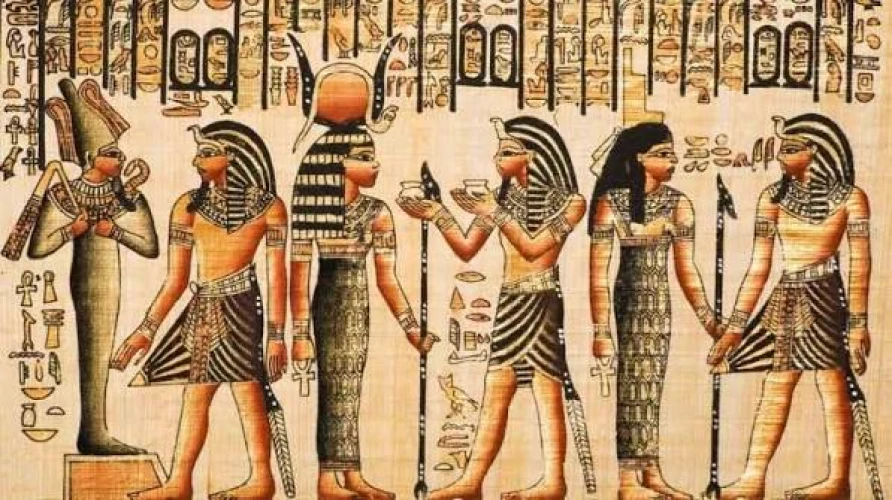
Judge of the Golden Scales: In the centre of the Hall of Two Truths Anubis would kneel under the balance scale. He would carefully adjust the plumb line and weigh the deceased’s heart (thought to contain the full story of their life) against the pure white ostrich feather of Maat (goddess of truth and balance).
Defender from Ammit: The heart would be weighed against the feather with Ammit (half crocodile, half lion and half hippopotamus) crouching under the scales ready to eat the heavy hearts of those who were deceitful or cruel. Anubis weighed the heart with fairness so all righteous souls would be judged fairly and could enter the Field of Reeds.
4. Symbolism
In Ancient Egypt Anubis was depicted with clear symbolism. These can be seen in tombs, coffins and museums.
Black Jackal or Man with Jackal Head: Anubis would be shown either as a thin jackal with alert eyes sitting on a shrine or as a human with the head of a black jackal with long pointy ears.
Black Colour: Anubis was always shown as black despite real Egyptian jackals having sandy brown fur. This is because the jackal was always shown with deep black fur to represent the dark fertile mud of the Nile and dark resins used in embalming. Black represents rebirth.
Imiut Fetish: A sacred symbol of Anubis. It consists of a headless pelt sewn onto a pole and placed inside a jar.
Golden Collar & Scepter: When shown as a human the jackal would wear a wide collared necklace, pleated kilt and carry the Was scepter (power and control) and Ankh (key to life).
5. Things to Look Out For in Locations of Anubis
Shrine of Anubis in Cairo: In the Grand Egyptian Museum or Egyptian Museum look out for the famous golden Anubis statue. It is shown as a sleek black jackal sitting on a mobile shrine. It was found protecting the entrance to Tutankhamun’s Treasury.
Kneeling at the Scales: When looking at scrolls from the Book of the Dead look directly underneath the centre of the balance scale in the Hall of Two Truths to see Anubis carefully adjusting the plumb line.
Protecting Tomb Doors at Luxor: In the tombs of the nobles at Sheikh Abd el-Qurna and tombs of the royals at the Valley of the Kings notice the pairs of black jackals painted on the doors and ceiling. They are symmetrical.
6. Why Anubis Represented Care and Respect in Ancient Egypt
Anubis was a caring god that represented respect for human life. Anubis ensured that people were cared for with love and that everyone would be judged fairly in the afterlife. As Anubis protected the body, led the soul and fairly judged the scales the ancient Egyptians knew they would never have to face the afterlife alone.