
 EN
 IT
 ES
 FR
 ZH
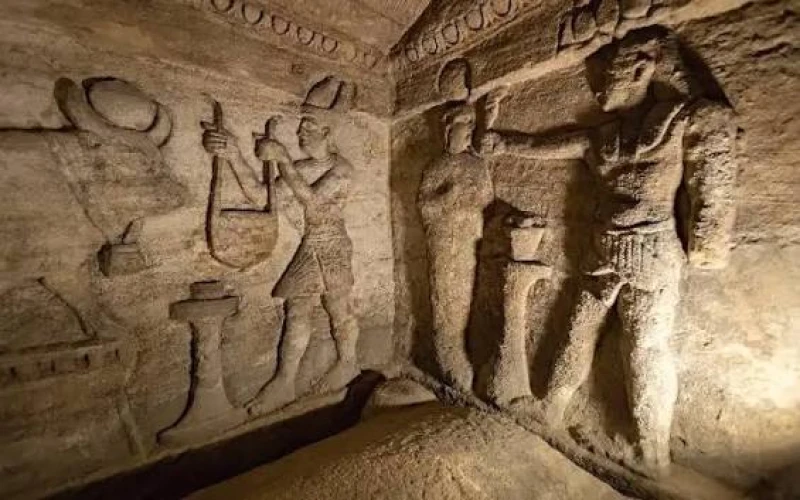
Ancient Greek Loculi and Kline: Understanding Burial Practices in Alexandria
With the founding of Alexandria in 331 BCE by Alexander the Great came a new period of life. The ancient city flourished as the uncontested centre of knowledge and commerce in the Hellenistic world attracting an array of people including veteran soldiers, Greek settlers, native Egyptians, Jewish scholars and merchants from all corners of the world. This mix is best seen in the huge underground necropoles. Underneath the white limestone cliffs of the Mediterranean coast in Alexandria the Alexandrian tombs were carved out of the natural rock. They combine classical Greek architectural features with Egyptian funerary beliefs. Within the tombs there are two funerary elements, the loculus (plural: loculi) and the kline (plural: klinai). Studying the functionality, development, decoration and significance can give us an insight into how Alexandrians would cope with death, commemorate their loved ones and deal with their multicultural society.
1. The Hypogea in Alexandria
To understand the function of the loculus and kline we need to look at the hypogeum in Alexandria.
A. Carving into the Rock
Unlike the arid and sandy cliffs of Upper Egypt, the Alexandrian rock consisted of easily carved and permeable limestone along a narrow strip of coastline. The Alexandrians would carve large tombs directly into the ground. People could enter through a staircase into open central courtyard (peristyle/atria). The courtyard would have several halls, banqueting rooms and shrines.
B. The Underground Home
The Greeks believed tombs were an extension of the home (oikos). The Alexandrians would carve a home-like structure underground. Decorative columns with fluting, colour painted cornices and pilasters would be included along with a central courtyard letting light and fresh air in. The deceased needed to be provided with a suitable space underground. The kline would be the main place for the master of the house to lay for the ceremony. While the loculi were carved into the wall to provide a suitable and efficient place for the deceased family members and ancestors.
2. The Loculus
The loculus (meaning 'small place’ from the Latin) is a horizontal rectangular recess carved into the tomb.
A. The Construction
Typically the loculus would fit perfectly with the size of an adult human. The depth would be around 2m, width 0.6m and height 0.5m. The gallery areas of the hypogea in Alexandria (Al-Shatby, Mostafa Kamel and Kom el Shoqafa) would have multiple loculi carved into the walls. They were carved three to four levels high providing space for many people under one tomb.
B. Covering
After the body (wrapped in linen or wooden casket) had been placed feet first inside the loculus, the entrance would be covered with a slab of limestone, terracotta or marble.
Decorating with Plaster and Paint
The slab would be covered in smooth white plaster then painted to look like classical elements. These could include small temple, double wooden doors or decorations.
Writing Inscriptions
The slab would have painted or carved Greek writing describing who the person was, their fathers name, where they were from, how old they were when they died and usually a short elegy or farewell message.
C. Cremation
The loculi were also often used to place ash urns. These were especially popular for foreign envoys and Macedians in early Ptolemaic times (Hadra Vases).
3. The Kline
While the loculus provided an efficient way of burying many people or family members, the kline (from the Greek word for bed) was a large and prestigious funerary item.
A. The Kline
The Kline was an important part of classical Greek life. It was used as a bed to sleep on and lie on during the symposium. When used in funerary contexts the kline would be carved out of stone. This would turn the tomb into an eternal banquet hall. The deceased would be seen as a respected guest lying down for ever enjoying a feast.
B. Carving the Kline
The kline would be carved from stone in the more prestigious Alexandrian tombs. Most notably in Tomb No. 1 at Mostafa Kamel and the main room at Kom el Shoqafa.
Carving
The kline would have beautifully carved legs, twisted posts and elevated heads (anaklintra). The bed would be made from thick stone with cushions and mattresses painted bright colours.
Sarcophagus
Often the kline was carved from the top creating a heavy sarcophagus. They were decorated with beautiful garlands, bull heads (bucrania) and mythical reliefs. The sarcophagus would have a lid carved to look like a person lying down or a cushion.
4. Ceremony
Having loculi and klinai in the same hypogeum shows how advanced the Alexandrians were with their ceremonies.
A. The Memorable Feast (Refrigerium)
The Alexandrians were very particular about memorialising their loved ones. Family members would visit the tomb on certain days to enjoy a meal with them. With a large stone kline in the room, family members would lie on the nearby stone triclinia and enjoy a meal. They would pour wine, milk and honey onto the floor or specially made channels that would lead them to the vault below.
B. Changing Styles
As Alexandria changed from being ruled by Ptolemaic Greeks to becoming part of the Roman Empire the loculi and kline changed.
Early Ptolemaic (4 th – 2nd century BCE)
At sites such as Al-Shatby and Mostafa Kamel the loculi and kline followed strict classical Greek architecture. They were painted in a delicate style (known as the Masonry Style) and there was little Egyptian religion.
Roman Imperial (1st – 3rd century CE)
The loculi and large sarcophagus kline at Kom el Shoqafa demonstrate a large blend of cultures. The reliefs around the kline show Egyptian gods, however they are carved in a realistic way using Roman anatomy and military clothing.
5. Archaeological Significance
Studying the loculi and kline can help historians understand the culture of the Alexandrians.
A. Understanding Society
Within one tomb the amount of loculi and kline can tell you about the social class. The large central stone kline was always used for the patriarch/matriarch of the family or whoever built the tomb. The loculi on the walls would have the children, extended family, emancipated slaves or next generation. The inscriptions on the slabs from the loculi have helped demographers understand how the population moved around, what trade they did and how long they lived for.
B. Preservation
As the loculi and kline are carved into porous limestone they are very prone to damage. The Egyptian Ministry of Tourism and Antiquities and other organisations are working to preserve the tombs. They are trying to control the microclimate to protect the delicate paint on the loculi and kline.
Conclusion
The loculus and kline were an important aspect of Alexandrian funerary practices. The loculus was designed to save space with being carved into rock and the kline was prestigious. The Alexandrians could combine their practical needs with their strong spiritual beliefs and artistic culture. They created their own funerary style by turning dark limestone rooms into eternal homes and banquet halls. The people of Graeco-Roman Alexandria created a unique funerary culture that helps us understand how life, art and remembrance worked in the ancient Mediterranean.