
 English
 Italy
Italy
Ancient Egyptian Gods Guide: Ra, Osiris, Isis, and the Concept of Ma'at
Gods and Goddesses of Ancient Egypt: The Sacred Divine Pantheon
For more than three thousand years, the spiritual and day to day lives of ancient Egyptians kinda got steered by a wide assortment of deities. The folks living along the Nile saw the gods as not being far away or something abstract, more like living forces right there, showing up in every angle of existence— from the everyday rising of the sun, and the yearly flooding of the river, to the hush mystery around life after death.
In the Egyptian pantheon, there were over 1,400 divine figures, going from the top tier creator gods honored in huge state temples, down to small household spirits that kept watch over families from sickness and risky animals.
Here’s the full guide to the gods and goddesses of ancient Egypt, including their main myths, symbolic functions, and the long shadow they left on history.
1. The Nature of the Egyptian Divine
Ancient Egyptian religion was polytheistic, in other words people worshipped a lot of gods at the same time. Still Egyptian theology was sort of different, more fluid , almost like it could adapt. In some cases gods could blend together to bring extra strength, they might shift their shape depending on the moment, or show up as local versions in separate cities, yeah.
Hybrid forms and sacred animals
Most Egyptian deities were shown in art as zoomorphic figures (an animal headed person) or sometimes as fully animal beings. But Egyptians didn’t really think the gods were just literal animals. Instead they used animal features as a symbol for divine qualities, like a visual shortcut you know:
The Falcon: it suggested soaring heights, sharp eyesight, and royal authority, so Horus and Ra.
The Jackal: linked with desert scavengers, it stood for mummification and also guarding the burial spaces, mainly Anubis.
The Lioness: meant fierce power, strong heat, and a destructive kind of wrath, connected with Sekhmet.
2. The Major Gods of the Egyptian Pantheon
While local cities leaned on their own patron deities, a few of the very big gods still carried supreme national weight across most of pharaonic history, kind of in this constant way, like everyone knew who mattered.
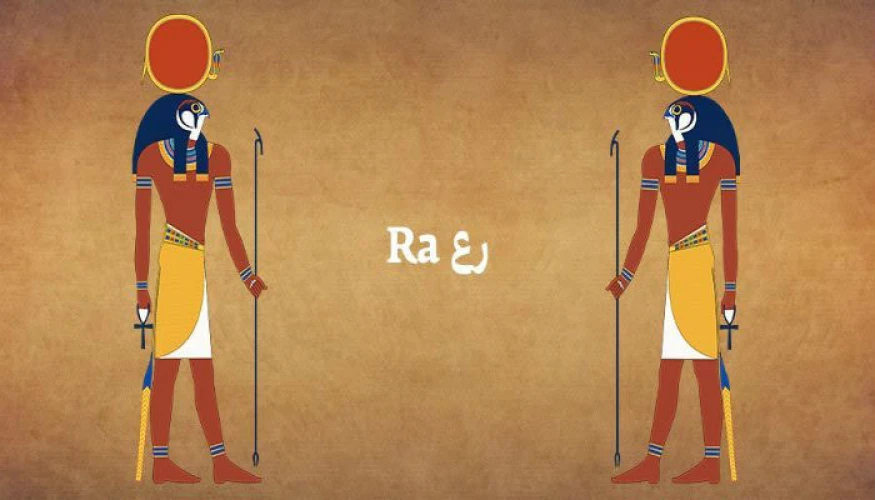
Ra: The Sun God and King of the Skies
Ra was the top sun god and also the creator force, he sailed across the sky every day on a solar boat. When night came, he went through the underworld (Duat) and fought the serpent demon Apophis , so the sun would return again the next morning. Pharaohs said they came straight from Ra, so they used the title "Son of Ra" (Sa-Ra) , not as a metaphor really, more like a right.
Osiris: Lord of the Realm Below and Rebirth
Osiris was tied to fertility, agriculture, and the afterlife. In the myth, he is described as a wise king who got murdered , then cut up by his jealous brother Seth. Through magic he was brought back to life, and then he became the chief judge of souls in the underworld, standing as the sign of eternal life for every Egyptian, even when people felt unsure.
Isis: Goddess of Enchantment and Motherhood
Isis, wife of Osiris and mother of Horus, is often framed as the strongest sorceress in the whole pantheon. She was treated like a protective mother, and she held deep knowledge of magic, called Heka. People kept honoring her, long past the earlier eras, and her worship continued into the Roman Period across the Mediterranean world , so it wasnt just one place or one time.
Horus—so, like the Sky God, and patron of pharaohs— is shown as a falcon-headed man wearing the Double Crown. He was the son of Osiris and Isis. After he defeated Seth in some epic kind of battle , just to avenge his father, Horus finally became the rightful ruler of Egypt. Living pharaohs were also seen as the earthly embodiment of Horus, like the god really walking around in human form.
Amun, the King of the Gods, started out as a local deity of Thebes (today’s Luxor). He was called “The Hidden One” and then during the New Kingdom he basically climbed into supreme importance. When Amun got merged with Ra, forming Amun-Ra, he turned into the official state deity of the Egyptian Empire. His huge temple complex at Karnak then became the religious center of the nation, the kind of heart people point to, again and again.
Anubis : God of Mummification and Funerary Rites. Anubis is usually depicted as a jackal, or as a jackal-headed man. He helped guide the souls of the dead into the afterlife, and he supervised the Weighing of the Heart ceremony in the Hall of Ma'at, where everything is judged, pretty carefully.
3. The Concept of Ma'at and Cosmic Balance
Central to Egyptian belief was Ma'at, more or less personified as a goddess, with an ostrich feather perched on her head, somehow. Ma'at stood for cosmic order, truth, justice and harmony, all kind of in one package.
The gods brought the universe into being in a kind of perfect balance, yet that equilibrium was always being pressed at the edges by Isfet, which was seen as chaos and destruction. So the main duty, for the pharaoh and also the ordinary folk, was to keep Ma'at going, through proper temple rituals and good moral living, plus showing respect for divine law, every day.
4. Religion in Daily Life: Household Deities
While big important state temples like Karnak and Philae were basically for priests and pharaohs, most everyday Egyptians still had this ongoing thing going on with domestic gods that offered quick protection , like in a very real way, right there at home:
Bes: a dwarf deity, with a beard and those lion like features, he guarded against evil spirits, bad dreams, and dangerous creatures that might wander into the house.
Taweret: a hippopotamus headed goddess, with lion legs and a crocodile tail, who watched over expectant mothers and infants during childbirth, almost like a steady shield.
Bastet: the cat goddess of the home, domestic joy, fertility, and she also kept danger away, especially rodents and venomous snakes.





-webp.webp "Hilton")
-webp.webp "dusit")
-webp.webp "Marriott Hotels")
-webp.webp "Azimut Hotel")
-webp.webp "Golden Tulip")
-webp.webp "sheraton")
-webp.webp "westin hotel")
-webp.webp "Movenpick")
