 EN
 IT
 ES
 FR
 ZH
Amun-Ra: The Rise of Egypt’s Most Powerful God
During the peak of the New Kingdom, when Ancient Egypt was at the height of its power spanning from the Fourth Cataract of the Nile in Nubia to the banks of the Euphrates River in the Middle East, there was one God above all others. Amun-Ra – King of the gods. This was created by combining the two powerful gods together, Amun – the oldest unknown creator god from Thebes and Ra – the dazzling sun god from Heliopolis.
Understanding the rise, combination, wealth and artistry around Amun-Ra is key for tourists visiting the massive stone lined temples of Karnak and Luxor.
1. Combination of two powerful gods – Amun and Ra
Amun (Hidden God)
Originally a local god to the city of Thebes (modern day Luxor), Amun got his name from the meaning ‘The Hidden One’ or ‘Invisible Wind.’. He was viewed as an ancient mysterious god who could create himself, his wind could be felt throughout the universe.
Ra (Visible Sun)
Ra was an ancient god of the sun based in northern Heliopolis. His shining sun shone across the sky every day bringing life to all physical creations.
Combination
As the Thebans fought off foreign rulers and united the whole of Egypt to create the New Kingdom, their local god Amun started to gain popularity across the nation. Combining the two gods together, the Egyptian priests combined the northern sun worship with the political strength of the south to create Amun-Ra. A God both hidden and visible, in the heavens and on Earth.
2. Protector God of the New Kingdom Empire
Not just a protector god, Amun-Ra was believed to have helped lead the Egyptian army to victory and expand the pharaoh’s territory.
Lord of the Thrones of the Two Lands
Pharaohs such as Hatshepsut, Thutmose III and Ramesses II credited all their military conquests, foreign gifts and prosperity to Amun-Ra.
Oracle of Karnak
Before going into battle or starting major building projects, the pharaoh and high priests would consult Amun-Ra. When the great festival took place the hidden golden statue of Amun-Ra within his sacred barge would lean forwards or backwards on the shoulders of the priests answering the pharaoh’s question.
Birth of the Pharaoh
The New Kingdom pharaohs encouraged stories of the birth of Amun-Ra taking on the form of the current king to impregnate the queen with the new royal heir.
3. The Wealth of the Amun Priesthood
As the empire brought in lots of wealth from taxes, gold mines in Nubia and conquered lands, a large portion was given to Amun-Ra. This made the Amun priesthood one of the most powerful people in the ancient world.
Massive Wealth
The temple complex itself contained thousands of acres of farmland, cattle, vineyards, quarries and ships. They employed tens of thousands of farmers, scribes, bakers, brewers and craftsmen.
Wealth
At its height during the Twentieth Dynasty, the Amun priesthood at Karnak had more land and wealth than the Pharaoh himself. Showing how much the religion and economy were linked.
4. Symbolism of Amun-Ra
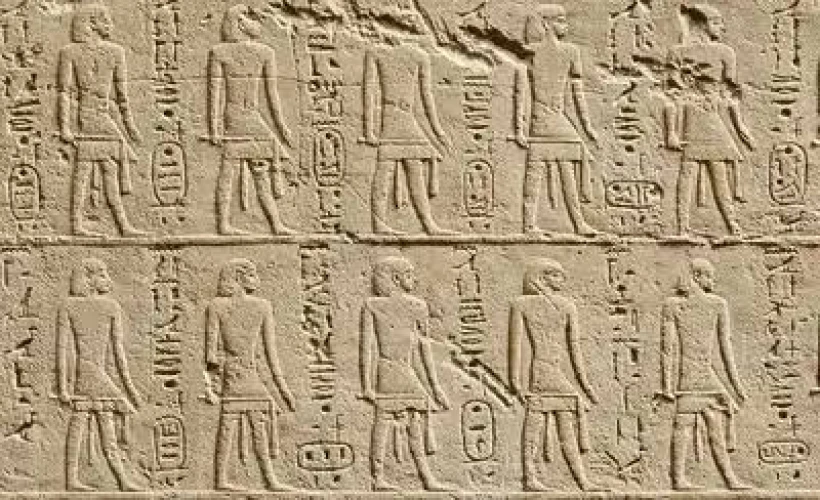
Ancient Egyptian Artists painted Amun-Ra with unique and majestic symbols. These are easy to see on the temple walls and statues in museums.
Feathered Crown
Amun-Ra is most well known for wearing a crown with two long vertical ostrich feathers.
Golden Skin
Many statues show Amun-Ra with a golden leaf covering his skin to appear like the sun. Some statues also show him with dark blue paint to represent the hidden skies and waters.
Sacred Rams
The rams with curved horns were sacred to Amun-Ra. They represented fertility and leadership. You can walk along the famous Avenue of Ram headed Sphinxes.
Sacred Geese
In some creation myths Amun-Ra was seen as an ancient goose in the heavens. His mighty goose honk echoed across the silent waters.
5. Karnak and Luxor Temples
There are two stunning temples in modern Luxor dedicated to Amun-Ra.
A. Karnak Temple
This temple complex covers over 200 acres of land making it the largest religious settlement in the ancient world. The Temple of Amun-Ra is the main temple. Throughout history many pharaohs have built massive stone pylons, towering obelisks and the amazing Hypostyle Hall containing 134 huge papyrus bud pillars adorned with colour.
B. Luxor Temple (Southern Temple)
Luxor Temple sits along the river front of the Nile. It was dedicated to Amun-Ra and his role in creating renewal. It is also the southern temple for the yearly Opet Festival. Amun-Ra would travel from Karnak to join with the king.
6. Top Tips for visiting Amun-Ra’s temples
Karnak Hypostyle Hall – Stand in the middle of the hall and look up. Notice how the architects used light to make you feel like Amun-Ra is everywhere.
Tall Feathered Plumes – Look at the coloured walls of Karnak and Luxor temples. Notice Amun-Ra sitting on his throne wearing his two plumed crown. He often holds an Ankh to the nose of the pharaoh.
Avenue of Sphinxes – Take your time to walk along the newly restored avenue of ram headed sphinxes.
7. Why Amun-Ra represented the peak of Egypt’s empire
Amun-Ra represented the highest ambition, creativity and confidence of Ancient Egypt. He was a powerful god combining the hidden wind with the blazing sun. He was the eternal king of the heavens and earth leaving behind him a legacy of amazing architecture that still amazes the modern world today.