
 EN
 IT
 ES
 FR
 ZH
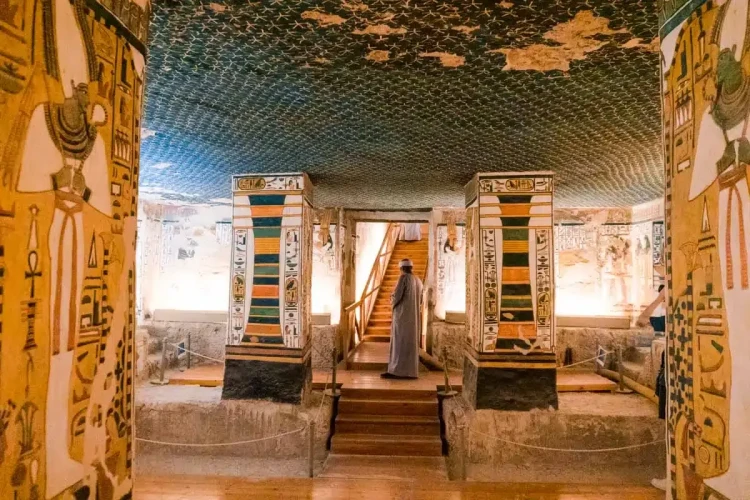
Vallée des reines
VALLÉE DES REINES.
the road reaches a junction after passing through the ruined Temple of Merneptah. To the southwest from this location Madinat Habii can be found (see below). The western road leads to the Valley of the Queens which is known in Arabic as Biban al-I:Iarim or Biban al-Malikat: of the Ladies or of the Queens. Toilets to the left of car park. The burial sites of high officials began to use this valley during the mid-point of the 18 Dynasties. The 18 Dynasties rulers preferred to share their tombs with their wives until the 19 Dynasties opened this area for royal family women and children. The dynasty called it 'Place of Beauty' which people used until the next dynasty but afterward it became obsolete. The earliest royal tomb appears to belong to Queen Sit Re>u32< who was married to Ramesses I while the most important tomb belongs to Queen Nefertari who was married to Ramesses II. The shallow valleys contain approximately 80 tombs which include both unnamed and uninscribed tombs and tombs that include cartouches with missing inscriptions. These small tombs contain bright wall paintings which visitors can access from their entrance points unlike the Valley of the Kings tombs. The plan usually consists of a small antechamber, long narrow corridor, several side chambers, many of which are undecorated, and at the end the tomb-chapel. Schiaparelli the Italian Egyptologist began clearing most tombs before World War I. Visitors usually explore three tombs which include Queen Tyti (No. 52), Prince Amun-hir-Khopshef (No. 55) and Prince Kha'emweset (No. 44).
Le premier tombeau notable se trouve du côté nord à une certaine distance en haut de la colline. Il s'agit du Tombeau de la Reine Tent-Opet (n° 74), épouse de Ramsès IV. Un peu plus haut du même côté se trouve le Tombeau de la Reine Bant Anta (n° 71),
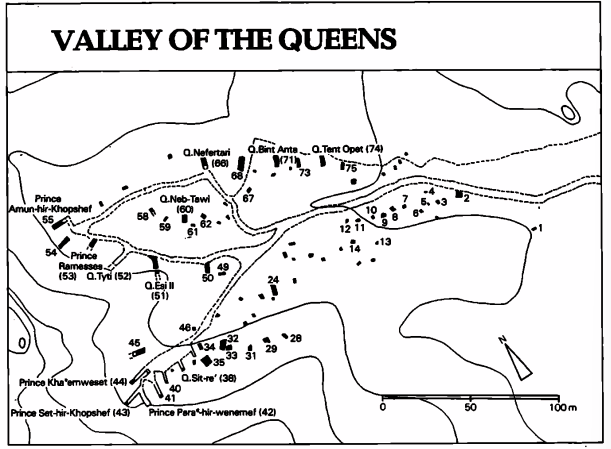
Tombeaux de la vallée des reines
-
Tombe de Néfertari (QV66)
La Grande Épouse Royale de Ramsès II.
Il est considéré comme l'une des plus belles tombes de l'Égypte ancienne en raison de ses couleurs vives et de ses peintures murales bien conservées. -
Tombe du Prince Amon-her-khépèchef (QV55)
Fils de Ramsès III. -
Tombe de la reine Tausret (attribuée à QV52)
Associé à la fin de la 19ᵉ dynastie (certaines attributions varient selon les chercheurs).